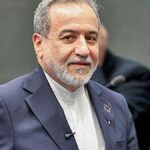
Ukrainian authorities will boycott next month’s Milano Cortina Paralympics after allowing Russian and Belarusian athletes to compete under their flags, Ukraine’s Sports Minister Matvyi Bidny said on Wednesday (Feb 18, 2026).
Ukrainian athletes will still take part in the March 6-15 Paralympics, but Mr Bidny said no Ukrainian official would be at the opening ceremony or any of the Games’ events, and he urged other countries to follow suit.
“In response to the outrageous decision of the Paralympics organizers to allow Russians and Belarusians (sic) to compete under their national flags, Ukrainian officials will not attend the Paralympic Games,” Mr Bidney said on social media.
“We will not be at the opening ceremony. We will not participate in any other official Paralympic events. We thank every official in the free world. We will fight to do the same!”
Russia and Belarus will have a combined 10 para athletes at next month’s Paralympics, following a decision by the International Paralympic Committee on Tuesday (17 February).
Earlier, Mr. Bidney cited the decision to allow six Russians and four Belarusians to participate in the Paralympics as support for Russia’s campaign.
Both countries were banned from Paralympic competition following Moscow’s 2022 attack on Ukraine, but regained full membership rights in the IPC after member bodies voted in September 2025 to lift their partial suspensions.
Belarus was a key staging ground for the invasion.
The international federations for every sport on the Paralympic Games program have said they will maintain the ban on those countries’ athletes, but Russia and Belarus won an appeal against the International Ski and Snowboard Federation at the Court of Arbitration for Sport in December, gaining some ground.
The minister condemned the decision
A limited number of Russians and Belarusians compete at the Milano Cortina Winter Games as individual neutral athletes without flags or anthems, with both countries’ Olympic committees still sanctioned by the International Olympic Committee.
“The decision by the Paralympic organizers to allow killers and their comrades to participate in the Paralympic Games under national flags is disappointing and outrageous,” said Bidney.
Russia will have two spots in para-alpine skiing, two in para-cross-country skiing and two in para-snowboard, while Belarus gets a total of four slots, all in cross-country skiing – one male and three female.
“The flags of Russia and Belarus have no place at international sporting events, which stand for fairness, integrity and respect. They are the flags of regimes that have turned sport into a tool of war, lies and contempt,” Bidney said.
Heraskevich spoke
His comments came hours after Ukrainian skeleton racer Vladislav Heraskevich, who was disqualified from the Winter Olympics over a helmet depicting Ukrainian athletes killed in the war, criticized Games organizers’ decision to have a Russian volunteer ahead of Ukraine’s delegation at the opening ceremony.
Local media said the Russian volunteer, who lives in Milan, wanted to carry the sign because he condemned Russia’s invasion and wanted to support Ukraine.
“I don’t want to attack anyone personally, but overall, this situation with the Paralympic Committee, with the IOC, with the disqualification and with the Russian flags, it seems like the IOC is doing some propaganda against the Ukrainian nation,” Mr Herskevich said. Reuters From Kiev.
The IOC says that it does not discriminate against any country or athlete in these sports. Mr. All decisions regarding Heraskevich are driven by rules in the Olympic Charter, which restricts any form of expression on the playing fields, it said.
“We’ve asked them (all athletes) for that specific moment, that field of play moment to be free of any messages,” IOC spokesman Mark Adams said at the same press conference. “We ask from any country, from any athlete, from anywhere in the world,” he said.
He said he was aware of the sign bearer, but added, “We don’t scrutinize all our volunteers, but a Russian volunteer carrying a sign is not a problem for me. Tell me differently.”
Luca Casassa, spokesman for the Milano Games, told a press conference that there were more than 1,200 volunteers at the opening ceremony. “They worked to make the opening ceremony special. We couldn’t vet every volunteer,” he said.