

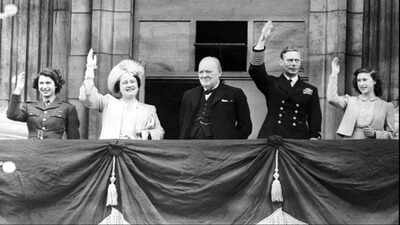
The British royal family, including Princess Elizabeth and Winston Churchill, appear on the balcony of Buckingham Palace during VE Day celebrations in London on May 8, 1945 | Image credit: PTI
Of all the stories about VE Day, perhaps none is as timeless as the night when Princess Elizabeth slipped into the cheering crowds in London and went unrecognized for some time.
The magic of the event lies not only in the young princess joining the celebrations. It also lies in the strikingly human element at the heart of the story: a teenage girl walking through crowds on one of the most emotional days in British history.D-Day on 8 May 1945 marked the end of the war in Europe, leading to celebrations across Britain after years of hardship and loss. According to reports by The Guardian, Princess Elizabeth and her younger sister Princess Margaret were allowed to leave Buckingham Palace that evening and join the crowds outside under the secret supervision of royal staff and military officers.This is what made the night especially memorable.A royal figure at a public ceremonyWhat gives the story its lasting power is the reflection it represents. Instead of appearing as a distant royal figure surrounded by ceremony and security, Elizabeth appeared as part of the crowd itself. This was not the moment when the future king addressed the nation from the balcony. Instead, she took to the streets of London to share the nation’s joy.
The future queen reportedly joined others in the streets to sing, dance and move through the crowds that day. Reportedly, the event eventually became one of the most memorable experiences associated with VE Day itself. This contrast between royal life and public life has helped this episode continue for a long time. For a brief period of time, the gap between the two worlds was bridged. The future queen was no longer an observer of national history.
I became a part of it.Why didn’t the crowd recognize her immediately?One element of the plot regarding the incident is that Elizabeth and Margaret apparently managed to remain unknown for some time. Kenneth Cohen, in his unpublished memoir, reportedly stated that a family member asked him to “look closely” before he realized that the “two princesses” were nearby with scarves tied around their heads.Well, this is an important detail because it makes the incident seem believable rather than something staged.
The princesses were not hiding behind elaborate masks. Instead, they were able to blend in with the crowd, which was busy celebrating the end of the war and listening to music.The incident is also important in terms of what it tells us about the spirit of VE Day celebrations. People were too preoccupied with the emotional significance of the victory to try to catch a glimpse of the royals. Isn’t this surprising?
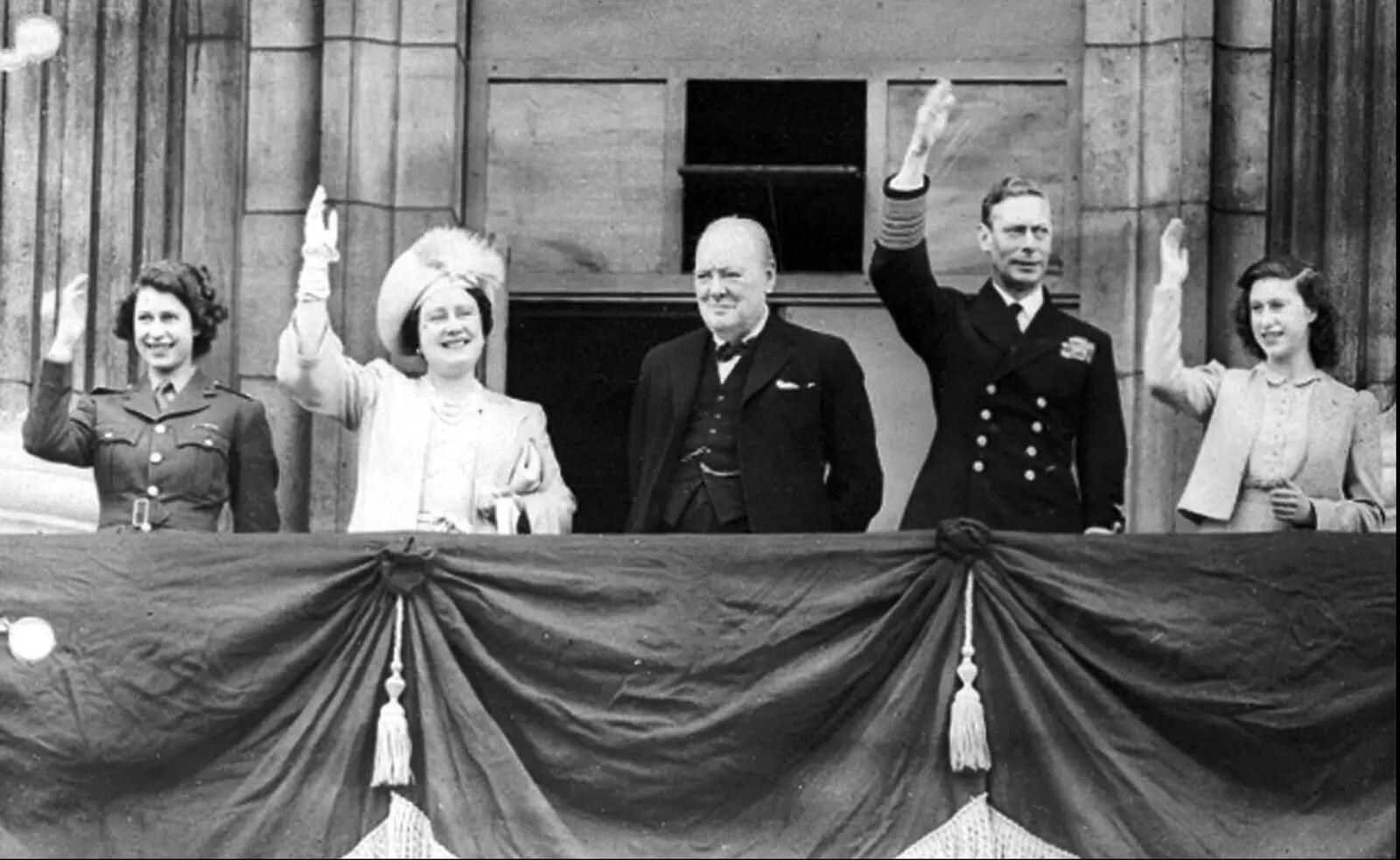
The British royal family, including Princess Elizabeth and Winston Churchill, appear on the balcony of Buckingham Palace during VE Day celebrations in London on May 8, 1945 | Image credit: PTI
A memory that has become part of British historyOver the years that followed, the tale slowly evolved beyond the realm of royal legend and into the wider cultural memory of D-Day in Britain. Accounts of the 70th anniversary event in 2015 often spoke of the “true story” of the princesses sneaking into the crowd and joining the celebration with other Londoners.Well, the story has all the ingredients of a compelling public narrative: historical context, assumed identity, experience of liberation, and eventual recognition.
However, what makes the episode interesting is precisely its small-scale nature. It has nothing to do with constitutional history or royal protocol.Why the story still resonatesThe story of the VE Day rally retains its importance because it allows a large historical event to become small, personal, and relatable. Historical stories tend to be told in numbers, speeches, and photographs. But she is still alive, and she approaches history differently. It makes history small by focusing it on a single moment in time: a scarf, a crowded street, people singing together, a future king moving through the crowds unnoticed.This story has persisted because it is consistent with the spirit of VE Day and Elizabeth’s early public image. Long before she became Queen Elizabeth II, she was a teenager standing in the middle of a historic crowd, participating in relief for a country emerging from war.