Crews have recovered the bodies of nine skiers killed in an avalanche in California’s Sierra Nevada, authorities said Saturday, ending a harrowing operation hampered by heavy snowfall.

A search team recovered the bodies of eight victims and found another person missing and presumed dead since Tuesday’s avalanche on Castle Peak near Lake Tahoe. The missing ninth person was found “relatively close” to the other victims, according to Nevada County Sheriff’s Lt. Dennis Hack, but was impossible to see due to the power outage conditions at the time.
At a news conference, Sheriff Shannon Moon praised the team efforts of several agencies that helped recover the bodies — from the California Highway Patrol to the National Guard to Pacific Gas & Electric — and the 42 volunteers who helped on the final day of the operation.
“We are fortunate in this mountain community because we are so close-knit, and our community shows up in times of tragedy,” Moon said.
The victims were named
The sheriff named the three Blackbird Mountain Company guides for the first time who died: Andrew Alessandratos, 34, Nicole Chu, 42, and Michael Henry, 30.
According to bios on the company’s website, Alessandratos was originally from Tampa, Florida, and moved to Tahoe about a decade ago. He enjoyed a wide range of adventure activities, from backcountry exploration to rock climbing.
Henry moved to Colorado in 2016 and then to Truckee three years later. He is described as “laid-back” and dedicated to sharing his knowledge and love of the mountains with others.
There was no bio for Choo on the site.
“This was a tremendous tragedy, and the saddest event our team has ever experienced,” Zeb Blaze, founder of Blackbird Mountain, said Wednesday in a statement.
“We are doing what we can to support the families who have lost so much, and our team members who have lost dear friends and colleagues,” he said.
The other six victims were women who were part of a close-knit group of friends who were experienced backcountry skiers and knew how to navigate the Sierra Nevada wilderness, their families said this week.
They have been identified as Carrie Atkin, Liz Clabaugh, Danielle Ketley, Kate Morse, Caroline Sicard and Kate Fite, all in their 40s. They lived in the San Francisco Bay Area, Idaho, and the Lake Tahoe area.
“We are devastated beyond words,” the families said in a statement. “Our focus now is on supporting our children through this incredible tragedy and honoring the lives of these extraordinary women. They were all mothers, wives and friends, all connected through a love of the outdoors.”
The families asked for privacy as they grieved and added that they had “many unanswered questions.”
Two friends emerged alive and were rescued along with four others, including a guide, after Tuesday’s avalanche. Their names have not been released.
Stuck on the mountain for hours
The avalanche occurred on the last day of the 15 skiers’ three-day tour, when the group decided to end the trip early to avoid an impending snowstorm. Officials said the route they took was a “normal travel route” but declined to specify what that meant.
At about 11:30 a.m. Tuesday, the six survivors called for help, describing a sudden and terrifying slide that was nearly the length of a football field. In the aftermath, they discovered the bodies of three fellow skiers, according to Huck.
Hack said rescuers were not able to reach them until about six hours after the initial call for help, and they took two separate routes to get there. They found five more bodies, leaving only one person missing.
But it immediately became clear to rescuers that recovering bodies at that time was very dangerous due to heavy snowfall and the threat of more avalanches. These conditions continued on Wednesday and Thursday.
Breakout on Friday
Authorities used two California Highway Patrol helicopters, with help from Pacific Gas & Electric, to break up snow and intentionally release unstable snowpacks to reduce avalanche risks.
Crews were then able to recover five victims that evening before it became too dark to reach the other three victims.
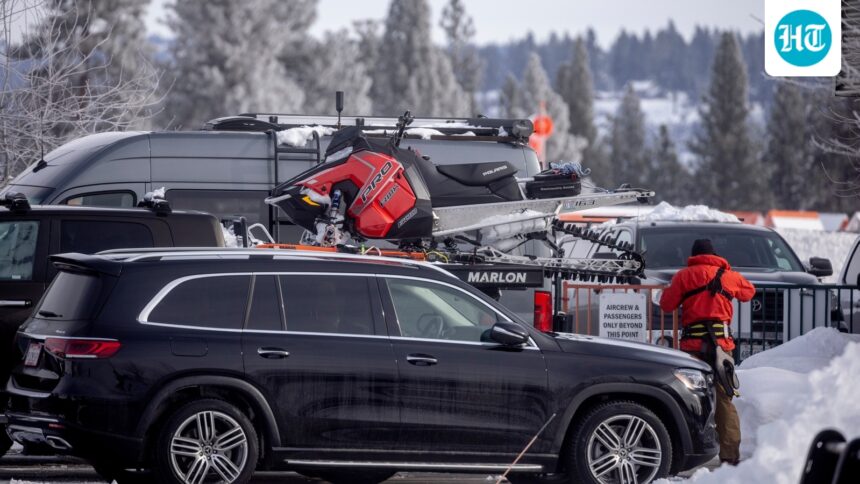
Rescuers used helicopters and ropes to lift the last four bodies from the mountain the next morning, braving strong winds that forced them to make multiple trips. The bodies were then transferred to ice trucks — trucks equipped to drive on ice — for further transport.
“We cannot say enough how deeply sorry we are for the families affected by this avalanche,” Moon said.
Haack said initial reports indicated that at least two of the surviving skiers were not swept away by the avalanche. The others were standing relatively apart and close together and were injured.
Huck declined to provide information about what might have caused the avalanche.
The authorities close the area
Chris Futri, forest supervisor for the Tahoe National Forest, said the terrain will be off-limits to visitors until mid-March. Officials intend to restore public access once the investigation is complete.
“This is public land, and they like to rebuild on it,” Viautrier said. “The Forest Service does not close public lands to every hazard or every obstacle. We trust that the American people will use their best judgment when restoring recreation.”