
Deepfake nudes and “revenge porn” must be removed from the internet within 48 hours or tech companies in the UK risk being blocked, with Keir Stormer calling it a “national emergency” that the government must deal with.
Companies can be fined millions or banned altogether if they allow images to be disseminated or reposted after victims have given notice.
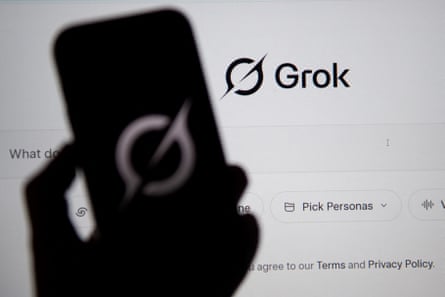
Amendments to the Crime and Policing Bill will be made to regulate AI chatbots such as X’s Grok, which produced non-consensual images of women in bikinis or in compromising positions until the government threatened to take action against Elon Musk’s company.
Writing for the Guardian, Starmer said: “The burden of tackling abuse should no longer fall on the victims. It should fall on the perpetrators and the institutions that cause harm.”
The prime minister said institutionalized misogyny was “woven into the fabric of our institutions” which meant the issue was not being taken seriously enough. “Too often, misogyny is condoned, minimized or ignored. Women’s claims are dismissed as exaggerated or ‘one-offs.’ That culture creates permissiveness,” Starmer wrote.
Government sources said Ofcom is expected to implement new powers by the summer and require companies to legally remove this content 48 hours after it is flagged.
Social media companies and platforms including porn sites that fail to act could be fined up to 10% of their worldwide revenue or have their services blocked in the UK.
According to the Department for Science, Innovation and Technology, victims can flag images directly with tech firms or with Ofcom – which will trigger an alert across multiple platforms.
Ofcom is responsible for enforcing the ban on images, with the aim of removing responsibility from victims, who have to report the same image thousands of times as it is constantly reposted.
The media regulator has been told to find ways to automatically flag “revenge porn” images every time they are reposted so that they have a digital watermark.
Internet providers will also be given new guidance on how to block hosting for rogue sites that specialize in hosting non-consensual real or AI-generated apparent content.
The Grok “nudification” tool sparked an outcry in early January, with ministers threatening to ban X if it didn’t act. According to an analysis conducted for the Guardian, around 6,000 bikini requests were made to the chatbot every hour, with many requests to produce images of women bending over or wearing only dental floss.
But in recent years non-consensual real or deepfake images have been used to blackmail young women and men, with charities linked to many suicides.
The horror stories of women and girls who have seen intimate images on the Internet are “the kind of story that, as a parent, makes your heart drop into your stomach,” Starmer said.
“Too often, those victims are left to fight it out alone – chasing the action from site to site, reporting the same thing over and over again, only to see it appear elsewhere hours later,” the Prime Minister said. “It’s not justice, it’s a failure, and it’s sending a message to the youth of this country that women and girls are a commodity that needs to be used and shared.”
Creating or sharing non-consensual intimate images also becomes a “priority offence” under the Online Safety Act, which carries the same level of severity as child abuse images or terrorism. The law does not require platforms to independently identify non-consensual intimate images, but only to remove these images when they are flagged.
Google, Meta, X and others already do this for child sexual abuse content through a process called hash matching — which assigns videos a unique digital signature that matches databases of abusive content. While the 48-hour timeline is brief, India recently ordered social media companies to remove some deepfake content within three hours.
“I think 48 hours is absolutely doable, to be honest with you,” says Anne Kranen, who researches online misogyny at the Institute for Strategic Dialogue.
“The problem is that this may not necessarily encourage a quick response rate from companies. But 48 hours is a long time to remove other types of content, such as terrorist content in the EU.”
Existing to use hash matching to protect intimate abuse victims Kranen added that programs include; Although synchronizing different technology platforms can be challenging, an abusive video uploaded to Facebook, for example, can be automatically detected on Reddit.
Hash matching is not a perfect technique, Kranen emphasized, and can be circumvented. Terrorist groups, for example, often add emojis or minor modifications to videos already hashed as terrorist content so that they are undetectable to hash matching systems.
The advent of AI tools and AI deepfakes exacerbates this problem, allowing non-consensual intimate images and other content to be quickly altered and spread across the Internet, something Kranen says has eluded efforts to quickly detect them with tools like hash matching. At a time like January’s grok bikiniification crisis, it’s impossible to reign in some abuse.
While the law appears to apply to all tech platforms, including “rogue websites” not covered by the Online Safety Act, there are questions about how it applies to encrypted messaging services such as WhatsApp and Signal.
In his article, Starmer said he was determined to challenge misogyny in government and politics, weeks after he faced criticism for appointing Prime Minister Peter Mandelson as US ambassador, despite his known friendship with notorious financier and child sex offender Jeffrey Epstein. Mandelson was fired after new revelations about the intimacy of their friendship.
The prime minister also faces controversy over the appointment of the new cabinet secretary, Antonia Romeo, as permanent secretary of the Home Office, who remains a divisive figure in the civil service despite being cleared of bullying allegations nine years ago. Some of her defenders say that criticism of Romeo is based on a sexist double standard.
Stormer advocated for more women to be appointed to senior leadership roles in government and said he was “determined to change the culture of government: to challenge the structures that still marginalize women’s voices”.
“That’s why I believe it’s not enough to count how many women hold senior roles,” he said. “What matters is whether their opinions carry weight and lead to change.”