
When planning to move to the moon, where will humans live? Before this step, one has to carry all the cement, water and building materials from the ground and build the houses first.
The whole idea seems practically impossible, which is why a recent study offered an interesting alternative to all that hard work.Scientists created a “lunar cement” produced using simulated lunar and Martian soil, and let it spend six months outside the International Space Station where it encountered vacuum, radiation and temperature changes. After returning to the station, the samples showed no deterioration, and one assembly recorded 35% higher compressive strength than controls kept on the ground during the mission.The results were published in the journal Advances in Space Research on May 15, 2026 and were detailed by the University of Delaware on July 9, 2026. The study conducted on NASA’s MISSE-20 mission evaluated the internal structure, chemical composition, and mechanical strength of geopolymers after their return to Earth.
Not from the moon
Despite the name used for ease of understanding, the material was not produced using real regolith brought from the surface of the moon.
The researchers used fabricated simulators to reproduce the chemical and mineralogical properties of different types of extraterrestrial soil.These materials are combined with an alkaline solution to form geopolymers. Geopolymers are binders obtained by the reaction between aluminosilicate-rich materials and alkaline solutions. The process bonds the particles into a solid structure without the traditional manufacturing of Portland cement.
The goal was to develop an alternative to traditional cement, which in the future could be used to be manufactured directly on the Moon with resources available on site.
Norman Wagner, a professor of chemical engineering at the University of Delaware, described regolith as a clay-like material rich in silicates. Its abundance on Earth, the Moon and Mars makes this raw material relevant for research into extraplanetary construction.
Journey into space
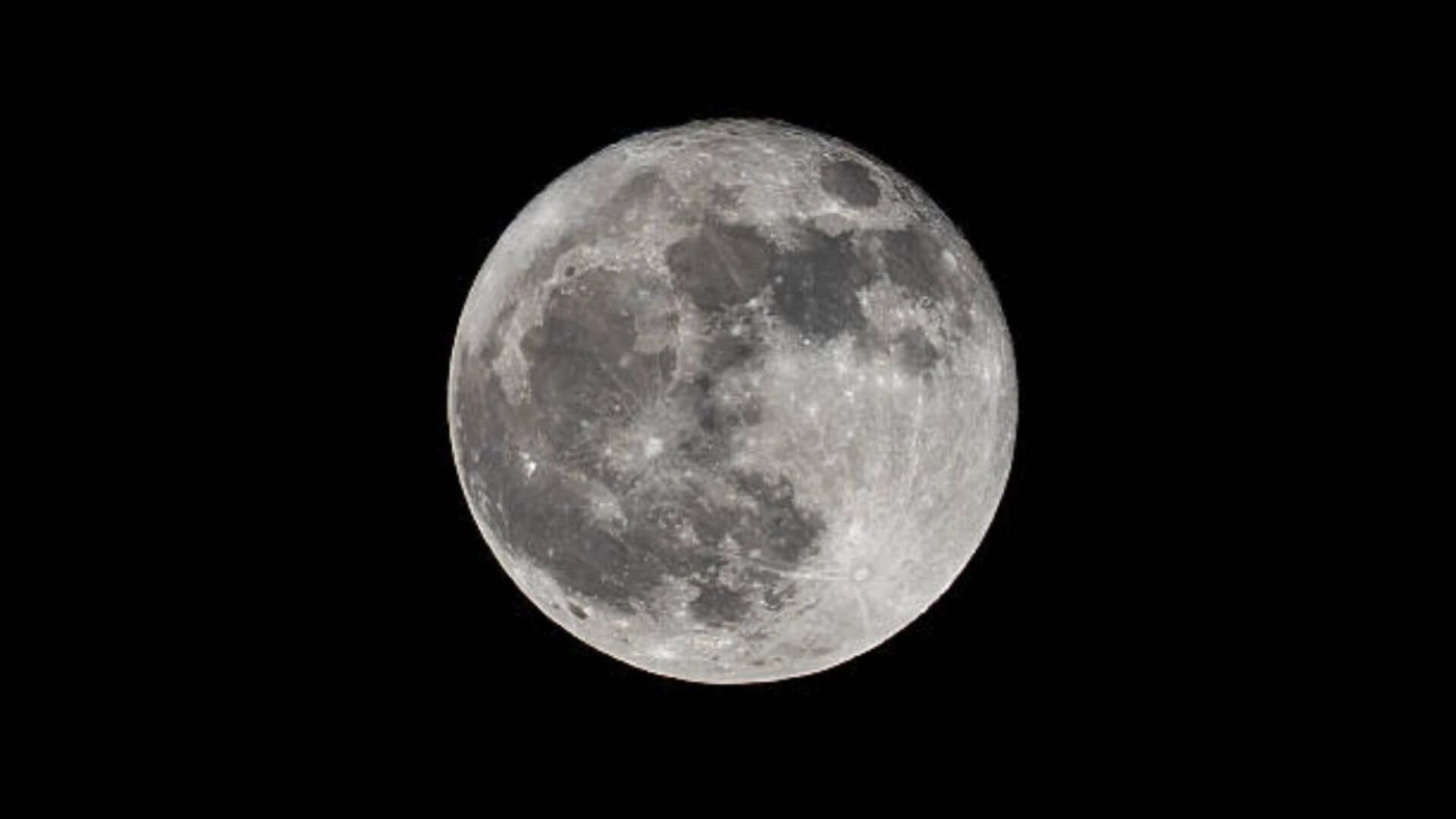
The team created four samples made from a lunar simulation, a Martian simulation, and high-quality metakaolin.
The team produced four types of samples. Two lunar regolith simulators were built called Lunar Highlands Simulant 1 or LHS-1 and Black Point 1, designated by the abbreviation BP-1. Another formulation used the MGS-1C Mars Simulator, while a fourth was produced using high-purity metakaolin. This comparison allowed checking whether different raw materials would react in the same way to the space environment.The samples were made into thin sheets and installed on the outside of the International Space Station. They participated in the MISSE-20 mission, a program used to evaluate materials and components directly in the orbital environment.During the mission, the experimental lunar cement encountered near-vacuum pressures, radiation, and frequent temperature fluctuations. The study recorded absolute values between -11.75°C and 35°C.
The temperature also varied by about 15 degrees Celsius with each orbit of the station around the Earth. After nearly half a year, the plates returned to Earth for mechanical, chemical and imaging examinations.
The future of space?
Geopolymers produced with the lunar simulators LHS-1 and BP-1 and with the Martian simulators MGS-1C showed no signs of degradation caused by the six months spent in low orbit. The results revealed that they maintained their chemical composition and mechanical strength.Furthermore, the sample made from LHS-1 that was sent into space showed a compressive strength of 60.3 MPa. The control group on land recorded 44.7 MPa. The difference corresponds to approximately 35%. This means that the sample returned with a higher gauge strength, but it does not allow us to conclude that the space environment directly enhanced the material. The researchers attributed the statistically significant change in the LHS-1 samples to a thermal procedure performed before launch, known as a baking test.
This treatment is used to reduce volatiles before sending the sample into space. Therefore, a strength greater than 35% should not be presented as evidence that vacuum or radiation increased the strength of lunar cement.Samples produced using high purity metakaolin became dark due to oxide attack and developed cracks due to vacuum treatment applied before flight.The analysis supports continuing studies, although it has not yet been proven that the material can be reliably produced and processed directly on the Moon. Transporting the cement, water, and other aggregate needed for a lunar base from Earth would require significant cargo capacity as well as enormous expense. That’s why space exploration programs consider in situ resource use, a concept known as ISRU.This time, samples sent to the station were initially produced and processed before orbital exposure. Now, it must be discovered how to mix, mold and harden the geopolymers under conditions similar to the lunar surface.