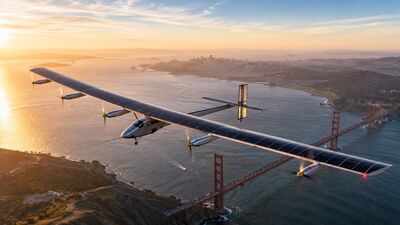
When Solar Impulse 2 returned to Abu Dhabi in July 2016, it had completed something that had never been achieved before. The plane traveled around the world powered only by energy collected from the sun, completing a journey of about 40,000 kilometers without using conventional fuel.
It is not designed to prove that commercial aircraft can immediately convert to solar power. Instead, the project showed that advanced engineering, lightweight materials and renewable energy could keep the plane flying across continents and oceans. The mission took 16 months, with weather delays and long pauses in route formation, yet it ultimately became one of the most celebrated demonstrations of clean energy technology in aviation.
How to complete Solar Impulse 2 Part 1 Fuel-free flight All over the world
The plane began its journey around the world after leaving Abu Dhabi on March 9, 2015. By the time it returned to the same city, it had traveled nearly 40,000 kilometers while spending nearly 500 hours in the air.Instead of completing the mission in one continuous flight, Solar Impulse 2 traveled in phases. The plane stopped 16 times, in part because weather conditions affected when it was safe to fly.
Some sites required the team to wait long periods before proceeding, extending the overall task over a year.According to a World Economic Forum article in collaboration with Reuters, the successful return to Abu Dhabi represents “the first fuel-free flight worldwide,” making the mission a milestone for renewable energy aviation rather than a traditional speed or endurance record.
How Solar Impulse 2 works using solar energy, batteries and electric motors
Solar Impulse 2 relied entirely on electricity generated from sunlight.
More than 17,000 solar cells were integrated into its wings, collecting energy throughout the day. Any surplus electricity was stored in on-board batteries, allowing the plane’s four electric motors to continue operating when sunlight was not available.Although its wingspan exceeds that of a Boeing 747, the plane itself weighs as much as a mid-sized family car. This unusual combination of an exceptionally large wing and lightweight construction helped it stay in the air while using relatively little energy.The plane was designed for efficiency, not speed. They cruise at a speed of no more than about 90 kilometers per hour and can reach altitudes of about 9,000 meters during the flight.Swiss explorers Bertrand Piccard and Andre Borschberg alternated flying duties throughout the expedition, each completing different legs of the World Route. Long-distance solo flights require more than just technical preparation.
Pilots also had to manage long periods alone in the cockpit while crossing vast expanses of ocean at relatively low speeds.Commenting on these challenges, Bertrand Picard said: “We were facing the oceans; we had to build this mentality, not just the plane and the technology.” His comments highlighted that endurance and preparation are as important as engineering during a project.
How Solar Impulse 2 inspired the future Electric aviation
For the team behind Solar Impulse 2, the flight represented more than just a successful aircraft program.
Bertrand Piccard said the technologies demonstrated during the mission could have broader uses beyond aviation.According to the World Economic Forum, Picard said: “More than just an achievement in aviation history, Solar Impulse has made energy history.” He also suggested that many of the technologies developed for the aircraft could help reduce carbon dioxide emissions when applied in everyday life.Looking to the future, Pickard predicts that “within the next 10 years, we will see electric planes carrying 50 passengers on short- to medium-haul flights.” Although this is presented as a prediction rather than a confirmed outcome, it reflects the ambitions driving the Solar Impulse programme.
What happened after Solar Impulse 2 completed its historic global journey?
Completing the task was not the end of the project work. According to Reuters, Bertrand Picard and Andre Borschberg plan to continue promoting renewable energy technologies after the plane returns to Abu Dhabi.The pair also intended to create an international council to advise governments while encouraging the development of new applications for clean energy technologies. Rather than treating the successful cruise as a final destination, they described it as the beginning of a broader effort to encourage wider adoption of renewable energy innovations.