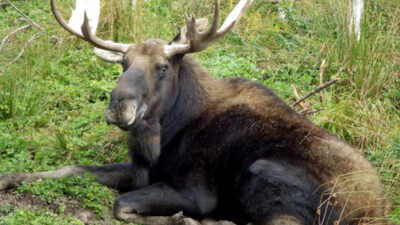
Moose are naturally found in Labrador but not on the island of Newfoundland.
More than a century ago, Newfoundland, an island in Canada, introduced a handful of moose into its forests to create hunting opportunities and provide a reliable source of meat.
The animals multiplied into one of the largest moose populations in North America and permanently reshaped the island’s forests.The story began in 1878, when a moose was first brought to the island, and continued in 1904 with the release of four more animals. Over the following decades, the population grew rapidly. With abundant food, almost no natural predators and vast forests to roam, the animals spread across the island much faster than expected.Today, wildlife managers say moose are an important part of Newfoundland’s culture and economy, but they also serve as a reminder of what can happen when a species grows beyond what its habitat can support. The province’s 2022-2026 moose management plan explains how their numbers expanded, why they later declined, and how science is now helping keep the animals and their habitats in balance.
Why did the moose population grow so quickly?
Moose are naturally found in Labrador but not on the island of Newfoundland.
According to the management plan, the introduced animals found ideal conditions after arriving on the island.There were no other large plant-eating animals competing for the same food. At the same time, wolves, the main natural predator of moose, almost disappeared, and the Newfoundland wolf became extinct around 1930. Young forests created by natural disturbance also provided plenty of fresh vegetation for the animals to eat.These favorable conditions allowed the population to increase rapidly. By the late 1950s, the island’s moose population was estimated at between 150,000 and 200,000, giving Newfoundland one of the highest moose densities in the world.
Moose change forests
Moose are large animals that eat large amounts of plants every day. An adult moose consumes about 20 to 30 kilograms of plants per day. Throughout Newfoundland, this adds up to about one million tons of plant material each year.
The animals feed mainly on young trees, shrubs and other new plants that are also essential for forest regeneration.Wildlife managers explain that forests can only produce a limited amount of food. When a moose population becomes too large, it begins to eat plants faster than it can grow back.Scientists call this the carrying capacity of the habitat, which means the maximum number of animals the land can support without being harmed.
Once this limit is exceeded, forests and moose populations begin to suffer.
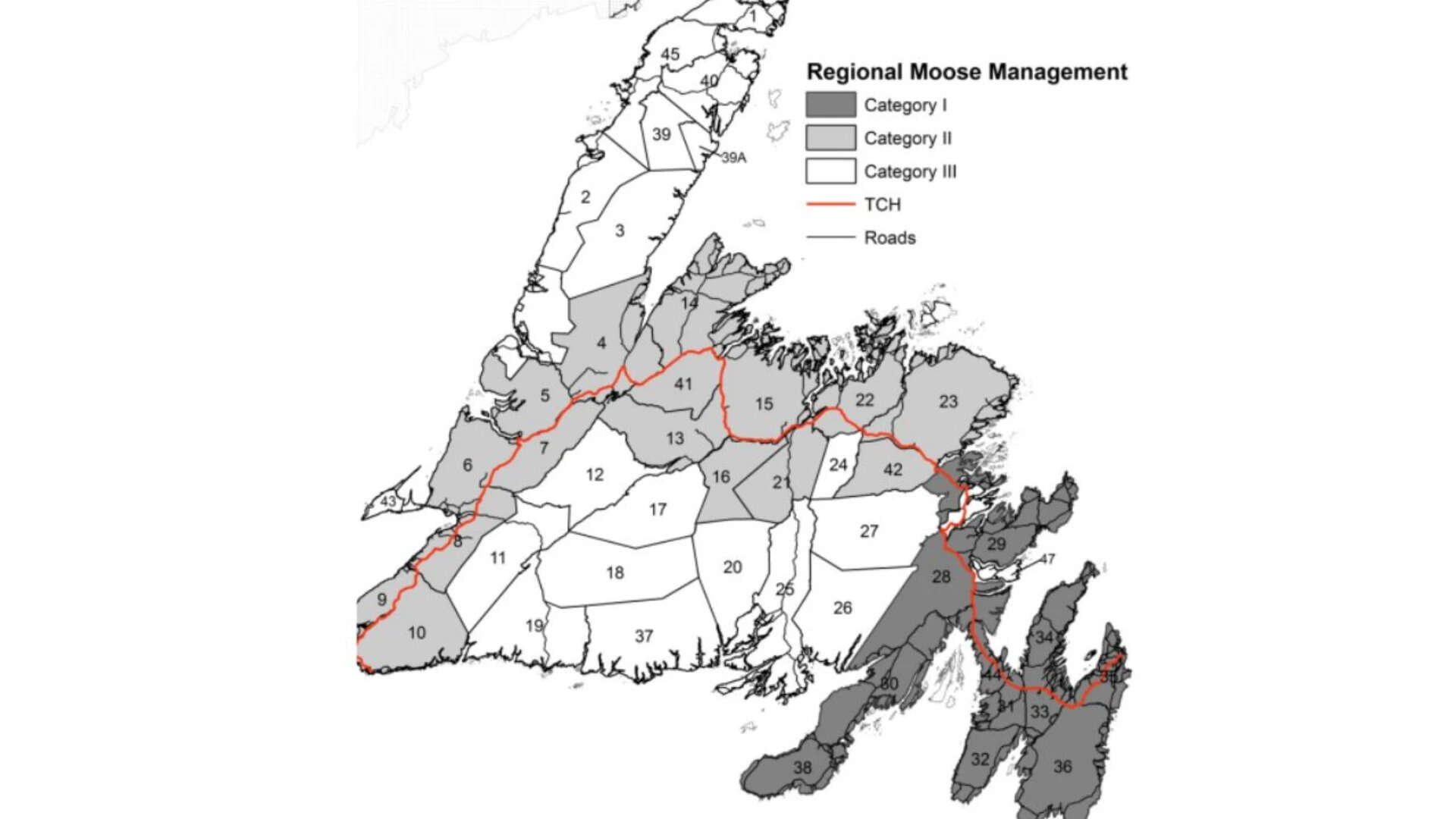
Category 1 – 1.0 deer per square kilometre, Category 1 – 1.5 deer per square kilometre, Category 1 – 2.0 deer per square kilometre.
First big drop
By the late 1950s and early 1960s, the island was already showing signs of overbrowsing, with moose eating too much of the vegetation in many areas. Local poaching in some areas has exacerbated the problem.Although records from that period are limited, the management plan says the population may have declined to less than 50,000 by the early 1970s.This decline prompted the provincial government to introduce an area-based quota system in 1973, allowing wildlife managers to control hunting in different areas according to local conditions. This system is still in use today.The new approach helped reduce hunting pressure where moose numbers were already low while allowing larger harvests in areas where populations remained high. As habitat slowly recovered, moose numbers began to increase again.
History repeats itself in the nineties
Over the next 25 years, moose numbers rose again. Commercial forestry has also created small forests that provide fresh food for animals.By the 1990s, the population again exceeded 150 thousand people. However, scientists say the island’s forests cannot continue to support such large numbers.In contrast to the sharp decline seen in the 1960s, wildlife managers have already begun increasing hunting quotas in many areas to reduce pressure on habitat.
As a result, the second decline was less severe.Between the mid-1990s and 2012, the island’s moose population declined by about 25 percent. According to the management plan, the decline occurred even in areas where hunting was not permitted, suggesting that habitat limitations, not hunting alone, are responsible.
Find balance
The management plan estimates the moose population in Newfoundland is now about 110,000. Officials say the goal is not to return to past records, but to maintain a healthy balance between moose, forests and people.Managers monitor the population using aerial surveys, hunter reports, jawbone collection programs, and other scientific information. These tools help estimate population size, reproductive success, habitat conditions and harvest levels before setting catch quotas for each management area.Different parts of the county also have different population goals. Areas near major highways and population centers are managed to reduce moose density to help reduce the risk of vehicle collisions, while other areas are managed according to local habitat conditions.