
For centuries, shellfish poisoning has been a threat to humans, and we have had no way to stop it. “Red tide” algae blooms found on the Pacific coast are deadly contributors, producing one of the most virulent neurotoxins known: saxitoxin (STX).
Eating the wrong shellfish, paralytic shellfish poisoning (PSP) ensues. There is no antidote. Or at least there wasn’t, until researchers from the University of California, San Francisco, found one hiding in bullfrogs. New research published in Nature Communications shows that a protein found in some frogs may neutralize saxitoxin.
The frog protein that could save hundreds of lives
The neurotoxin STX was stored in “red tide” algae as a chemical weapon during the Cold War, when there was no antidote.
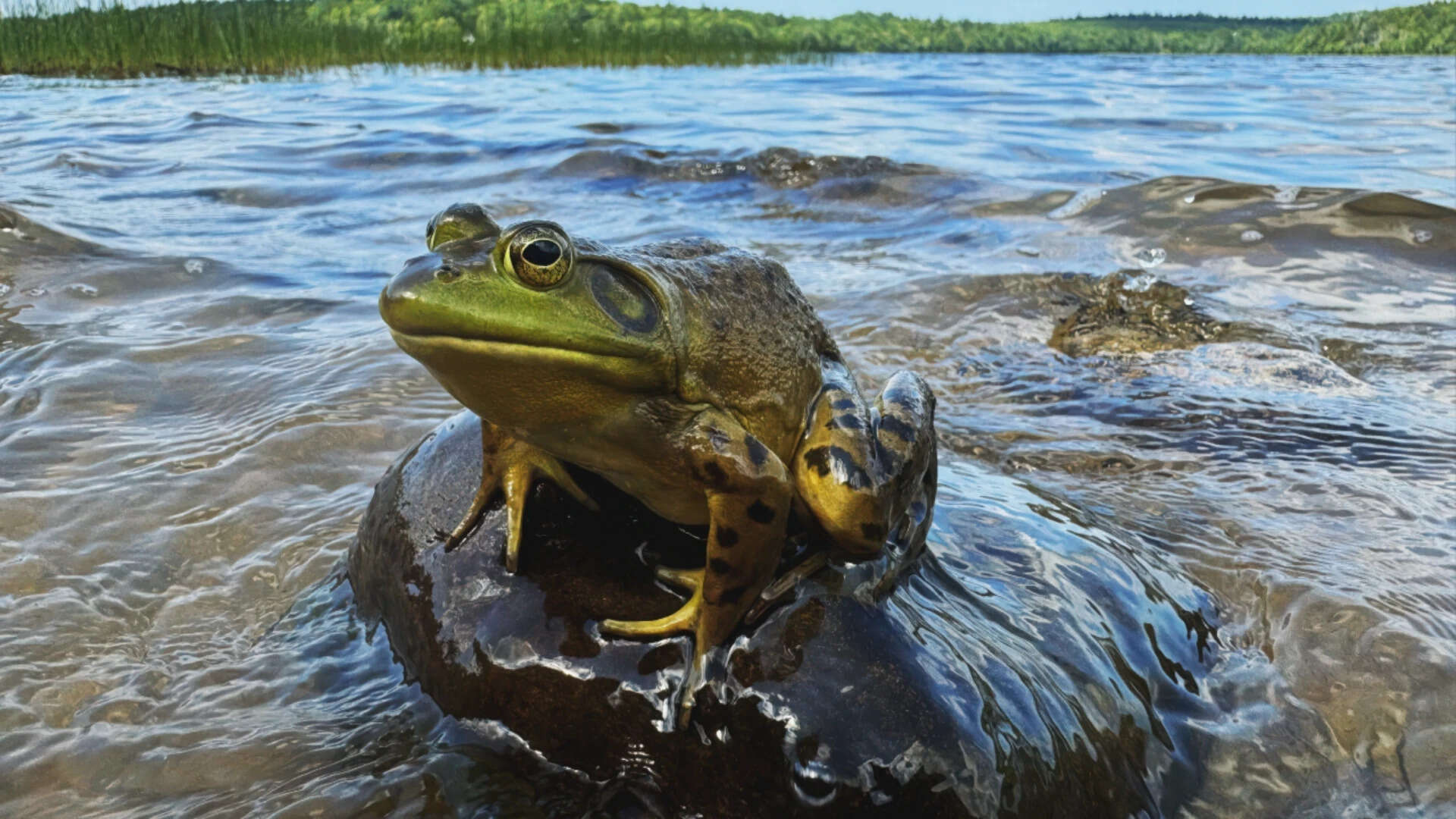
A UCSF study may have changed that. The research, conducted by Daniel Minor, Ph.D., a professor at UCSF’s Cardiovascular Research Institute, found that a frog protein called saxiphyllin can neutralize saxitoxin in mice. This protein can also reverse fatal poisoning.This protein is found naturally in bullfrogs and many other frogs from around the world. It essentially acts like a molecular sponge, binding tightly to saxitoxin in the bloodstream before it can reach the nerve and muscle cells it normally attacks.
Previous research on the STX antidote has focused on interrupting the complex biological processes it uses to inactivate neurons or attempt to stimulate immune responses against them. These attempts ended in disappointment.“This was a problem we were looking to solve,” Minor said. “It turns out that one naturally occurring protein is all that’s needed to take this toxin out of commission.”As these algae become more common around the world, this discovery could be a crucial step forward.
Minor discovered the antidote in collaboration with chemist Justin Du Bois, a Ph.D. at Stanford University.
Toxic sponge

Representative image
This new study built on a 2021 paper in which Minor and colleagues showed that saxiphylline strongly binds to saxitoxin. Frog protein absorbs poison like a sponge and prevents its toxic properties. However, whether this interaction would work within an organism remained uncertain.In the new study, junior and postdoctoral researchers Samantha Nixon, PhD, and Sandra Zakrzewska, PhD, tested saxophylline on mice exposed to lethal doses of STX.
The researchers found that when the protein was given before or alongside STX, it prevented toxicity. It also led to almost all mice exposed to the toxins being cured, largely mirroring what would happen if humans unknowingly consumed poisoned shellfish.“We had this big protein that needed to catch up to a small toxin molecule that would kick it in gear,” Minor said. “We weren’t really sure this was going to work.”The researchers noted that the protein not only improved survival, but also reduced symptoms associated with acute poisoning, without any harmful side effects.
They also found that saxophylline spreads throughout the body, reaching the brain, heart and muscles, allowing it to trap the toxin wherever it travels.
Solve a century-old mystery

The origins of this discovery go back to the 1920s and 1930s, when physician and scientist Hermann Sommer at the University of California, San Francisco, investigated cases of shellfish poisoning along the California coast. He realized that the poison did not come from the shellfish itself but from the microorganisms associated with it.
It was then called “mussel poison.” His observations laid the foundation for the eventual identification of saxitoxin.
He also noticed that some of the frogs seemed resistant to the toxins. Nearly a century later, this observation has been proven true.Scientists now know that STX is not a single toxin but a family of more than 50 different types with closely related structures. Minor’s previous studies found that saxophylline can bind to a wide range of these variants, making it a strong candidate for the antidote.Minor now hopes to determine whether smaller, engineered versions of saxiphylline could work the same way, or even better, to protect against a range of STX variants. This may also provide insight into improving shellfish safety. In California, the state testing laboratory in Richmond routinely inspects shellfish for paralytic shellfish toxins.“Nature has had to solve this problem many times,” Minor concluded. “Therefore, there is resistance to toxins throughout the biological world.”