The US administration announced new sanctions on Iran, targeting the country’s newly formed agency that oversees shipping through the Strait of Hormuz, as Washington continued its economic pressure campaign amid the ongoing war.
This move came hours after Wednesday (local time) after US forces carried out strikes on an Iranian military facility following the downing of an attack drone by Iranian aircraft.The latest sanctions target Iran’s Persian Gulf Strait Authority and any individual or entity working with it. The agency, created earlier this month, regulates transit through the Strait of Hormuz and charges fees that can reach $2 million per vessel.The Strait of Hormuz is one of the most important shipping routes in the world, through which about a fifth of the world’s oil and natural gas supplies pass.“The Iranian military’s recent attempt to extort global maritime trade is evidence that economic anger has left the regime desperate for money,” US Treasury Secretary Scott Besent said in a statement.The Iranian Revolutionary Guard defended the move, saying ships should use the lane designated by the force as they pass through the waterway.
It also warned that ships moving outside the approved route may face attacks and other dangers.These sanctions come in the latest attempt by the Trump administration to increase pressure on Iran while talks continue on a possible agreement to end the war and reopen the Strait of Hormuz.The conflict has sent oil, gas and related energy prices soaring globally since the war began after the United States and Israel launched military action on February 28.
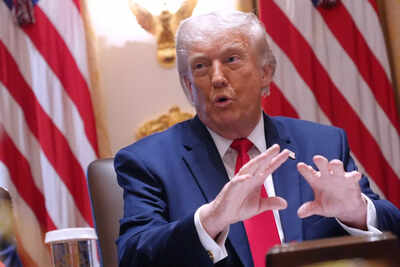
Experts said it could take weeks or even months for shipping traffic and prices to return to normal once the waterway reopens.Meanwhile, the United States imposed a blockade on Iranian ports for more than a month. Trump said that the blockade “will remain in full force and effect until an agreement is reached, ratified, and signed.”The latest sanctions come at a time when Washington and Tehran are still engaged in negotiations aimed at ending the conflict.Speaking at a Cabinet meeting on Wednesday, Trump said Iran was “negotiating on fumes” and claimed the two sides were close to reaching an agreement.“They desperately want to reach an agreement,” Trump said. “So far, they haven’t gotten there. We’re not satisfied with that, but we will be — either that or we’ll have to finish the job.”Earlier this week, the US military said it carried out what it described as “self-defense” strikes on missile launching sites and boats laying mines.
Wednesday’s strikes are expected to make negotiations more difficult.Trump also warned that fighting could resume if an agreement is not reached, though he has backed away from similar threats several times in recent months.Since the conflict erupted three months ago on February 28, the strategically important Strait of Hormuz has remained in turmoil, straining oil supplies around the world. Iran’s tight grip on the pipeline has had ripple effects on economies, as the corridor was responsible for transporting 20% of the world’s energy supplies.