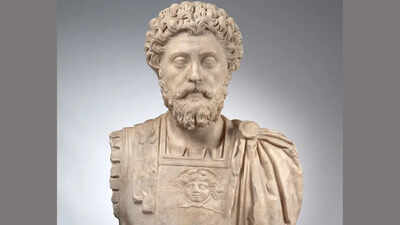
Marcus Aurelius (Photo: Wikipedia)
People often expect powerful quotes to sound sexy. They imagine big words, complex ideas and messages that immediately announce themselves as life lessons. However, some of the more memorable quotes do something quieter.
They start out as simple notes and then slowly settle into the mind hours later. This quote by Marcus Aurelius sounds somewhat similar.On the surface, he seems to be talking about death. Someone reading it might quickly assume that the message is about fear or death. Then the second half changes direction completely. Suddenly, the quote stops focusing on death and starts focusing on something much bigger. Living.This shift is interesting because most people spend more time thinking about the future than they realize. Someone says they will start traveling later. Someone plans to learn something new after life gets less busy. Someone keeps waiting for the perfect moment before taking a risk, changing direction, or doing something they really want.Life begins to turn into a set of plans.Days pass. Months pass. Sometimes years pass too.
Marcus Aurelius seems to be asking an uncomfortable question with this quote. What if the biggest problem isn’t that life eventually ends? What if the biggest problem is getting to the end and realizing you never started in the first place?This thought seems a bit worrying.Maybe because a lot of people recognize parts of themselves in it.
Today’s quote by Marcus Aurelius
“It is not death that a person should fear, but that he should fear not to begin to live.”
Understand the meaning of Marcus Aurelius’s quote
This quote seems to suggest that people should worry less about death itself and think more carefully about whether they are truly living while they have time.
Death is inevitable. Marcus Aurelius understood this fact well. As a Stoic philosopher, many of his ideas focused on accepting things that people cannot control rather than constantly fearing them.The quote seems to say that fear often makes people stay stuck. People postpone decisions because they are worried about failure. They avoid opportunities because uncertainty makes them uncomfortable. They stay within a routine that feels safe because change creates anxiety.Gradually, life can become something that people observe rather than experience.Marcus Aurelius seems to question this custom. Existence and living are not necessarily the same thing. A person can move through a routine every day without feeling connected to anything meaningful. A person can be so focused on avoiding mistakes that they also avoid experiences.This seems to be the deeper idea hidden beneath the words.The citation does not encourage reckless behavior. It seems to encourage awareness. There is a difference.
Why do people often keep waiting for the right moment?
Many individuals live with the strange assumption that life will eventually become orderly enough for happiness to come naturally. People imagine a future point where responsibilities become smaller and everything suddenly becomes clear.Someone says that they will enjoy life after getting a promotion.
Someone says that they will travel after saving enough money. Someone promises himself that he will begin to realize his dream as soon as circumstances improve.The problem is that life is rarely perfectly arranged.New responsibilities replace old responsibilities. New fears emerge. Different problems replace the previous ones. Waiting itself slowly becomes a habit without people noticing it.Perhaps this is why Marcus Aurelius’s words are still relevant centuries later.
Humans continue to behave in remarkably similar ways even though they live in very different worlds.People still put off important things. People still assume that there will always be more time. Sometimes there is. Sometimes there isn’t.
Why can comfort so quietly become a trap?
Comfort is not usually seen as something serious. Most people naturally move toward situations that seem stable and predictable. Security creates reassurance, and there is nothing unusual about wanting that.However, convenience sometimes causes unexpected problems.People sometimes become attached to routines that no longer excite them simply because familiarity seems easier than uncertainty. The job may seem unfulfilling, but a change in direction feels scary. Someone may have interests they want to explore, but keep putting them off because trying something unfamiliar creates a risk.Over time, the routine can slowly become automatic. The days start to look alike.
Weeks start to blend.People continue to function normally, but excitement and curiosity sometimes begin to disappear in small ways.Marcus Aurelius seems to warn against this serene form of existence. The quote almost asks readers whether they are living intentionally or simply moving through familiar patterns because they feel safe.This question may be asked differently depending on where someone is in life.
Looking at Marcus Aurelius outside of philosophy books
Marcus Aurelius was not just a philosopher detached from ordinary life. He was also a Roman emperor responsible for political decisions, military campaigns, and leadership during difficult periods.These details make his words even more interesting.People sometimes imagine philosophers as individuals disconnected from practical reality. Marcus Aurelius lived with enormous responsibilities and constant pressure.
His ideas about life developed as he dealt with real problems rather than abstract situations.Many of his ideas later appeared in his work Meditations. The writings were not originally intended for a general audience. They were more like personal thoughts and written reminders to himself.This perhaps explains why many of his ideas seem surprisingly straightforward. They don’t sound like speeches. It often feels like they are someone trying to make sense of life in private.Sometimes readers connect strongly with this honesty.
Why is fear often disguised as practicality?
One of the interesting things about fear is that it doesn’t always look like fear.Sometimes it feels like waiting. Sometimes it feels like overthinking. Sometimes it seems responsible.People often tell themselves that they are simply being practical while avoiding something that really matters to them. Someone delays making a decision because they want more certainty.
Someone avoids trying something because the timing doesn’t seem ideal.The explanations often seem reasonable.The hard part is recognizing when caution quietly turns into avoidance.Marcus Aurelius seems to indicate this possibility. Fear itself does not always come suddenly. Sometimes it settles into routine and convinces people to stay exactly where they already are.Years later, people sometimes realize that they spent an inordinate amount of time preparing to live instead of living.
Why the quote is still relevant today
Modern life creates endless distractions and constant movement. People stay busy almost constantly. Schedules get crowded. Notifications arrive every few minutes. Responsibilities compete for attention all day long.For this reason, many people begin to believe that activity automatically means achievement.The two things are not necessarily identical.Someone can stay busy while feeling disconnected from the things that actually matter to them.
Anyone can achieve goals and still wonder if something is missing beneath the accomplishments themselves.Marcus Aurelius’s words seem to ask readers to stop and think about this difference. Life may not be about surviving responsibilities or reaching future milestones. It may also include attending to experiences, relationships, and moments that create meaning while time still exists.
Other famous sayings by Marcus Aurelius
- “You have power over your mind, not over external events.”
- “The happiness of your life depends on the quality of your thoughts.”
- “Waste no more time arguing about what a good man should be. Be one.”
- “Very little is needed to achieve a happy life.”
- “Focus on the beauty of life, see the stars, and see yourself running with it.”
Why do these words continue to stick with readers?
Some quotes become memorable because they create motivation. Others stay because they ask uncomfortable questions that people can’t easily ignore.This person probably belongs to the second category.Most people do not fear death every day. They fear smaller things. Failure, rejection, change, uncertainty, looking foolish and making mistakes. These fears often seem normal and harmless while they’re happening.However, Marcus Aurelius may have been noticing something that many people overlook.Sometimes the risk is not getting to the end. Sometimes the risk is spending years waiting to get started.