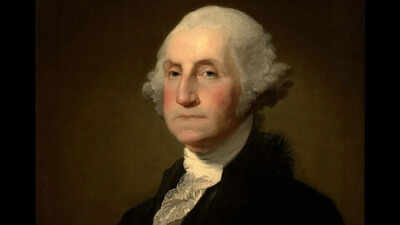
George Washington (Photo: Wikipedia)
Some of the advice still stands because it sounds great and exciting. There are other tips that persist because people keep encountering them in real life. This quote associated with George Washington seems closer to the second type.
He doesn’t try to convince anyone with complicated language. He’s simply saying something that many people eventually figure out for themselves, sometimes after a few mistakes, sometimes after years of experience.When people are young, friendships often seem simple. Conversations start quickly. Confidence emerges naturally. Someone shares the same interests as you, sits next to you at school, laughs at the same jokes, and suddenly a friendship is formed almost effortlessly.
Life at this stage can seem refreshingly uncomplicated.Things are gradually changing.As people get older, relationships often become more layered. Individuals move in and out of life. Some remain nearby for years and then disappear unexpectedly. Others arrive quietly and remain present during moments when support really matters. Many people realize that being surrounded by others and truly knowing others are two very different experiences.
Here George Washington’s words begin to sound less like ancient historical advice and more like something people continue to learn even now.
Quote of the day by George Washington
“Be courteous to all, but intimate to a few, and let those few be well tested before you give them your confidence.”
What is the meaning behind George Washington’s quote?
The quote seems to be about the balance between openness and caution. George Washington is not proposing to doubt everyone. It discourages people from excluding others from their lives. In fact, the first part of the quote moves in the opposite direction.It starts with a compliment.These details seem important because a compliment says something about character. Treating people with respect does not require complete trust. Kindness does not require emotional closeness. One person can be polite, considerate, and warm without giving another person immediate access to their deepest thoughts or their complete trust.The second half moves into more cautious territory. Washington says people should become intimate with a small number of individuals.
The wording seems old-fashioned now, although the idea itself remains familiar.Most people meet hundreds or even thousands of individuals during their lives. Some become colleagues. Some become regular friends. Some remain a part of small moments and then slowly disappear.Very few people become people whom someone can call in difficult times.Very few of them become reliable individuals with fears, doubts and important decisions.Washington seems to realize something that many people ultimately realize through experience rather than instruction.Trust and friendliness are not the same things.
Life has a strange way of teaching this lesson
People rarely learn the value of trust from books alone. Life usually deals with this lesson personally.One person remembers believing someone else completely, only to later discover that the promises meant very little. Another person recalls sharing his concerns with someone who later dealt with those concerns casually.
Small disappointments happen to almost everyone at some point.The interesting part is that these moments don’t always look exciting while they’re happening.Sometimes a promise is forgotten. Sometimes the contradiction is repeated.Sometimes it is discovered that words and actions quietly move in different directions.People often remember those experiences because they change the way relationships are viewed afterwards.A person who was once trusting may quickly become more committed. A person who focuses primarily on words may begin to pay more attention to behavior.Time starts to become more important. Patterns start to become more important.Perhaps this is what George Washington meant when he spoke of allowing people to “be well judged.”
Trust usually reveals itself through ordinary moments
Movies often create the impression that loyalty is demonstrated through dramatic events. There is usually a huge scene where someone makes a sacrifice or gives an emotional speech.
Real life often behaves differently.Trust seems to grow in smaller, quieter ways.A friend remembers a conversation I had months ago and asks about it later. Someone signs up without needing a reason. Someone shows up during difficult periods without delivering.At first, these things may not seem important. Then the years pass.Looking back, people often realize that those ordinary moments held more meaning than they originally noticed.The opposite can also happen.Sometimes people reveal themselves through small actions too. Excuses are becoming common. Promises slowly disappear. The effort becomes one-sided.Small things have a strange way of becoming bigger things over time.
George Washington understood the importance of governance
George Washington lived in a world where trust carried consequences beyond personal relationships. He commanded armies, overcame political uncertainty, and ultimately became a central figure in the creation of a new state.Imagine trying to make important decisions while being surrounded by different ambitions, competing interests, and constant uncertainty.Trust in those circumstances might have meant something very practical.Choosing the wrong people can affect much more than emotions. The ruling itself became important.Such experiences may have shaped Washington’s thinking. It is likely that trust has become associated not only with feelings, but also with observation and patience.People reveal themselves over time. This idea seems to sit quietly beneath the quote.
Why are these words still familiar today?
Modern life creates an unusual situation. People can constantly stay in touch. Messages arrive instantly. Social media allows interaction with hundreds of people simultaneously.However, many individuals talk about loneliness or uncertainty regarding real relationships.Most people have probably encountered something similar.
Contact lists get bigger every year. Notifications appear constantly. Letters arrive on birthdays and special occasions.Then a difficult period appears.Suddenly, the circle often becomes smaller.People remember those moments because they reveal something important. Presence and proximity do not always mean the same thing.George Washington’s advice seems surprisingly relevant, because human behavior itself seems less interested in change than technology.
Other famous quotes by George Washington
“It is better to have no excuse than to make a bad one.”“Be with men of good morals if you respect your reputation.”“Perseverance and spirit have worked wonders for all ages.”“Happiness and moral duty are inseparably linked.”“Freedom, when it begins to take root, is like a fast-growing plant.”
Final takeaway from George Washington’s quote
George Washington’s quote does not seem to encourage staying away from people. It feels more balanced than that. The message seems to be about treating others with kindness while realizing that trust has value.People enter life for different reasons. Some remain for a short time and become part of fleeting memories. Others stay long enough to reveal their true identity through actions rather than promises.Perhaps this is the quiet lesson hidden within these words.A compliment can be given freely and often takes time.