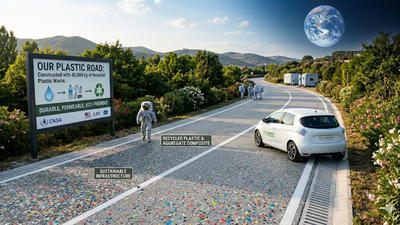
Plastic waste management in Nepal has turned out to be the country’s most pressing environmental issue. With increasing rates of plastic production and use, as well as insufficient recycling infrastructure in rapidly growing urban areas such as Pokhara and Kathmandu, the level of pollution is extremely high in Nepal.
Therefore, in order to deal with this pressing environmental issue, Nepal has begun implementing its own version of plastic waste on its roads. The idea of recycling plastic waste, such as that from pasta packages, biscuits and many others, to use as asphalt in roads is revolutionary and could help find an environmentally friendly solution to the problem of pollution and lack of quality of roads. But despite the obvious advantages, there are many long-term disadvantages that cannot be ignored.
How plastic waste methods are changing cities in Nepal
Vehicles in Pokhara now have to traverse roads built partly on plastic scraps. This project is led by Green Road Waste Management, a local NGO founded by Bimal Bastola with his partners, which believes that low-quality plastics can serve as valuable construction materials instead of being thrown away.According to the project team, about two tons of shredded plastic material is needed for every kilometer of road.
Most of the plastics used here consist of snack containers, multi-layer food packaging and other materials that cannot be easily recycled using current technology.Pastola explained the reason for adopting this technology, saying:“Plastic road can use even low-quality plastics. We saw the potential of these plastics and thought there was scope for them to be used as raw materials and an alternative to bitumen in road construction.” The shredded plastics are first melted down before being painted on road rubble. Bitumen is then added to produce the asphalt mixture. According to project workers, these roads will last longer and will be more resistant to water damage.
Nepal’s growing urban plastic waste crisis
Nepal has been facing solid waste management problems for many years. Rapid urbanization, increased consumption and inadequate recycling have all contributed to plastic pollution.For example, according to an article published by the United Nations Development Program in Nepal, urban areas in Nepal dispose of hundreds of tons of plastic waste daily. It has been noted that this poses a risk to the ecosystem and even to public health and water systems.Another study published by the World Bank indicates that urban areas in Nepal contribute about 5,000 tons of solid waste daily. Plastic is one of the most common forms of waste found in urban areas.It’s easy to see people posting about littering and inadequate waste management online. They noted that plastic waste can be seen on roadsides, rivers and even mountain trails outside urban centres.
Can plastic roads really help make cities cleaner?
Advocates of this method believe it can solve Nepal’s dual problem of road repair and plastic waste. A research titled “Use of plastic waste in road construction”, conducted by Akindra Budha, a researcher from Nepal College of Information Technology, described this practice as:“It’s low-hanging fruit that will help solve two problems at once: creating durable roads and managing the plastic waste problem.”Many countries, such as India, Bangladesh, and even the Netherlands, have already begun experiments using the same technology. In India alone, reports indicate that several thousand kilometers of road construction have been carried out using this technology.However, environmental experts stress that a lot of research needs to be done on this issue. Valerie Hickey of the World Bank’s climate change department said scientists should study emissions during production, the risks of microplastic releases, and the process of road degradation.However, the government of Nepal continues to implement this practice and plans to test it in Kathmandu as well.
future Building sustainable roads In Nepal
Nepal’s experience trying to use plastics to build roads is just another step towards rethinking the use of waste. Although this innovation may not necessarily solve all the issues related to plastic pollution in Nepal, it shows how waste can be effectively used to build new elements of infrastructure.In addition, the Nepali authorities’ attempt to utilize their plastic waste and build environmentally friendly infrastructure has been received positively by the public, who hope that the streets in Nepal will soon become cleaner. Once the project proves successful, it may set a good example for other developing countries facing plastic pollution and urban waste problems.