

Aboard the International Space Station (ISS), Expedition 74 crew members prepare for a pivotal spacewalk while advancing microgravity research. NASA flight engineers Jessica Meier and Chris Williams prepared spacesuits in the Quest airlock, cleaned cooling loops and reviewed procedures for the March 18 extravehicular activity (EVA).
They will install array modifications and route cables for the seventh solar array, enhancing the ISS’s power capability. Meanwhile, ESA’s Jack Hathaway and Sophie Adinot tested EchoFinder-2, an AI-augmented reality ultrasound device in the Columbus module, autonomously scanning organs to reduce reliance on Earth for remote missions. NASA also reports that Roscosmos cosmonauts Sergei Kud-Sverchkov and Sergei Mikaev monitored blood vessel health using sensors, while Andrei Fedyaev maintained the oxygen generators and water systems.
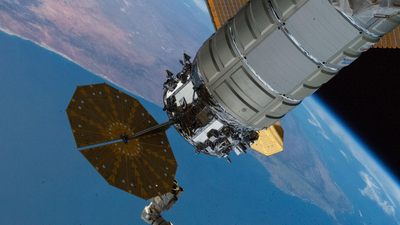
Northrop Grumman’s Cygnus XL, after delivering 11,000 pounds of cargo since September 2025, was undocked March 12 via Canadarm2 for return to the Pacific Ocean. These efforts blend conservation and science, fueling the deep space ambitions of the Chief Artemis Endeavor. Live coverage begins at 6:45 a.m. EST on all NASA platforms.
Preparations for a spacewalk On the International Space Station
NASA aerospace engineers Jessica Meir and Chris Williams are leading the upcoming spacewalk scheduled for March 18.
Inside Quest’s airlock, the duo meticulously cleaned the cooling rings on their spacesuits, refilled water components, and checked helmets to make sure everything was working flawlessly during the six-and-a-half-hour extravehicular activity (EVA). Their mission? To install a modification assembly and guide cables on the port side of the International Space Station for a future deployable solar array, the seventh such array to enhance power generation on the station.
As posted on their X account, “Meir and Williams will spend a lot of time preparing for this mission, studying every step of the process,” with an emphasis on the precision required in orbit. This spacewalk underscores the constant upgrades that keep the International Space Station running amid its aging infrastructure.
Veteran astronaut Jessica Meir, with her experience from previous EVA, collaborates seamlessly with Chris Williams, who has been acclimating to station life since November. Their teamwork in the Quest airlock not only sets up hardware, but also reviews emergency procedures, which is vital to the harsh vacuum of space. Augmented Reality and Artificial Intelligence in Space Health ChecksInnovation doesn’t just happen outside the station, it thrives inside it too.
Aerospace engineers Jack Hathaway of NASA and Sophie Adino of the European Space Agency (ESA) conducted augmented reality-guided ultrasound scans using the EchoFinder-2 instrument in the Columbus Laboratory module. They photographed each other’s abdomens and vascular systems, with artificial intelligence analyzing the data to automatically identify organs. “EchoFinder-2 opens the door to autonomous ultrasound using minimal training and low-tech hardware for space missions,” explains an ESA report on the technology, reducing reliance on ground-based experts who are crucial to future Mars missions where signal delays extend to 20 minutes.
Adeno, on her first mission since February 2026, and Hathaway, a U.S. Navy captain with more than 2,500 flight hours, took turns testing the system’s reliability in weightlessness.
Meanwhile, NASA blogs also include Roscosmos astronauts Sergei Kud-Sverchkov and Sergei Mikayev, who monitored circulatory health using blood pressure cuffs and sensors on the forehead, fingers and toes. Data sent to the laptops helps doctors track the effect of microgravity on vascular systems, from fluid shifts to potential clots. Flight engineer Andrey Fedyaev continued to operate life support, maintaining the Zvezda module’s electronic oxygen generator and purifying water tanks to protect crew supplies.
Departure of the Cygnus cargo spacecraft from the International Space Station
Concluding a six-month stay since September 18, 2025, Northrop Grumman’s Cygnus XL cargo spacecraft is scheduled to separate from docking on March 12. Filled with junk and experiments, it will be handled by Unity’s Canadarm2 robotic arm and launched for a fiery return over the South Pacific. The mission delivered more than 11,000 pounds of supplies, instruments and scientific payloads under NASA’s Commercial Resupply Services program. “Cygnus XL, operated by Northrop Grumman, is scheduled to depart the International Space Station on Thursday, March 12,” Space Coast Daily confirms, noting that live coverage begins at 6:45 a.m. EST on NASA+.Sophie Adeno will oversee Cygnus’ systems post-release, ensuring a smooth exit. This departure frees up the docking port for future missions, maintaining the ISS’s role as a launching pad for deep space ambitions.
Expedition 74 crew: pioneering spacewalk
Expedition 74, underway since December 2025, combines the expertise of NASA, ESA and Roscosmos in research in biology, physics and human physiology. From solar array upgrades powering tomorrow’s outpost to AI diagnostics paving the way for autonomous medicine, these activities are captivating global audiences.As the Trump administration looks to Project Artemis and beyond, the International Space Station remains Earth’s orbiting laboratory, where current modifications such as the introduction of solar arrays feed sustainable energy for an extended human presence in space. Watch the events live and watch history unfold 400 kilometers above us.