New Zealand’s capital Wellington has a sewage leak explained In what local officials consider an “environmental disaster,” repairs to the city’s wastewater treatment plant are likely to take months.
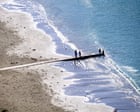
Wellington residents are advised not to enter the water, collect seafood or walk their dogs on local beaches.
On Wednesday, the lower floors of the Moa Point Wastewater Treatment Plant filled to capacity after heavy rain caused sewage to back up into a 1.8km outfall pipe that normally discharges treated wastewater into the Cook Strait. According to Wellington Water.
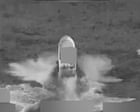
As a result, untreated sewage started flowing through A short five-metre outfall pipe into the water off Wellington’s south coast.
Wellington Water chief executive Pat Dougherty Said About 70 million liters of raw sewage leaked into surrounding waters, New Zealand’s 1News reported.
Dougherty said he was “at a loss” to explain why the outfall pipe failed: “The outfall pipeline has more capacity than the treatment plant, which is designed to work no matter what happens.”
Wellington Mayor Andrew Little on Thursday explained The leak was a “catastrophic failure,” he says: “It’s a sewage plant that processes sewage for a big city, and it’s completely failed, it’s completely shut down.”
On Facebook update On Friday morning, Wellington Water said it had partially restored operation of the long outfall pipe and screening system, which removes sanitary pads and wet wipes from sewage.
The company is currently able to “pump 900 liters of sewage per second through the long outfall pipe”, saying: “This is more sewage on an average day, but during peak flows throughout the day we have to use the short outfall pipe.”
“Releasing the screened sewage to the sea through a 1.8km long outfall pipe will enable greater dilution of sewage in the Cook Strait,” the company said: “This will reduce the volume of untreated wastewater flowing around the coastline – although the risk to public health remains.”
It continued: “We will continue to work over the weekend to minimize the use of the short outfall pipe to maximize flow through the long outfall pipe. The situation is complex and we cannot provide a time frame for when this will be at this stage.”
Local residents, including owners of dive schools operating nearby, expressed concern about the impact of the spill.
Dave Drane, owner of Dive Wellington, Said Otago Daily Times: “It affects us financially in a lot of ways. Also the bad publicity that comes from it, people thinking: ‘Well, I’m not going to learn to dive in Wellington, but also the bookings we have to cancel.’ 30 students have already had to cancel planned dives in a nearby reserve.
A local resident, Angus, expressed Hesitant to surf, telling RNZ: “I didn’t want to go there because I looked unfamiliar… toilet paper or jellyfish, so I didn’t really want to go in any of that.”
Commenting On the leak, New Zealand’s Department of Conservation said it was “very concerned” with its chief marine science adviser, Shane Jiang: “Raw sewage and sewage entering the marine environment poses an immediate and serious threat to a range of ecological functions and species, but I think the primary concern is around public health authorities.”
Gianz said the department is working with local officials to determine the extent of the sewage’s spread.