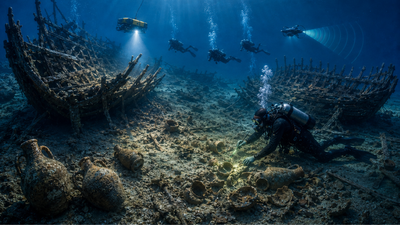
For centuries, ships carrying merchants, soldiers, and explorers passed through the narrow waters connecting the Atlantic Ocean to the Mediterranean Sea. Many never got out. Now, archaeologists working in southern Spain have discovered what may be one of the largest underwater archaeological assemblages in the western Mediterranean: a massive ship graveyard hidden beneath the waters of the Bay of Gibraltar.
During a three-year investigation known as Project Hercules, researchers documented more than 150 underwater archaeological sites, most of them shipwrecks dating from ancient civilizations to the modern era. Some shipwrecks are believed to be more than 2,400 years old, buried under layers of sand on the sea floor.
A huge marine cemetery under the waters of Gibraltar
The discovery was made in the Bay of Gibraltar, also known as Algeciras Bay, a strategically important body of water located on the northern edge of the Strait of Gibraltar.
The area has served as one of the world’s busiest sea lanes for thousands of years, connecting Europe, Africa and the wider Mediterranean world.But the same waters that made the Gulf valuable for trade and military operations also made it dangerous. Strong currents, sudden storms, rocky coastlines, and centuries of naval warfare have caused countless ships to sink in the area. Archaeologists say that the seabed now contains layers of maritime history extending across multiple civilizations and historical periods.
The discoveries came through the Heracles Project, a major underwater archeology initiative led by researchers from the University of Cádiz and the University of Granada. Before the project began in 2019, only four underwater archaeological sites had been officially documented in the area.Over the next three years, researchers used sonar mapping, marine geophysics, underwater photogrammetry, and divers’ surveys to identify more than 150 archaeological sites hidden beneath the bay.
The team also relied on historical marine records and interviews with local fishermen and divers familiar with the waters.According to archaeologist Felipe Cerezo Andreu of the University of Cadiz, the discoveries have dramatically changed the understanding of the region’s underwater heritage.
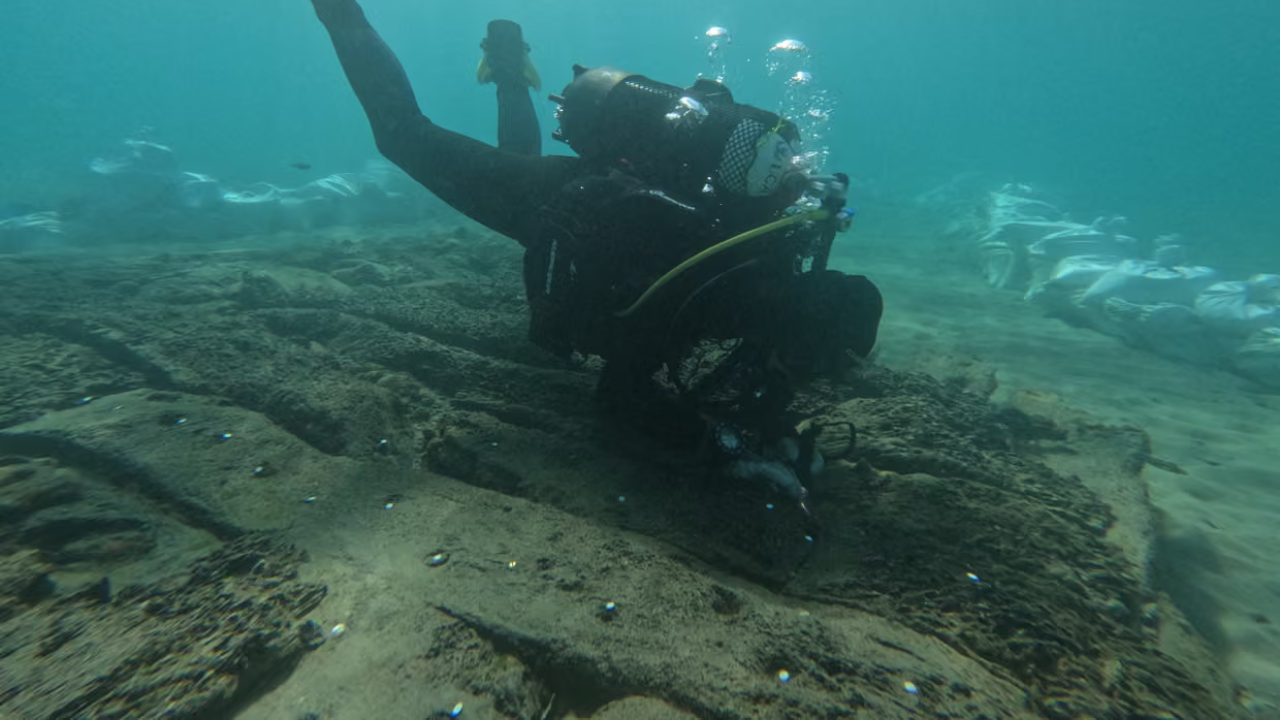
ancient roman Phoenician and war-era shipwrecks have been found beneath the sand
Shipwrecks span multiple eras of Mediterranean history. The researchers identified ancient Phoenician and Punic ships, Roman-era ships, medieval shipwrecks, and military ships dating back to the 18th, 19th, and 20th centuries.Many ancient shipwrecks remain partially buried under layers of sand, which has helped preserve parts of their structure for centuries. Some of the finds date back to the fifth century BC, making them among the oldest submerged archaeological remains documented in the region.One of the most important finds was the remains of Puente Mayorga IV, a Spanish gunboat from the late 18th century said to have been used in attacks against British shipping during periods of conflict around Gibraltar.
The importance of discovery
Researchers say the shipwrecks provide a rare opportunity to study thousands of years of marine activity at one concentrated site. The Bay of Gibraltar has long been shaped by trade, migration, wars and empire-building involving the Phoenicians, Romans, Moors, Spanish and Britons.Newly documented shipwrecks may help historians better understand ancient trade routes, shipbuilding methods, naval warfare, and how Mediterranean societies interacted over the centuries.
Some shipwrecks may also preserve cargo, weapons, and everyday items lost during voyages long ago.Scientists believe the discoveries could reshape understanding of how important the Gibraltar Passage was to ancient and medieval maritime networks.
Digital technology helps preserve underwater sites
To help protect the fragile remains, researchers have created digital reconstructions, virtual models and 360-degree videos of several shipwrecks. These tools allow the public to explore underwater sites virtually without being disturbed.Archaeologists say digital preservation is becoming increasingly important because many underwater sites face threats from looting, pollution, industrial activity and changing ocean conditions. By documenting shipwrecks in detail, researchers hope to preserve their historical value even if the physical remains deteriorate over time.The team described the shipwrecks as “undersea museums”, arguing that protecting them meant preserving pages of human history hidden underwater for centuries.