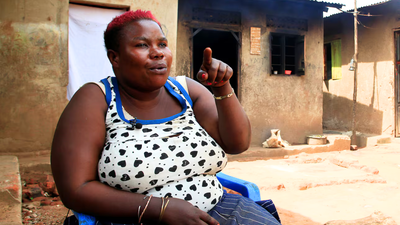
When Maryam Nabatanzi from Uganda gave birth to her first set of twins at just 13 years old, she had no idea that her life would become one of the most extraordinary stories in the history of modern medicine.
Over the next two decades, she gave birth to 44 children through an impressive series of multiple pregnancies, including six sets of twins, four sets of triplets, and three sets of quadruplets. Her story received global attention, with many media outlets calling her the most fertile woman in the world. However, behind these staggering numbers lies a deeply human story of child marriage, a rare medical condition, poverty and a mother’s determination to raise one of the largest documented families in the world.
How the world’s most fertile woman became a mother of 44 children
Born in 1980 in Uganda, Maryam Nabatanzi was married off at the age of 12 in what was widely reported as a child marriage. A year later, she became a mother after giving birth to her first set of twins. Instead of spending her teenage years in school, she found herself taking care of children while still growing up herself.Maryam revealed in interviews with Reuters that she had once hoped to have only six children. She wanted to rebuild the family she lost after her mother abandoned her, and according to her account, five of her older siblings later died after being poisoned by their stepmother.
Reflecting on her early life, she said: “I started taking on adult responsibilities at an early stage. I think I haven’t been this happy since I was born.
“Over the course of nearly 25 years, Maryam gave birth 38 times, giving birth to 44 children due to repeated multiple births. Her pregnancies included six sets of twins, four sets of triplets, three sets of quadruplets, and singleton births. Tragically, six of her children later died, leaving her to raise 38 surviving children.The extraordinary frequency of multiple births made her case one of the best documented in modern medicine. Contrary to many historical claims about exceptionally large families, Mary’s pregnancies have been widely reported and medically documented, making her story unique among contemporary cases.
The rare medical condition behind multiple births
Doctors later diagnosed Maryam with hyperovulation, a condition in which the ovary releases several eggs during a single menstrual cycle instead of the usual number of eggs.
When multiple eggs are fertilized, the chances of having twins, triplets or quadruplets increase significantly.According to Dr. Charles Kiggundu, a gynecologist at Mulago National Specialist Hospital in Kampala, Maryam’s unusually large ovaries prompted the release of multiple eggs frequently, making consecutive multiple pregnancies much more likely than the average woman. Although hyperovulation itself is common, specialists say that the condition, which involves multiple high-level recurrent births over many years, is extremely rare.Medical experts also point out that genetics play an important role in hyperovulation, which is why fraternal twins often run in families. However, repeat pregnancies resulting in triplets or quadruplets are still very uncommon.
Why didn’t doctors stop the pregnancy early?
After several pregnancies, Maryam sought medical help because she no longer wanted any more children. However, according to her later interviews, doctors initially advised against using certain birth control methods due to concerns about complications associated with enlarged ovaries.As a result, she continued the pregnancy until her final delivery. After she gave birth to her last child, doctors performed a tubal ligation, a surgical procedure that permanently prevents pregnancy, thus ending one of the most notable reproductive history ever documented.
Raising dozens of children alone
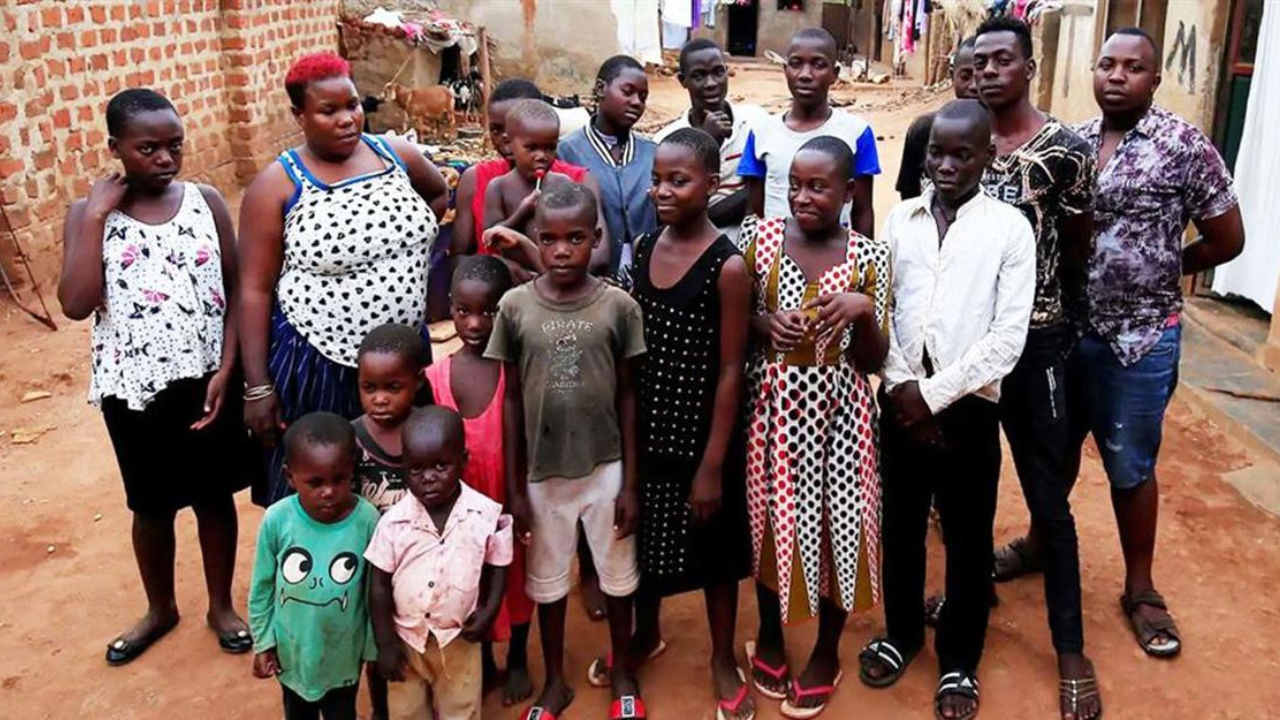
Life became more difficult when Maryam’s husband reportedly abandoned the family in 2015. Left to care for dozens of children on her own, Maryam did whatever work she could find, including farming, sewing, hairdressing, selling herbal medicines and decorating events.In an interview with Reuters, Maryam described the constant struggle to support such a large family: “I spent all my time taking care of my children and working to earn some money. I grew up crying, my husband put me through a lot of suffering.”Her eldest son, Ivan Kibuka, described the family’s daily reality: “My mother is exhausted, and work is crushing her. We help where we can, like cooking and washing, but she still bears the full burden of the family.”Reports indicate that the family sometimes needed about 25 kilograms of maize flour per day to prepare enough food for everyone, while meat and fish were sometimes considered luxuries due to their cost.
Life inside one of the largest families in the world
At various points, Maryam’s family included more than 60 people, including children, grandchildren, and daughters-in-law. The family lives in several modest brick houses with corrugated iron roofs, where the older siblings help cook, clean, and care for the younger children.Despite the enormous responsibilities, Maryam repeatedly stressed the importance of education. Whenever possible, she prioritized sending her children to school, believing that education provided them with opportunities she never had before.Maryam Nabatanzi’s life is much more than just giving birth to 44 children. Her story highlights the lasting effects of child marriage, the importance of maternal health care, and the challenges of raising a large family in poverty. While the world may remember her for an extraordinary medical rarity, her greatest accomplishment was raising dozens of children despite enormous financial and personal hardship.