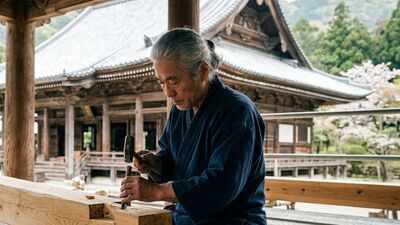
Japan does not use modern nails to repair centuries-old temples. Instead, master craftsmen rely on ancient woodworking technology (AI image)
Centuries-old temples in Japan are still repaired without the use of nails, screws or modern metal brackets. In Japan, master carpenters continue to follow an ancient woodworking technique that has been passed down through generations for more than 1,000 years.The method, called kigomi, involves meticulously carving wooden joints so that they fit together like puzzle pieces. Beams, columns, and other parts of the structure are also shaped to lock together without the need for metal fasteners. This traditional technique is still used to restore some of Japan’s oldest temples and shrines. These structures have survived earthquakes, hurricanes, and variable weather for centuries.The craftsmen who carry out the work are known as miyadaiko, or temple carpenters.
Why does Japan avoid nails?
The continued use of wooden joints is not just about preserving tradition. The method also has practical advantages. Japan faces humid summers, heavy rains, and frequent typhoons and earthquakes. Metal nails rust over time when moisture gets into the wood, weakening the joints and eventually damaging the wood. However, with wood joints, the wood expands in wet weather and contracts when the weather is dry.
This does not put much stress on the structure.They also help buildings resist earthquakes, as unlike solid metal connections, traditional wood connections move slightly during seismic activity. Flexibility absorbs vibrations and spreads them through the structure, reducing the risk of serious damage during earthquakes. This is one of the reasons why many historic wooden temples remain standing after repeated earthquakes.
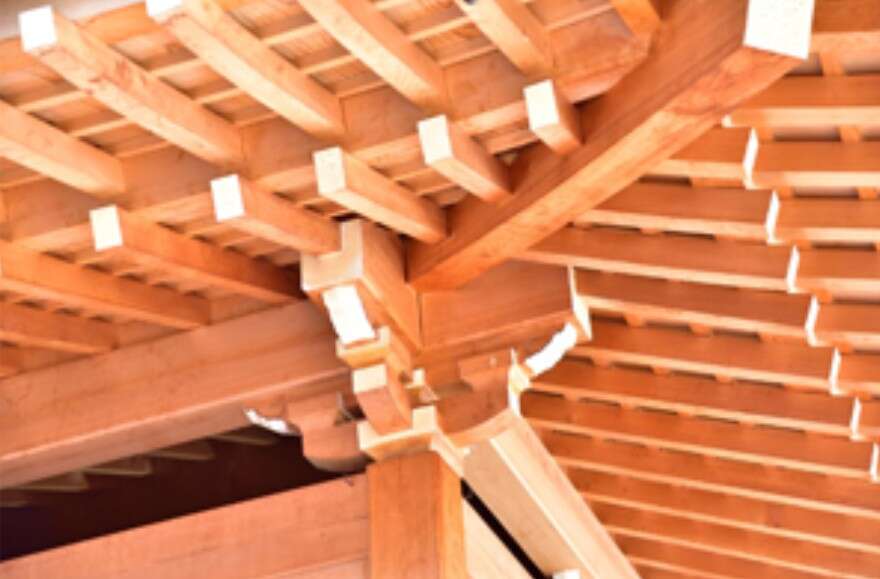
Kigomi, a method of attaching wood without the use of nails or metal fittings
Hand carved
Making these joints requires years of skill and precision. Instead of cutting identical pieces of wood, Miyadaiko carefully studies each piece of wood. They examine the wood’s grain, natural curves and strength before deciding where it should be used in a building.Different joints also serve different purposes. For example, Tsugete connects two pieces of wood to create longer beams or columns. Meanwhile, Shiguchi joints hold beams and columns together at different angles to form the building’s frame, explains Japan’s Foreign Ministry.Each joint must also fit perfectly, because even a small gap can weaken the structure. Most of these joints remain hidden inside the building, even though they are essential to its strength.
A 1,400-year-old tradition
Japan has more than 150,000 temples and shrines, many of which were built using traditional wooden construction methods. Some of the country’s oldest temple carpenters trace their origins to the construction of Shitenno-ji Temple, founded in 593 AD.Obtaining a miyadaiko requires years of professional training. Carpenters pass on their knowledge to younger craftsmen. They teach them carpentry skills as well as how to understand the natural qualities of different types of wood.

Yusuhara Wooden Bridge Museum
The craft is also appreciated for its sustainable approach. Because wooden structures can often be disassembled, repaired, and reassembled without damaging the timber, individual components can be replaced without rebuilding the entire structure. This helps extend the life of buildings and also reduces waste.