
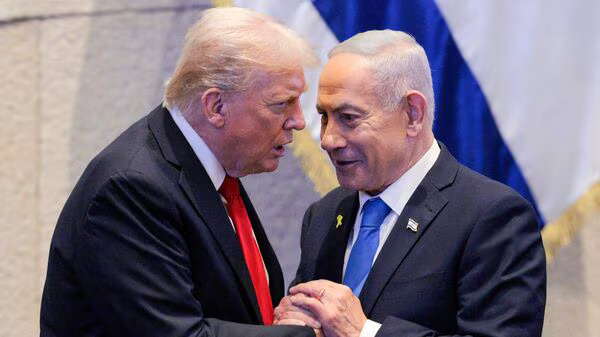
Israel’s Prime Minister Benjamin Netanyahu has accepted an invitation from former US President Donald Trump to join a proposed “Board of Peace” focused on the Gaza conflict, according to people familiar with the development. The move comes at a time of intense international attention on the war in Gaza and ongoing diplomatic efforts to shape a post-war framework for the region.
Trump, who has positioned himself as a central figure in global peace initiatives during his current political campaign, has been reaching out to several world leaders to form what he describes as a consultative body aimed at conflict resolution. Netanyahu’s acceptance places the Israeli leader among the first prominent figures linked to the initiative.
The proposed Board of Peace is expected to focus on ceasefire pathways, humanitarian access, regional security arrangements and long-term political solutions related to Gaza. While details about its structure, authority and timeline remain unclear, sources say the group is envisioned as an advisory platform rather than a formal negotiating body.
Netanyahu’s decision to join the initiative comes amid mounting pressure on Israel over the humanitarian situation in Gaza. The war, triggered by the October 7 attacks, has led to widespread destruction, large-scale displacement and a growing death toll, drawing criticism from several governments and international organizations. Israel maintains that its military operations are aimed at dismantling militant infrastructure and ensuring long-term security.
Trump and Netanyahu share a long political relationship dating back to Trump’s first term in office, during which the United States recognized Jerusalem as Israel’s capital and brokered the Abraham Accords. Observers say this history likely played a role in Netanyahu’s willingness to associate himself with Trump’s latest diplomatic proposal.
In Israel, reactions to the announcement have been mixed. Supporters of the prime minister argue that participation in any international peace-focused forum helps Israel maintain influence over discussions that could shape Gaza’s future. Critics, however, question the credibility and timing of a Trump-led initiative, particularly given the lack of clarity about its mandate and global backing.
Palestinian officials have so far not formally responded to the development. In the past, Palestinian leadership has expressed skepticism toward initiatives perceived as being heavily tilted toward Israeli or US political interests. Analysts say Palestinian participation, or the lack of it, will be a key factor in determining whether the Board of Peace gains any real relevance.
Internationally, diplomatic circles are watching closely. Some Western officials see the move as a parallel track to existing efforts led by the United States, Egypt, Qatar and the United Nations to secure pauses in fighting and expand humanitarian aid. Others caution that overlapping initiatives could complicate already fragile negotiations.
The announcement also comes as Netanyahu faces legal and political challenges at home and abroad, including scrutiny from international legal bodies over Israel’s conduct in Gaza. Joining a peace-oriented forum could help project an image of diplomatic engagement at a time when Israel is under intense global focus.
Trump has not yet released an official list of other potential members of the Board of Peace, but aides have indicated that invitations have been extended to leaders and former leaders from multiple regions. Whether the initiative evolves into a sustained diplomatic effort or remains a symbolic gesture will likely depend on who ultimately joins and how actively the group engages with existing peace processes.
For now, Netanyahu’s acceptance underscores the continued intersection of global politics, personal diplomacy and the search for a path forward in Gaza, even as fighting on the ground shows little sign of fully subsiding.
Get the latest world news with verified facts, real-time updates and global reactions from trusted international sources. Stay informed on geopolitics, diplomacy, conflicts and major global developments shaping the world today.