

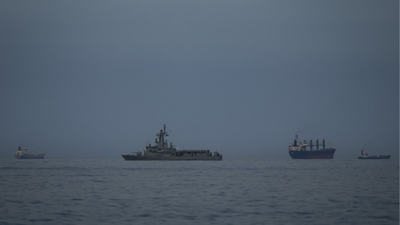
Iran is considering allowing a limited number of oil tankers to pass through the strategic Strait of Hormuz, on the condition that oil shipments are traded in Chinese yuan, CNN reported, citing an Iranian official.The source told the outlet that Tehran is working on a new plan to manage the flow of tankers through the main sea lane amid escalating tensions in the region.
NATO ship struck by Iran in Hormuz? Projectile explosion “burns” the oil tanker
Aside from sanctioned Russian crude, which is often traded in rubles or yuan, most global oil transactions are still priced in dollars.China has been trying for years to expand the use of the yuan in global oil trade, including attempts to convince Saudi Arabia to accept the Chinese currency to buy crude.
However, the US dollar remains the dominant global reserve currency, and the yuan is still not widely accepted in international markets.Concerns about potential disruptions in the Strait of Hormuz, one of the world’s most important oil transit routes, pushed global crude oil prices to their highest levels since July 2022, shortly after Russia’s invasion of Ukraine.Tensions escalated after US President Donald Trump announced that US forces had struck Iran’s main oil export center on Kharg Island.
Trump said in a post on the Truth Social website: “Moments ago, at my direction, United States Central Command carried out one of the most powerful air strikes in the history of the Middle East, completely destroying every military target on Iran’s crown jewel, Kharg Island.”However, the US President said the operation deliberately avoided Iran’s oil infrastructure on the island, which handles nearly 90% of the country’s crude oil exports.Trump also warned that the United States could target oil facilities if Iran continues to obstruct shipping through the Strait of Hormuz.Earlier, the United Nations warned that restrictions on shipping through the narrow waterway could have serious global consequences.“When ships stop moving through this strait, the consequences move quickly,” said Tom Fletcher, UN Under-Secretary-General for Humanitarian Affairs.He added: “Food, medicine, fertilizers and other supplies have become more difficult and more expensive to transport.”The Strait of Hormuz is one of the world’s most important sea lanes for oil and gas trade. Any disruption to shipping through the corridor raises concerns among major energy importing countries, including India, which relies heavily on crude oil imports that pass through the route.