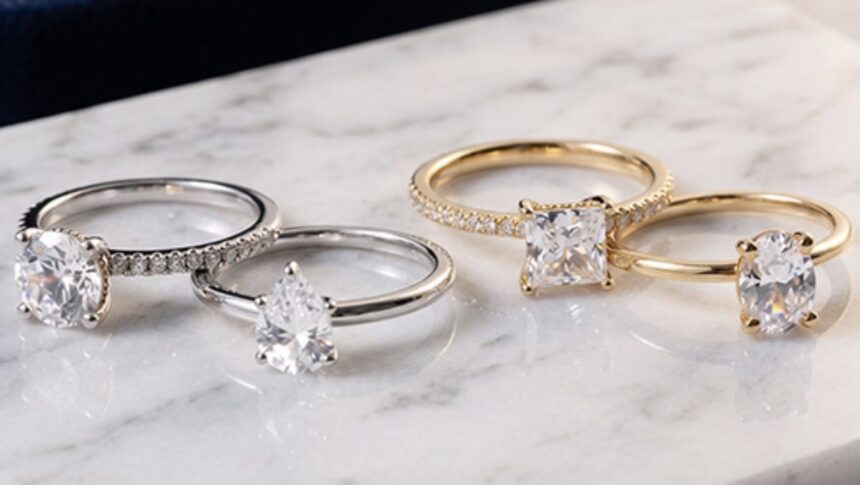

For younger couples, conversations about rings may change. The decision is often less focused on tradition alone and shaped more by personal style, budget, and what seems meaningful to the relationship.
Buyers often ask more practical questions, including where the stone comes from, whether the price is reasonable, and how to weigh size, quality and budget.
There is also a growing awareness that lab-grown options exist, and that they can look no different from extracted stones.
This is where the lab-grown Rare Carat range may be of relevance to some buyers.
Rare Carat bills itself as one of the major online diamond retailers in the US, and its company page indicates it has ranked number one on Trustpilot.
It also says it acts as the merchant of record Engagement rings Handcrafted in New York or New Jersey, it provides access to GIA graduate gemologists who guide buyers without the pressure of a commission.
Ethics can be part of the ring buying conversation
For many younger buyers, ethics aren’t something you think about later, they come up at the beginning.
The ring still carries the same meaning, while more buyers are also thinking about where the stone comes from and how it was made.
That’s part of the reason why lab-grown options on Rare Carat are getting more attention. It gives buyers a way to avoid the impact associated with traditional mining without giving away the look or wear of the ring over time.
On its education page, Rare Carat also points out that lab-grown stones are generally viewed as a more responsible option since they are sourced more responsibly and don’t involve the same kind of environmental disruption as mining.
This perspective shows up in how people shop today. It’s not just about how the ring looks, it’s also about whether or not the choice behind it is right.
Get more flexibility outside of your budget
For a long time, buying diamonds seemed like a balancing act. If you expand, you have to give up something else, usually clarity or staying within budget.
The lab-grown Rare Carat variety changes that a bit. The brand notes on its site that lab-grown stones can be approximately 60 to 70% lighter than similar mined stones.
Each diamond (whether natural or lab-grown) is backed by an IGI or GIA certification, as well as an in-house cut registration, price and review from a wide range of gemologists, according to the company.
This can change what the process looks like. Buyers may have more room to thoughtfully compare options before deciding which trade-offs are most important.
For someone looking at lab-grown diamonds, the low price isn’t the only thing that stands out. This usually means having more flexibility, perhaps for a better cut, a different setup, or even keeping part of the budget aside for something else.
Rare Carat also includes a 100% money back guarantee and free 30-day returns, so there’s a little breathing room in the decision as well.
Same chemistry, different origin
Lots of hesitation around Lab grown diamonds It usually comes down to one thing, which is whether it’s “less real” in some way.
This idea doesn’t really hold up anymore.
Lab-grown and mined diamonds are made from the same material and exhibit the same physical and optical properties. The difference is simply how they are formed and how they are priced, not how they look or perform over time.

That’s why most buyers don’t stop at superficial assumptions. They tend to look at certifications, grades, and actual stone details before making a decision.
Rare Carat supports this process with IGI and GIA certified options across both lab grown and natural diamonds, so the comparison remains consistent either way.
At this point, the decision usually changes. It’s less about “real vs. not real” and more about what suits budget and preference and what seems right overall.
The engagement ring just got more personal
The way people deal with suggestion rings isn’t the same anymore. It’s not just about sticking with what’s always been done, but more about coming up with something that actually feels right for the two people involved.
Obviously the ring is still important. But the thinking behind it is just as important now.
Rare Carat may suit this type of setup because buyers can compare several options rather than feeling tied to one path.
You can take a look at natural and lab-made options without turning into two completely different shopping processes.
On its engagement ring page, Rare Carat lists the basics — GIA and IGI certified stones and a range of metals — and if you’re not sure, you can always reach out to one of the company’s in-house gemologists.
So you’re not left guessing your way through it. At the same time, there doesn’t seem to be anyone guiding every move either.
You can compare some options, move away from them, come back to them later, and discover them at your own pace.
With Trustpilot familiarity, certified reports, and the support of non-commissioned gemologists, the process may seem easier for buyers who prefer additional information and guidance while shopping.

Trust is true luxury
What people expect from a “luxury” purchase doesn’t look the same anymore. It’s not just about exclusivity, it’s also about knowing what you’re actually buying and who’s behind it.
This shows up in small but important ways. Buyers are looking for clear certification, real policies, and some feel that the advice they receive isn’t there just to drive a sale.
Nader Karat leans towards this aspect of the experience. The company says it verifies the stones in-house in New York, and that its engagement rings are handcrafted with attention to detail.
Also included is a lifetime manufacturer’s warranty on all rings and jewelry sold, with free insured shipping and free resizing within the first year for most rings (30 days for eternal styles).
On its About page, Rare Carat notes that customers buy directly through the brand, with Rare Carat acting as the merchant of record. For an online purchase at this level, this type of structure tends to matter more than people expect.
By the time everything is considered, the appeal is not limited to the way the ring looks. It’s the feeling that the process – from browsing to delivery – feels covered.
conclusion
Younger buyers are not shying away from what the ring represents. If anything, they’re looking at him more closely now.
The meaning has not changed. It’s just things like value, where diamond It comes from, and how you feel the whole process as you go through it. These details matter more than they used to.
This is where lab-grown diamonds found their place. For many couples, this is not a fallback option, but simply the most logical option.
Rare Carat supports this shift with Trustpilot recognition, certified stones, access to GIA-trained gemologists, and buyer protection that gives people some space to think things through.
For buyers looking to compare options without making the process seem too complicated, Select Labs may provide a straightforward place to start.