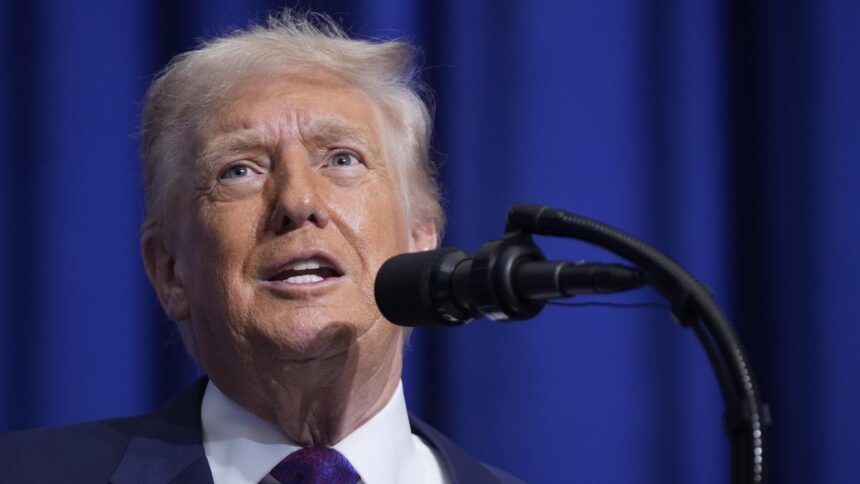
A significant majority of Indian Americans disapprove of US President Donald Trump’s first-year job performance, according to new survey results. Indian Americans during the turmoilreleased Thursday (Feb. 19, 2026) by the Carnegie Endowment for International Peace. However, Mr. Disapproval of Trump’s job performance has not translated into gains for the Democratic Party, which, despite strong support among Indian Americans relative to the Republican Party, draws lower levels of support from this demographic.
Only 29% of Indian Americans Mr. Trump’s performance approved – same ratio compared to 2020. The results are based on the 2026 Indian American Attitudes Survey (IAAS), which surveyed the attitudes of 1,000 Indian American adults between November 25, 2025 and January 6, 2025.

In terms of party affiliation, support for the Democratic Party among Indian Americans has declined from 52% (2020) to 48% (2024) and then to 46% (2026). Affiliation with the Republican Party increased from 15% to 19% between 2020 and 2024, remaining at 19% in 2026. More than a quarter, or 29%, of Indian Americans in the survey identify as independents, up from 23% in 2020 and a loss of 25% in the demo in 2024. Share of independents.
Compared to all Americans whose data was collected in a contemporary survey by YouGov, Mr. Indian American approval ratings are low (disapproval rates are high) for Trump’s first year in office.

Disapproval rates for Trump’s policies
When broken down by policy area, the rejection rates were 64% for immigration policies, 68% for domestic economic policy, and 70% for international economic policy (trade, tariffs, sanctions).
However, there is a sharp contrast between Republicans and Democrats across party lines, namely among Indian Americans. A majority of Republican Indian Americans, 76%, Mr. approve of Trump’s immigration policies and 62% approve of his international economic policies. 84% of Indian American Democrats support Mr. 86% disapprove of Trump’s immigration policies and his international economic policies.
Indian Americans on Immigration Policies
అడ్మినిస్ట్రేషన్ యొక్క ఇమ్మిగ్రేషన్ విధానాల యొక్క వివాదాలు మరియు ఇండియన్ అమెరికన్ కమ్యూనిటీపై ప్రభావం కారణంగా, సర్వే ఐదు రంగాలను పరిశీలిస్తుంది: నేర చరిత్ర లేని పత్రాలు లేని వలసదారులను అరెస్టు చేయడం, కార్యాలయంలో దాడులు నిర్వహించడం, వలసదారులను మూడవ దేశాలకు బహిష్కరించడం, జన్మహక్కు పౌరసత్వానికి ముగింపు పలికే చర్యలు మరియు $100,000 H-1000000000000000000000 H-1.
A substantial majority of Democrats oppose all five categories of policies, while Republicans show less support for each of these than for immigration policy as a whole, although a majority of Indian American Republicans still support these individual policies.
Indian Americans on US Relations with India
Only 20% of Indian Americans approve of Mr. Trump’s handling of relations with India, while 55% disapprove. Of note, according to the authors, a quarter of respondents said they “don’t know” to this question, indicating that the issue is of limited importance to most Indian Americans. Approval of India’s handling of relations was 35% at the end of the first Trump administration in 2020 and 48% at the end of former US President Joe Biden’s administration in 2024.
According to the survey, between 2024 and 2026, young Indian Americans (18-29) swung back to the Democrats. This is important because of increased support from young Americans for Mr. Trump in the November 2024 election. Those over 50 tend to lean Republican. Support for the Democratic Party declined significantly among those without a college degree and remained stable among those with a college degree. Indian Americans with incomes above $100,000 tend to lean toward the Democratic Party.
Among religious groups in the Indian American population, Hindus tend to lean more Democrat, while Christians lean more Republican. In fact between 2024 and 2026, Christian Indian American support for the Republican Party increased from 33% to 43%, while support from Hindus and Muslims declined.
The survey report was authored by Sumitra Badrinathan, Devesh Kapoor, Andy Robaina and Milan Vaishnav.