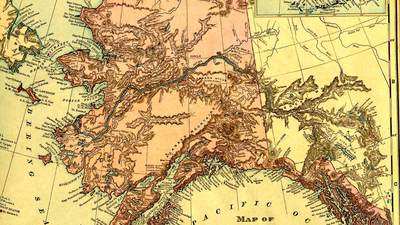
In 1867, Russia’s decision to sell Alaska to America turned out to be a historical mistake that went unnoticed for years to come. The amount paid by the United States was only $7,200,000. Although it seemed logical under the circumstances at the time, in retrospect the action seems extremely short-sighted.
Russia found itself economically restricted and geographically distant from the region, and feared falling into the hands of the British without any compensation. But in reality, the region has proven to be of great value both strategically and naturally.
Why did Russia agree to Buy Alaska
The choice to sell Alaska was based on economic and political reasons. By the mid-19th century, the Russian Empire was facing financial difficulties as a result of the costly Crimean War.
It is becoming increasingly difficult for the country to manage remote, sparsely populated areas like Alaska.According to EBSCO, “the Russian-American company was in decline, and the colony failed to make any profit.” In addition, the lucrative fur trade declined, making the region less economically valuable to the empire.At the same time, Russia feared that Britain would seize Alaska if another war broke out between the two countries. Selling the colony to the friendly United States seemed like a logical step. As the office of the historian, William Seward, US Secretary of State, says, “It was an opportunity to expand her influence in North America and hinder Britain’s further growth.”
For Russia, the deal was an opportunity to minimize losses. However, it has greatly underestimated Alaska’s potential.
The hidden wealth given up by Russia
Another thing that Russia did not expect was the amount of wealth that Alaska possesses. Within several decades after the acquisition, the state witnessed discoveries of vast deposits of gold, oil and other minerals.“Alaska has produced more than 40 million ounces of gold,” according to the USGS. Furthermore, Alaska is home to some of the world’s most important untapped mineral deposits, according to the U.S. Geological Survey (USGS). But more importantly, the country’s oil reserves were valuable.
The Prudhoe Bay oil field was discovered in 1968 and has become one of the largest in North America.In retrospect, the amount the Americans paid, $7.2 million, or two cents per acre, was somewhat laughable. According to Howard Kushner, the deal “deprived Russia of an extremely rich region, the true value of which would only be recognized in the twentieth century.”
Strategic and geopolitical consequences
In addition to resources, there is the issue of strategy and how important Alaska is to the United States from a strategic point of view.
This is a very good place to be when it comes to defense strategy. It is bordered by the Arctic Ocean and also happens to be close to Russia.During the Cold War, Alaska became a border region of the United States and became home to military installations and warning systems.According to Colonel Michael Forsyth, of the US Army, the proximity of Russia and Alaska, only about ninety kilometers across the Bering Strait, means that this region has become of great importance to the defense plans of the United States.From today’s perspective, Alaska’s strategic location makes the state very important to U.S. Arctic policies, energy security, and even environmental policies.Looking back, what seems clear to us now is that the Russians sold Alaska for immediate needs rather than future considerations. In order to solve the problem, they lost a valuable resource to Russia.Conclusively, the Alaska Purchase was never supposed to happen, as it had a major impact that will last throughout history.