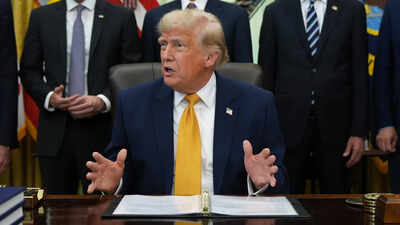
Trump and Vance say Iran has agreed to IAEA inspections. Tehran denies. Image source: AP
The first full day of US-Iranian talks in Switzerland ended with Washington and Tehran presenting different accounts of what was agreed upon, especially regarding the issue of international inspection of the Iranian nuclear program.Speaking after the opening round of negotiations at the Bürgenstock resort in Switzerland, US Vice President JD Vance said Iran had agreed to allow inspectors from the International Atomic Energy Agency to return to the country.“The Iranians have agreed to invite IAEA inspectors to return to their country,” Vance told reporters, according to Agence France-Presse.“This is a major milestone for the American people and a first step toward permanent denuclearization or permanently ending Iran’s nuclear weapons program,” he said.Vance also expressed an optimistic tone about the negotiations, saying: “We have laid a very good foundation for a successful final agreement.”The talks mark the beginning of a two-month negotiating period set out in a preliminary agreement reached last week. Mediators Pakistan and Qatar said that negotiators had agreed on a “roadmap towards reaching a final agreement within 60 days,” and technical discussions were scheduled to continue throughout the week.
US President Donald Trump echoed Vance’s comments, writing on Truth Social that Iran would agree to inspections aimed at ensuring “nuclear integrity.”Trump later told reporters: “If Iran doesn’t abide by their agreement, or if Iran doesn’t act, I will do what I have to do.”However, Iran has publicly questioned suggestions that such a commitment has been made.Iranian Foreign Ministry spokesman Ismail Baghaei told the official IRNA news agency that Iran has not yet discussed nuclear issues during the talks and has not made any new commitments in this regard.Baghaei said negotiations on the nuclear issue have not yet begun, which directly contradicts the American account of the discussions, IRNA reported.He added that Iran’s interactions with the International Atomic Energy Agency will continue in accordance with current procedures, subject to the approval of the Iranian Parliament and the decisions of the Supreme National Security Council.The conflict comes against the backdrop of long-standing tensions over Iran’s nuclear program.
Iran has limited IAEA inspections since previous US and Israeli military operations and suspended them completely after the outbreak of war earlier this year. Tehran insists that its nuclear program is peaceful.Last year, the Iranian parliament passed legislation limiting cooperation with the International Atomic Energy Agency and suspending routine inspections in the wake of US strikes on Iranian nuclear facilities in Isfahan, Fordow and Natanz.
However, relations with the UN’s International Atomic Energy Agency were not completely severed. The law still allows inspectors access to some “active nuclear sites,” including the Bushehr nuclear power plant, on a “case-by-case” basis.Under the terms of the initial framework released last week by US officials, Iran is expected to dilute its stockpile of enriched uranium, possibly through “on-site mixing under the supervision of the International Atomic Energy Agency.”The International Atomic Energy Agency estimates that Iran possesses about 440 kilograms of 60 percent enriched uranium, a percentage close to weapons-grade levels.Vance said discussions about the inspectors’ return could begin almost immediately.“I expect that to happen at least this week, but we believe that some of those conversations with the inspectors… and with the International Atomic Energy Agency could take place as soon as today,” he said.The agency’s director general, Rafael Grossi, confirmed on the X website that he was present in Bürgenstock and met with Swiss Foreign Minister Ignazio Cassis.