

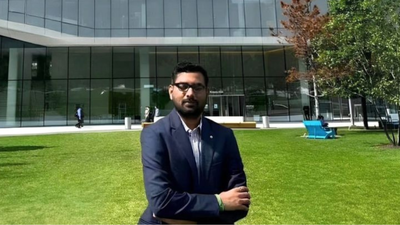
A deeply personal story about Rajiv Krishna Annaprajada has gone viral, highlighting the human cost of visa delays in the United States. Rajeev, a visually impaired Indian student who moved to the United States to study at Columbia Business School, was unable to attend his sister’s wedding in India due to a lack of available H-1B visa appointments.
The story, shared from a conference in New York, sparked widespread debate about immigration systems, the personal sacrifices and the realities faced by international professionals.
H-1B visa delay Behind the lost wedding
According to the account shared online, Rajeev had built his life in the US after earning his MBA and was working in Seattle while paying off student loans. Back home in India, his only sister, who is also visually impaired, was preparing to get married.Since their father was no longer alive, the occasion carried deep emotional significance. Rajiv hoped to return home to be with his family at this historic moment.However, he was unable to get a visa appointment in time, although he reached out to consulates, public servants and other channels for assistance. As a result, he missed the wedding.Rajeev’s story is particularly powerful because of the challenges he overcame.
He reportedly lost about 95 percent of his vision when he was 12 years old due to a degenerative condition.Despite this, he rebuilt his learning process using adaptive methods and went on to gain admission into Columbia Business School, one of the most prestigious institutions in the world. His journey from India to earn an MBA from the Ivy League reflects years of determination and perseverance.After graduation, he began working in the United States, balancing career growth with the financial stress of paying off student loans.
H-1B visa challenge
The situation Rajeev faced is not uncommon. The H-1B visa program allows skilled foreign workers to live and work in the United States, but travel abroad often requires the visa to be stamped at a US consulate before returning.This process depends on securing an appointment, which has become increasingly difficult due to high demand and limited availability, especially for applicants from India.In many cases, individuals risk being unable to return to their jobs if they leave the United States without confirmed appointments.
This creates a difficult trade-off between attending important personal events and maintaining legal and professional stability.In Rajeev’s case, the lack of available visa appointments means that traveling to India carries a great deal of uncertainty. Without a confirmed location, he risks being stranded outside the United States and losing his job.Faced with this situation, he chose to remain in the United States, eventually missing a once-in-a-lifetime family event.
Viral reactions and public debate
The story sparked strong reactions online. Many expressed their sympathy, noting the emotional impact of the migration backlog and the sacrifices made by international students and workers.At the same time, the post also sparked controversy, with some questioning the broader reliance on H-1B visas, and others calling for systemic reforms. Suggestions included improving appointment availability, introducing more flexible travel policies and handling backlogs more efficiently.Rajeev’s experience reflects a broader challenge faced by thousands of professionals navigating the U.S. immigration system. Visa delays and administrative bottlenecks can disrupt not only professional lives, but also deeply personal moments that cannot be postponed.For many, the system creates difficult choices between professional commitments and family responsibilities, and there is often no easy solution.