

Meet the 11 Indian-Americans who just made Forbes’ list of Most Powerful Innovators
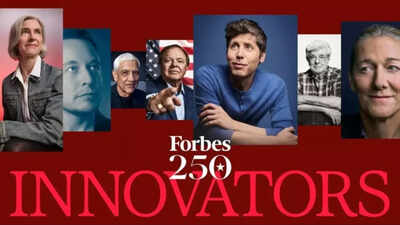
In a stunning testament to the evolving face of American ingenuity, 11 Indian Americans have been honored among Forbes’ list of America’s 250 Greatest Innovators, a list released as part of the celebrations of the 250th anniversary of the founding of the United States, highlighting those whose ideas and leadership have helped shape the country’s technological and economic future.Compiled by Forbes with input from industry experts and data-driven rankings, the Innovators 250 list celebrates influential entrepreneurs, engineers and researchers whose work goes beyond creating products: they have transformed entire industries, from the early internet to artificial intelligence, biotechnology and cloud infrastructure. Against prominent names like Elon Musk and Jeff Bezos in the broader classification, the presence of so many Indian Americans highlights how deeply the diaspora is integrated into the backbone of American innovation.
A collection of Forbes’ Indian-American innovators and accomplishments
American Indian innovators span a wide range of sectors, each with a story of resilience, expertise, and transformative impact:
Tech giants and disruptors
- Vinod Khosla: Co-founder of Sun Microsystems and founder of a major venture capital firm; It has been celebrated for early bets on frontier technology such as generative artificial intelligence.
- Satya Nadella: He is credited with reinventing Microsoft into an AI-centric powerhouse, and guiding its strategic embrace of modern cloud and smart services.
Sundar Pichai : He was honored for guiding Alphabet’s pivot toward advanced AI applications, including Gemini and deep machine learning integration.- Neha Narkhedi: A major figure in distributed computing, he co-founded Confluent and developed the real-time data streaming infrastructure critical to modern cloud systems.
Health, biotechnology and real-world solutions
- Soma Krishnan: The award was given to co-found a biotechnology company that has developed the world’s first topical gene therapy to treat epidermolysis bullosa, a rare and painful skin disorder that represents a breakthrough in genetic medicine.
- Sangeeta Bhatia: It is celebrated for pioneering the integration of microchip technology with biology, improving how we test drugs and model disease, and is a life-saving combination of engineering and biology.
Pioneering architects of modern infrastructure
Creative people like Jay Chaudhary (Leadership in Zero Trust Cloud Security), Aman Narang (Transforming digital restaurant operations) and Baiju Bhatt (Expanding access to financial markets and now the development of space solar energy) Each of these constitute sectors that touch millions of people every day.
Others, incl Shiv Rao and Shan Sinhais recognized for its contributions to medical AI tools and data-driven healthcare safety platforms, reflecting how innovation increasingly intersects with human well-being. Together, these American Indian innovators represent every stage of the innovation life cycle, from foundational research to commercial transformation, demonstrating a broad and sustained impact on how technology, healthcare, and infrastructure evolve in the 21st century.
Forbes Innovators 250: Innovation, Immigration, and America’s Future
The Forbes 250 Innovators list highlights not only individuals but also the deeper structural trend that the United States remains a magnet for global talent and that its innovation ecosystem thrives with ideas and entrepreneurship that cross borders. Notably, many recognized Indian American innovators were not born in the United States but come from elsewhere, often moving from rigorous technical education systems abroad to leadership roles in Silicon Valley, academia, and strategic corporate innovation.
This narrative about immigrant achievement in high-growth sectors reinforces America’s identity as a place where talent, regardless of origin, can find opportunity and make a huge impact. Their inclusion on this prestigious list also reflects a broader shift in how innovation is measured. It’s not just about invention alone, but about how ideas can be scaled, commercialized and woven into the fabric of everyday life, from how we communicate, conduct business and receive healthcare to manage data on a global scale.
What this means for American Indians and future innovators
For the Indian-American community, one of the fastest-growing demographic groups in the United States, this deep representation on the Forbes Innovators 250 list signals pride and possibility. Young professionals, students and aspiring technologists now see role models in multiple fields, from artificial intelligence to biotechnology and cybersecurity. Their success is a reminder that innovation is both cumulative and collaborative, because the breakthroughs we see today often depend on decades of research, partnerships, and crucially diverse perspectives.
This recognition is also consistent with the broader narrative in American industry and academia. Innovation has become more inclusive, with women and people of color making up large portions of the top rankings, a stark contrast to similar lists from decades past. 11 Indian Americans have been named to the Forbes 250: America’s Greatest Innovators list, which includes leaders in technology, biotechnology, data infrastructure, healthcare and digital services.Its influence extends from the early Internet infrastructure to advanced artificial intelligence, cloud computing, gene therapy and cybersecurity. The list reinforces the role of immigrant talent in driving American innovation, a trend evident throughout the economy. Recognizing these innovators provides inspiration for the next generation of scientists, entrepreneurs, and builders who are reshaping the future.