
Health authorities are racing to track down dozens of people who recently disembarked from the Dutch cruise ship MV Hondius after a Hantavirus outbreak on board killed three people and infected several others.According to the World Health Organization, five out of eight suspected cases have been confirmed. Among the dead is a 69-year-old Dutch woman who tested positive for the virus.The outbreak attracted international attention after the Andean Hantavirus strain, the only known strain capable of spreading between humans, was discovered among passengers on board. The South African Minister of Health confirmed the discovery of the strain in a British man who was being treated in Johannesburg and in a Dutch woman who died.Passengers on the ship have been confined to their cabins to limit exposure, while health officials continue to trace close contacts and monitor possible infections.
What is the Andean strain of Hantavirus?
Hantaviruses are a family of viruses named after a river in South Korea. They belong to the family Hantaviridae within the order Bunyavirales.More than 20 types of hantaviruses have been identified worldwide, although only a limited number are known to cause disease in humans.
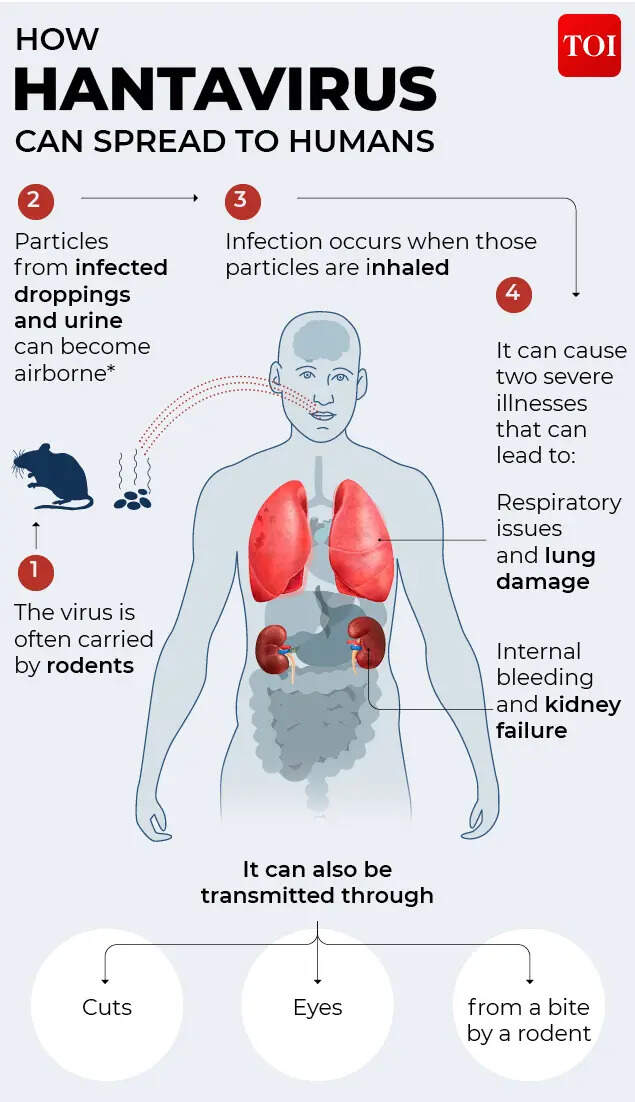
Most are associated with rodents, especially rats and mice, which carry the virus without becoming ill.People usually become infected through exposure to rodent urine, droppings or saliva, often by breathing contaminated air.The Andean strain, found mainly in Argentina and Chile, is the only Hantavirus known to spread from person to person, although such transmission is considered very rare.
Is this another Covid-19 situation?
WHO officials stressed that the outbreak cannot be compared to the Covid-19 pandemic.Maria Van Kerkhove, an infectious disease epidemiologist at the World Health Organization, said in a press conference that the situation is no longer the same as it was six years ago with Covid-19, because the Hanta virus spreads through “close and intimate contact.”Unlike Covid-19 or influenza, Hantavirus does not spread easily through coughing or sneezing. Human-to-human transmission has only been documented through the Andean strain and requires close, prolonged contact with a symptomatic person.Experts say the overall risk to the global population remains very low, and there is currently no evidence of it spreading beyond the ship.However, World Health Organization officials have warned that the virus must be taken seriously. They urged cross-border cooperation to track and contain the outbreak, and warned that more cases were likely to emerge because the virus has an incubation period of up to eight weeks.
Past outbreak in Argentina
WHO officials point to the outbreak in Ibuen, Argentina, in 2018 and 2019 as an example of how to control the virus.During this outbreak, an infected person is believed to have spread the virus to 34 confirmed cases after a party, resulting in 11 deaths.Dr. Abdel Rahman Mahmoud of the World Health Organization said the outbreak on cruise ships was “similar” to the outbreak in Argentina, where the virus entered humans through a single infected person.Researchers later described the outbreak in Argentina as the first known example of sustained person-to-person transmission of Hantavirus associated with a superspreader event.
How does Hanta virus spread?
Hantavirus infection usually occurs in places where people and rodents coexist.People usually become infected by breathing air contaminated with virus particles from rodent urine, droppings, or saliva. Infection can also occur through rodent bites.WHO officials said measures such as isolating infected patients, regular hand washing, tracing close contacts, and infection control practices will be crucial in preventing further spread.
Symptoms and treatment
Hantavirus infection can cause two serious diseases: Hantavirus pulmonary syndrome (HPS) and hemorrhagic fever with renal syndrome (HFRS).HPS, commonly associated with Andean mountain strain, often begins with fatigue, fever, and muscle aches. Patients may later develop headache, dizziness, chills, stomach pain, nausea, vomiting, diarrhea, and severe breathing difficulties.The mortality rate for HPS associated with the Andean strain is estimated to be between 20% and 40%.The virus has a long incubation period, with symptoms appearing anywhere between one and eight weeks after infection.HFRS begins with flu-like symptoms, but can later affect the kidneys, leading to low blood pressure, internal bleeding, and acute kidney failure.There is currently no specific treatment or widely available vaccine for hantavirus infection. However, WHO officials said early medical support could improve chances of survival.Treatment of severe cases may include oxygen therapy, mechanical ventilation, dialysis, and intensive care. Vaccines against some strains of Hantavirus are currently being used in China and South Korea, while researchers continue to test new treatments and vaccines.