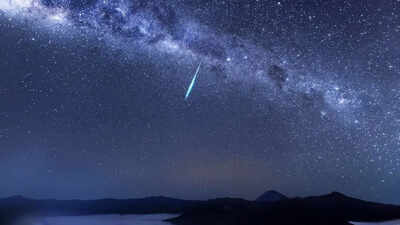
This year, the Eta Aquarid meteor shower is reaching its peak activity, and the night sky is about to put on an interesting show for observers. For many, the idea of meteor viewing seems fairly obvious; However, it all boils down to timing of monitoring.
The margin between not seeing meteors and seeing multiple meteors is actually very small, and this is something everyone should keep in mind. Unfortunately, this year is not a good year to observe rain showers, however experts claim that many of them can still be seen if one knows exactly when the best time to do so will be.
Eta Aquarius meteors tonight: When is the best time to see them?
The best time to view the Eta Aquarid meteor shower tonight will be at dawn on May 6.
This means spending time outdoors for two or three hours before dawn. During this window, the Earth rotates toward the path of debris from Halley’s Comet, increasing the likelihood of seeing meteors. According to astronomers, as the night passes, the radiation of the meteor showers, located in the constellation Aquarius, moves upward from the horizon.
At dawn, it will be in a more convenient viewing position, making it possible to see more meteors.
For this reason, watching late at night is not as productive as watching at dawn.
Eta Aquarius meteorites: How to find the right place
When trying to spot meteors, you should pay attention to the part of the sky where the meteors are expected to appear. The constellation Aquarius is where the Eta Aquarius radiation occurs. This section appears in the eastern part of the sky during the early morning. But one does not need to focus on the exact position of the radiation.
In fact, meteors usually occur far from radiation. According to experts, focusing on a point about 30 to 40 degrees away from the radiation will result in better observation.One should also find an area that is relatively darker than others. Any artificial lighting in the vicinity can make it difficult to see the meteors. Furthermore, one should wait for their eyes to adapt to the darkness for 15 to 20 minutes.
Why might you see fewer meteors despite peak timing?
While timing may work in your favor, there are other variables that can affect vision. The main obstacle to seeing showers this year is the presence of a bright moon. With the 84% illuminated waning gibbous Moon set to rise shortly after midnight and remain visible throughout the night, this factor adds more light to the atmosphere, making it more difficult to see faint meteors.
It is possible that the number of visible meteors will decrease by this factor. While the Eta Aquaridus meteor shower usually brings many meteors into view, those to the north will see only a few.However, brighter meteors will likely still be visible.
What viewers in the Northern Hemisphere should expect
This meteor shower appears to be more beneficial to those in the Southern Hemisphere than to their counterparts in the Northern Hemisphere, especially due to better viewing conditions in the southern parts.
While an observer in the Southern Hemisphere might spot up to 50 meteors per hour during the peak of the Eta Aquaridus meteor shower, an observer in the Northern Hemisphere would likely see about 10 to 30 meteors per hour under ideal viewing conditions, depending on the bright moon.
However, it can be fun and worthwhile for those who want to view the night sky.
The best meteor sightings may come just before sunrise
The ideal opportunity to view Eta Aquarids in all its glory tonight will be before dawn on May 6th. This is the period in which there will be the highest probability of seeing meteors, despite the lack of ideal conditions. The Eta Aquaridus meteor shower may not offer a steady stream of meteors, but it has its moments. All one needs is a glimpse of a shooting star to have the memory of a lifetime.