“One human life is worth millions of times more than all the possessions of the richest man on earth.”
When we weigh one human life against material wealth, the right choice seems clear. However, everyday real-world systems always calculate in the opposite direction. Car companies weigh the cost of fixing a serious defect against the cost of paying accident lawsuits.
Investment firms buy up empty apartment buildings while unhoused people sleep on the streets outside. Modern society often measures value by what can be bought, sold, or protected behind gates.In contrast to this financial way of thinking stands a bold statement: “One human life is worth millions of times more than all the possessions of the richest man on earth.”This quote rejects the idea of putting a price on people. She says that human life is so valuable that comparing it to money or possessions is a major moral mistake. The statement is still relevant today because it speaks to a shared frustration: The feeling that economic systems treat people like numbers on a spreadsheet.
Doctor’s speech in Havana
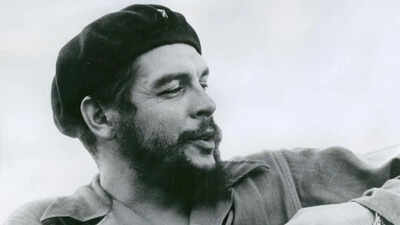
These words were spoken by Ernesto “Che” Guevara in Havana, Cuba, on August 19, 1960. Before becoming a famous guerrilla leader in the Cuban Revolution, Guevara was a trained doctor.Guevara gave this speech entitled: About revolutionary medicineFor health workers and militia members. Cuba was undergoing massive political changes, and its health care system was suffering after hundreds of private doctors left the country.
Guevara spoke to the remaining medical staff as a fellow doctor. He remembers his younger days when he was traveling through South America as a medical student. On those trips, he saw poor families, untreated diseases, and children dying simply because their parents couldn’t afford basic treatment.He explained how his experiences in the mountains during the revolution changed his thinking. Seeing poor farm workers suffering from preventable diseases taught him that medicine could not just be about making money.
He said that a doctor’s true duty is to help build a society in which no one’s life is treated as worthless. The quote wasn’t just an abstract idea. It was a clear instruction for health workers to rebuild the country’s medical system.
Putting people above property
At its core, the quote advances a simple moral idea: HHuman beings have basic dignity that money cannot buy. The 18th century philosopher Immanuel Kant famously wrote that everything in the world has a price or dignity.
Things that have a price can be exchanged for money, but humans have dignity that cannot be exchanged for anything.Guevara took this philosophical point and applied it to real-world politics and economics. The quote highlights two very different ways of seeing the world:Focus on ownership: It measures value through money, ownership, and land titles.Focus on life: He argues that human life and health hold absolute value that no amount of material possessions can match.By placing one life above “all the possessions of the richest man on earth,” this quote sets a clear rule. She insists that property rights are positive laws intended to serve people. The moment property rules harm human health or survival, they lose their moral authority.
Real world relevance today
The conflict between property rights and human survival remains a major issue in modern society.Look at universal health care. During health crises, big pharmaceutical companies closely protect their patents and formulations to protect their profits.
Low-income countries often face severe shortages of life-saving medicines because making cheaper versions is prohibited under international trade laws. In these cases, financial ownership is given priority over human survival.Also look at housing in major cities. Local governments often deal with extreme homelessness, while thousands of luxury apartments owned by investors remain completely empty. When laws protect empty property assets while making it illegal for homeless people to sleep on park benches, society acts as if property claims are more important than basic human shelter.The same principle applies to technology and corporate management. Social media companies often weigh user safety against corporate profits. They decide how much effort to put into protecting users based on how it impacts their profits. When a platform chooses to design algorithms that get people addicted at the expense of their mental health, it is making the exact decision that Guevara opposed.Putting this quote into practice means changing how organizations are run.
It requires companies, courts and governments to make decisions that always put human safety and health first, regardless of the financial cost.In 1960, Cuba used Guevara’s ideas to build a free public health care system. Despite severe economic problems and shortages, the nation prioritized free medical care and sent doctors to help during disasters around the world. It was a direct attempt to put these words into real practice.Whether in public health, city planning, or business, the basic lesson remains unchanged: Building a world that treats every human life as something priceless.