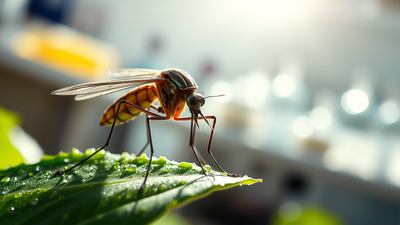
Brazil is facing one of its worst dengue outbreaks in years, and scientists are trying to do something unusual to bring the numbers down. Instead of relying solely on vaccines and mosquito spray, health teams are releasing genetically modified mosquitoes in several cities, hoping that these laboratory-bred insects will help reduce the number of mosquitoes that spread diseases over time.
The idea seems strange at first: releasing more mosquitoes to fight a mosquito-borne disease, but the science behind it is pretty simple once you understand how it works. With cases rising rapidly and hospitals under pressure, this approach is seen as another tool in a much larger battle.
Dengue cases are rising rapidly in Brazil
Brazil has recorded a huge jump in dengue cases this year, and the numbers have surprised even health officials. According to a situation report by the Pan American Health Organization, more than one million dengue cases were reported across the country in just the first two months of the year, an increase of more than 200 percent compared to the same period last year.
Several cities have already declared health emergencies. Rio de Janeiro, for example, recorded more than 42,000 cases since the beginning of the year before officially calling the outbreak a public health emergency.
What is dengue fever and how does it spread?
Dengue fever is a viral infection spread by the bite of an infected female Aedes aegypti mosquito, and it cannot be transmitted directly from one person to another. Nearly half the world’s population lives in areas that pose a risk of dengue, and in Brazil the disease is endemic, meaning it never completely disappears and continues to spread year after year.
Most infected people, nearly three in four, do not have symptoms, but those who do usually experience fever, headache and nausea that disappear within a week.
In rare cases, the disease can become severe and even life-threatening. There is no specific treatment for dengue, so treatment mainly focuses on managing symptoms and keeping patients stable, according to the World Health Organization.
How do genetically modified mosquitoes work?
The mosquitoes being released are created by a biotech company called Oxitec, and the science behind them is rather clever. Scientists are breeding male Aedes aegypti mosquitoes that carry a modified gene that causes any female offspring to die before reaching adulthood. Since only female mosquitoes bite and spread dengue fever, this method slowly reduces the number of mosquitoes carrying the disease in an area over time. According to Oxitec, this approach has successfully reduced local mosquito populations by up to 90 percent in places where it has already been tried, based on details the company shared on its official tech page.
Where these mosquitoes are released
To actually release these mosquitoes into the wild, Oxitec places their eggs inside small boxes that hatch once water is added, mimicking the way Aedes aegypti mosquitoes naturally lay their eggs in standing water found in containers, bowls or old tires. The modified mosquitoes complete their full cycle inside these boxes in about ten days before the adults emerge and head out to mate. This method is currently being used in several Brazilian cities, including the city of Suzano in São Paulo state, which has also declared a state of emergency due to the ongoing dengue outbreak.
Brazil is not the first country to try this
Brazil is not the first place to test genetically modified mosquitoes as a means of combating diseases. Back in 2021, a similar modified Aedes aegypti mosquito was released for the first time in the United States, specifically in the Florida Keys, as part of efforts to control wild mosquito populations there. Besides this method, scientists in other parts of the world have also tried to infect mosquitoes with a naturally occurring bacteria called Wolbachia, reducing their ability to spread dengue to humans in the first place.
Are genetically modified mosquitoes safe?
Naturally, such a method raises questions about safety and its long-term effects. There have been some concerns that modified mosquitoes might sometimes produce offspring that survive and pass on their genes to wild mosquito populations, although the consequences of this are still not fully understood. But so far, there is no evidence to suggest that this poses any danger to humans. As dengue outbreaks continue to grow in size and frequency across Brazil, especially during the traditional rainy season between October and May, health officials say they are open to trying multiple strategies at once rather than relying on any one solution to control the disease.