
Larry Fink, CEO of BlackRock, warns that the price of oil could reach $150 amid the war between Iran and the United States, which could lead to a “global recession” / Image: BBC
Amid the escalating conflict involving tensions between Iran, Israel and the United States, which is now more than three weeks old, with Washington deploying more than 4,000 Marines to the region and considering further troop movements even as talk of a ceasefire emerges, oil markets have been swinging sharply in response to both military developments and diplomatic signals.Larry Fink, one of BlackRock’s eight founders and now chairman and CEO, has warned that prices could rise to $150 a barrel and push the global economy into recession if Iran continues to threaten energy supply routes even after the war ends.
A conflict that determines the direction of oil markets
BlackRock, the world’s largest money manager with assets of approximately $14 trillion, is one of the most influential financial institutions on the planet. Its broad scope and reach gives Chairman and CEO Larry Fink a unique perspective on global events and their potential impact on the economy.
In an interview with the BBC’s Big Boss Interview program, published on Wednesday, he said it was still too early to determine the final outcome of the war, but the direction of oil prices would depend on what comes next.He added that if the conflict is resolved and Iran becomes a country that “can once again be accepted by the international community,” prices could fall below their pre-war level, which was about $70 a barrel.But this outcome depends on more than just a ceasefire.
“Years above $100…closer to $150 for oil.”
Fink warned that even if the fighting stops, markets could remain under pressure if Iran continues to pose a threat to trade and regional stability, especially around the Strait of Hormuz.“If there is a cessation of the war, and yet Iran remains a threat, a threat to trade, a threat to the Strait of Hormuz, a threat to this peaceful coexistence in the Gulf Cooperation Council region, then I would argue that we could have years where oil prices are above $100, closer to $150 for oil, which has profound implications for the economy,” he said.
Such a scenario would amount to a “stark and likely severe recession,” he added.
The supply disruption was centered on a critical choke point
The warning comes as the conflict has halted shipments of oil and liquefied natural gas through the Strait of Hormuz, a narrow passage that normally carries about a fifth of the world’s gas and crude oil supplies.The scale of the disruption raised concerns from the International Energy Agency, which described the situation as “the largest supply disruption in the history of the global oil market.”
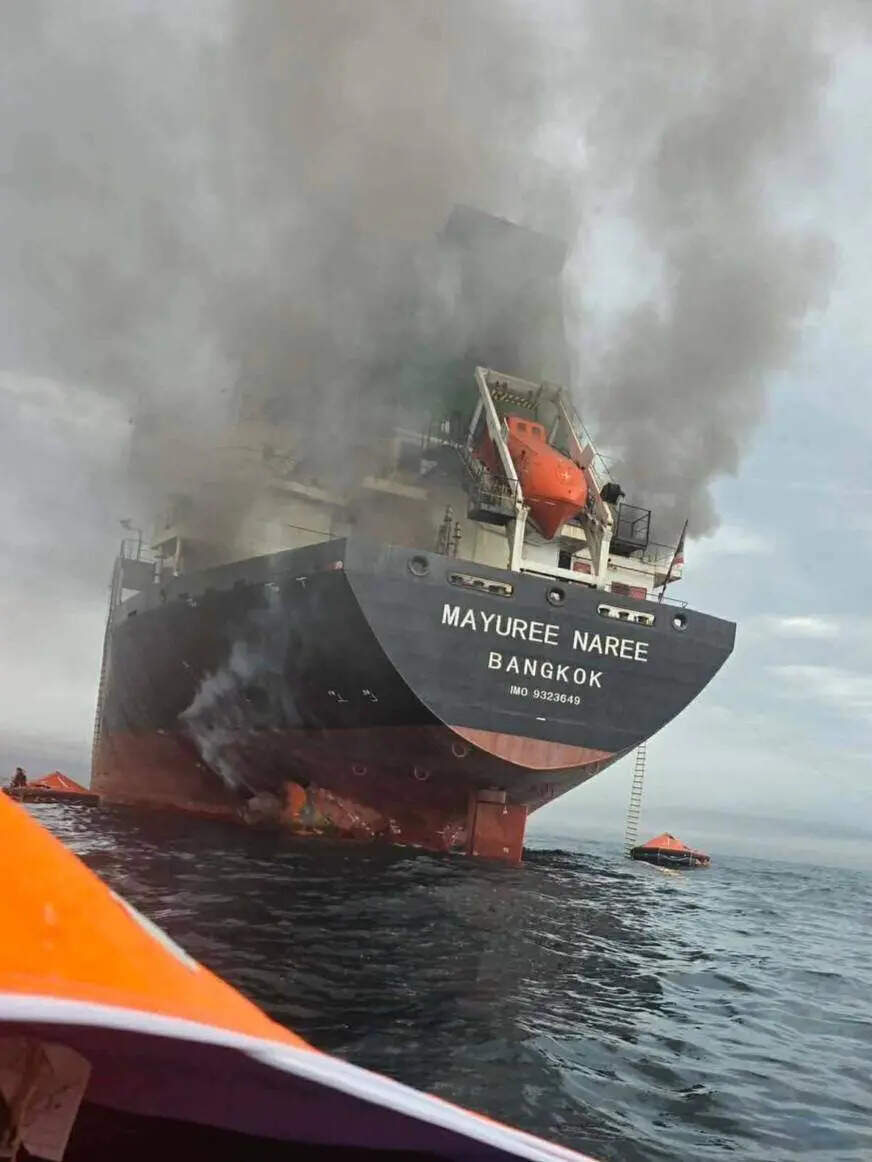
This photo released by the Royal Thai Navy shows the Thai cargo ship, Mayuri Nari, that was struck and set on fire in the Strait of Hormuz on Wednesday, March 11, 2026. (Royal Thai Navy via AP)
Brent crude prices rose to their highest levels in nearly four years, at one point approaching $120 a barrel.But on Wednesday, prices fell about four percent to about $98 a barrel after reports that the United States had sent Iran a 15-point proposal aimed at ending the war, increasing the chances of a ceasefire.Iran has strongly rejected Donald Trump’s claims that negotiations are underway to end the ongoing conflict, with the military’s top leadership mocking Washington’s comments.In a video published by Iranian media, a military spokesman categorically denied this suggestion, saying that the United States was effectively “negotiating with itself.” The spokesman sent a challenging message, stressing that Tehran has no intention of entering into talks under the current circumstances.
“Our first and last word…was and will remain: A person like us will never reconcile with someone like you.
“Not now, not ever,” the spokesman said.Meanwhile, Washington has deployed more than 4,000 US Marines to the region and is considering sending a combat brigade from the Army’s 82nd Airborne Division, signaling a potential escalation.
Damage to infrastructure and delayed recovery
Even if hostilities ease, energy supplies are unlikely to recover quickly. Fatih Birol, executive director of the International Energy Agency, said more than 40 energy assets in nine countries in the Middle East had suffered “severe or very severe” damage, meaning oil fields, refineries and pipelines could not be restored immediately.
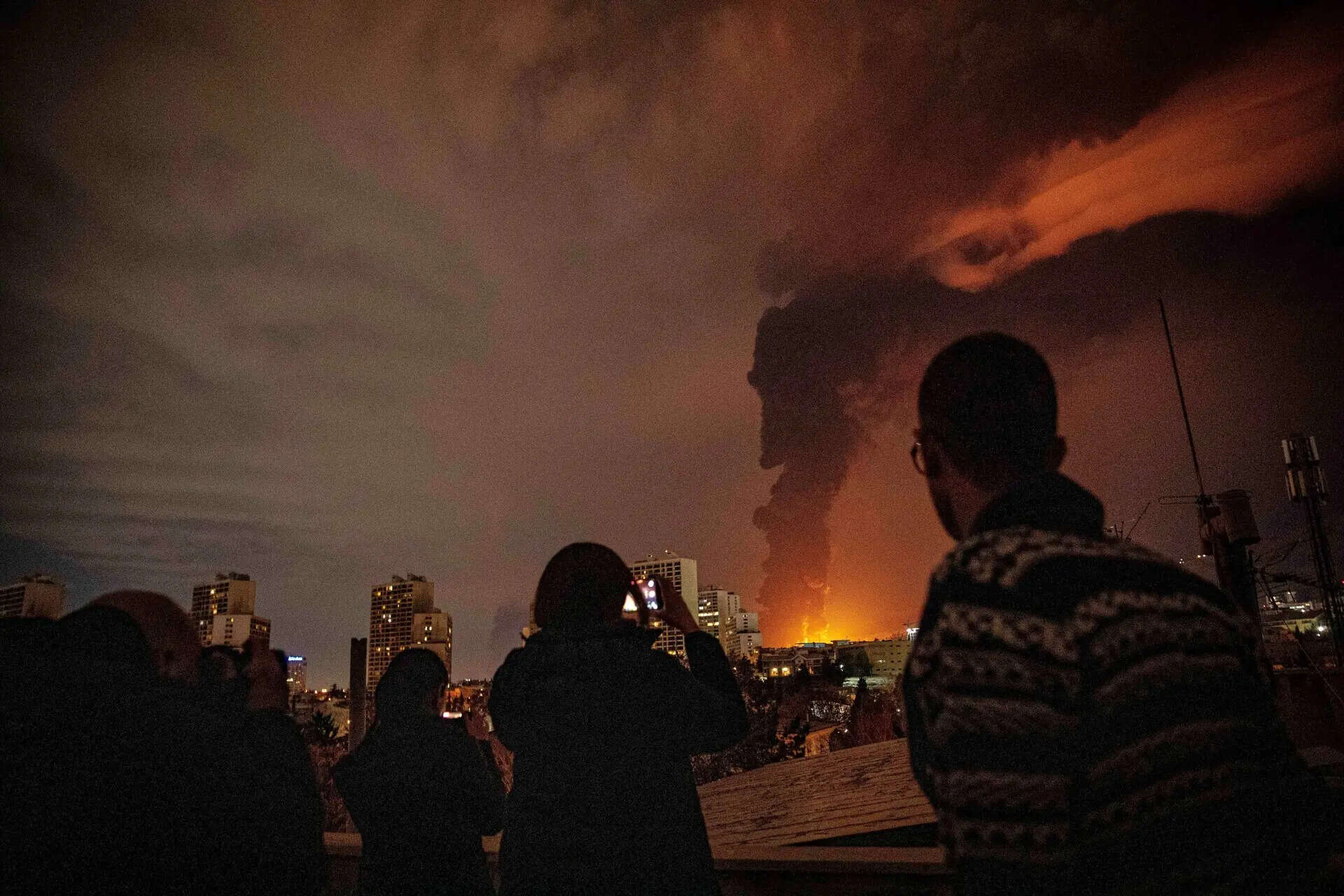
Residents look on and take photos as flames and smoke rise from an oil storage facility that was attacked during the US-Israeli military campaign in Tehran, Iran, Saturday, March 7, 2026. (Alireza Sotakbar/ISNA via AP)
The devastation will prolong disruptions to global supply chains even after the conflict ends. Birol, speaking on Monday at the Australian National Press Club in Canberra, compared the current situation to past crises: “The impact of the current unrest is equivalent to the two major oil crises of the 1970s and the natural gas crisis in 2022 after Russia’s invasion of Ukraine, all combined.” He added that the impact goes beyond oil and gas. Birol said: “Some of the vital arteries of the global economy, such as petrochemicals, fertilizers, sulfur and helium, have all had their trade disrupted, which will have serious consequences for the global economy.”
The impact on families and the trend towards alternative energy
Fink also warned that rising energy prices would have a direct and unequal impact on consumers, especially in countries that rely on imports. “High energy prices are a very regressive tax. It affects the poor more than the rich,” he said. In the UK, where much of the country’s energy is imported, rising oil and gas costs are expected to impact household bills in the coming months. The pressure has already led some energy experts to call on governments to expand domestic oil and gas production to reduce exposure to external shocks.
He watches
The head of financial giant BlackRock warns of a global recession if the price of oil reaches $150 | BBC News
Meanwhile, Fink said continued high prices could accelerate the shift toward alternative energy sources. “If oil prices rise to $150, many countries will move very quickly toward solar energy and perhaps even wind energy,” he said. “Use what you have without a doubt, but also move aggressively toward alternative sources as well.”