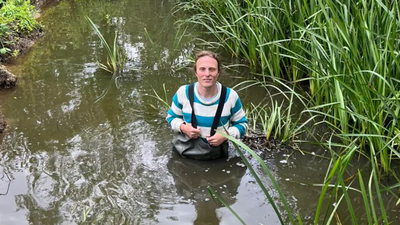
A British lawyer and environmental activist who spent days helping volunteers clean up a neglected river now faces possible prosecution. Paul Powwelsland, founder of the River Roding Trust, led a 10-day effort to remove more than 200 bags of rubbish, weeds and silt from Alders Brook, a tributary of the River Roding in Essex and east London.
The cleanup reportedly helped restore water flow and bring back wildlife including fish, dragonflies and birds. However, the Environment Agency launched an investigation, alleging that the work may have breached environmental regulations because it was carried out without the required permits.
How a British lawyer removed 200 bags of rubbish from a polluted river
Paul Powlesland is a lawyer, environmental activist and founder of the River Roding Trust. He lives on a boat on the Roding River and has spent years campaigning to improve the health of the waterway.According to Paulsland, authorities have been repeatedly asked to address pollution and illegal waste dumping along the river, but little action has been taken. Frustrated by years of inaction, he and a team of volunteers decided to organize a cleanup themselves.Earlier this year, volunteers from the River Roding Trust spent 10 days clearing Alders Brook, a tributary of the River Roding. They removed more than 200 bags of trash, branches, weeds and silt from the stream.
The group also treated invasive Japanese knotweed and restored water flow to sections that had become clogged with sludge and debris. Pauwelsland said the cleanup was part of a broader volunteer effort undertaken over the past five years.
Wildlife returned quickly after the cleanup
According to Paulsland, the restored section of the river soon began to show signs of recovery. Fish, dragonflies, herons and nesting birds were seen returning to the area after years of neglect.Project supporters say the cleanup has transformed a section of the river that has been severely affected by pollution, sewage discharge and illegal waste dumping. Photos shared by volunteers showed clearer water and better vegetation along the banks.
Why is the Environment Agency investigating?
The Environment Agency accused the group of carrying out unauthorized works without obtaining an environmental permit, which is required under the Environmental Permits (England and Wales) Regulations 2016.In a letter seen by The Guardian, the agency said unlicensed works had been carried out and claimed dredging had been carried out and waste left on the floodplain, potentially leading to flood risks. She added that the site is being investigated for possible permit and waste violations, and that further investigations are underway.
What does Paul Paulsland say?
Paulsland stresses that volunteers only got involved after years of frustration over pollution and illegal waste dumping along the Roding River.
He says authorities have been too slow to address long-standing environmental problems, and believes enforcement efforts should focus on major polluters and waste offenders rather than community groups trying to improve local waterways.He also said he was open to working more closely with regulators in the future and would be willing to coordinate restoration projects with the Environment Agency to ensure sensitive habitats, infrastructure and flood risks are properly considered.
According to Powlesland, better cooperation between authorities and local volunteers could help protect rivers more effectively.
The Ruding River faces serious pollution problems
The Ruding River has suffered from pollution and sewage discharge for years. Local MP Jas Athwal recently raised concerns in Parliament about the state of the river.Data obtained by Friends of Roding showed that Crane Brook’s sewage overflow releases more than 750,000 liters of raw sewage into the river each year.
The information was shared with the Environment Agency.Thames Water said the drains were legally permitted and were designed to prevent sewage from accumulating in homes during periods of heavy rainfall.
What did the Environment Agency say?
The Environment Agency said in a statement that it supports efforts to improve the Roding River but stressed that expert oversight and permits are necessary to ensure restoration work does not inadvertently damage habitats or drainage systems or increase flood risks.The agency said it continues to investigate pollution incidents and work with partners to address poor pipe connections and other environmental issues.
A broader debate on community-led conservation
The issue has drawn criticism from environmental activists and conservation groups, with many arguing that local communities should be encouraged rather than discouraged from restoring neglected ecosystems.Meanwhile, regulators insist that environmental permits and expert oversight are necessary to avoid unintended consequences that could affect wildlife, drainage systems, or flood protection.The dispute has highlighted a broader challenge facing environmental authorities: how to balance protecting ecosystems through regulation and supporting citizens trying to improve them. As the investigation continues, the case is likely to spark debate about the role communities should play in restoring Britain’s rivers.