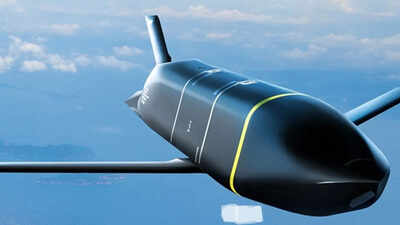
The United States is set to commit almost its entire stockpile of long-range JASSM-ER stealth cruise missiles to its ongoing military campaign against Iran, significantly depleting stockpiles allocated to other regions, according to a Bloomberg report.Citing a person with direct knowledge of the matter, Bloomberg reported that orders were issued in late March to withdraw $1.5 million worth of missiles from Pacific reserves, with additional weapons redirected from the continental United States and other locations to US Central Command and Fairford bases in the United Kingdom.
Iran launches cluster missiles at Israel and affected cities as the conflict enters a dangerous new phase
After the redeployment, only about 425 JASSM-ER missiles would remain from the pre-war stockpile of about 2,300 missiles, the report said.
About 75 others are considered “unserviceable” due to damage or technical malfunctions. The remaining operational inventory will be sufficient for approximately 17 B-1B bomber missions.The JASSM-ER, or Joint Air-to-Surface Missile Extended Range, has an attack range of more than 600 miles and is designed to strike targets from a distance while avoiding enemy air defenses. Combined with the shorter-range JASSM missile, which has a range of about 250 miles, nearly two-thirds of the US stockpile is now allocated to the Iranian conflict.
The extensive use of long-range precision weapons comes as US and Israeli forces continue their air campaign that began on February 28. According to the report, more than 1,000 JASSM-ER missiles were launched in the first four weeks of the war alone.While such weapons reduce risks to personnel by enabling stand-off strikes, their rapid consumption strains stockpiles intended for potential conflicts with more advanced adversaries such as China.
It may take years to replenish these stocks at current production rates.Although Washington and its allies have claimed to have destroyed much of Iran’s air defense network, recent losses indicate the risks remain. A US F-15E fighter jet was shot down on Friday, followed by the downing of an A-10 attack aircraft and damage to two search-and-rescue combat helicopters, according to the New York Times.
Iran reportedly destroyed more than a dozen MQ-9 drones during the conflict.Despite the scale of the deployment, not all of the allocated missiles are expected to be used. To date, JASSM-ER aircraft have been launched from B-52 and B-1B bombers as well as attack fighters.The United States has financed the purchase of more than 6,200 JASSM missiles since 2009, although production of the basic version stopped about a decade ago. Manufacturer Lockheed Martin is expected to produce 396 JASSM-ER missiles in 2026, with the potential to increase the number to 860 per year if production lines are fully customized.US Central Command and the Department of Defense did not immediately respond to requests for comment.Warning of the “Stone Ages” and evolving battlefield dynamicsThere remains uncertainty about the next phase of the US campaign, even as additional ground forces, including Marines and paratroopers, are deployed to the region. Speculation has increased about a possible move to seize Kharg Island, a vital hub for Iranian oil exports.“Over the next two or three weeks, we’re going to take them back to the Stone Ages where they belong,” President Donald Trump said in a speech Wednesday night, without clarifying whether the comments were referring to Iran’s military, government or civilian infrastructure.US military officials signaled a change in tactics. Chairman of the Joint Chiefs of Staff Gen. Dan Keane said B-52 bombers had begun flying over Iran, indicating improved access to airspace and enabling the use of cheaper JDAM precision-guided bombs.However, analysts have questioned the extent of reliance on backup weapons so far. “It raises questions about the extent to which the United States will continue to rely on standoff capabilities,” said Kelly Greco, a senior fellow at the Stimson Center, referring to the delayed deployment of older B-52 bombers.The conflict also put pressure on missile defense systems. Iran has launched more than 1,600 ballistic missiles and about 4,000 Shahed-type cruise missiles across the region, according to Gulf officials.
Intercepting ballistic threats alone may require at least 3,200 interceptor missiles.Production constraints remain a concern. Lockheed Martin currently manufactures about 650 Patriot PAC-3 interceptor missiles per year, with plans to increase production to 2,000 per year by 2030. Production of the THAAD interceptor system is 96 per year, with an agreement to increase production to 400.Meanwhile, the United States launched hundreds of Tomahawk cruise missiles during the campaign. Before the war, US stocks included about 4,000 Tomahawk missiles, including older anti-ship versions. RTX Corp. produced approximately 100 new missiles in 2025, while about 240 older units were upgraded to the latest Block V configuration.