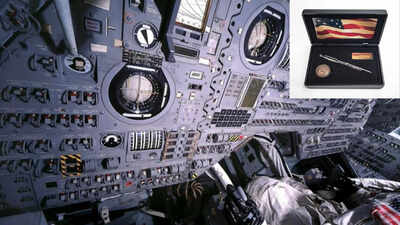
Buzz Aldrin used nothing more than a pen to fix a broken switch and an Apollo 11 rocket returning from the moon
An ordinary pen that helped save two astronauts stranded on the moon has sold at auction for $857,600.During the historic Apollo 11 mission in July 1969, Buzz Aldrin used a simple writing tool to repair a broken circuit breaker, allowing the lunar module to leave the Moon and return safely to Earth.
The brushed aluminum Duro Rocket pen was the highlight of the lot at Sotheby’s 2026 Space Exploration auction, selling within the expected price range of $800,000 to $1.2 million.The pen was sold directly from the Buzz Aldrin Family Trust and remains one of the most famous examples of emergency problem solving in space history.
Broken key on the moon
The story of the pen began after a serious problem occurred inside the lunar module Eagle. After Neil Armstrong and Buzz Aldrin completed their historic journey on the moon’s surface, they returned to the lander to prepare for departure.
That was when they found a serious problem.Inside the small spacecraft, one of the astronauts accidentally broke the plastic end of an engine lever circuit breaker switch. This switch was very important because it activated the ascent engine, the only engine that could lift the top of the Eagle from the surface of the Moon.Without the key, the engine cannot start. This meant that Armstrong and Aldrin could have been left permanently on the Moon, while command module pilot Michael Collins continued to orbit alone on Columbia, unable to help them return.
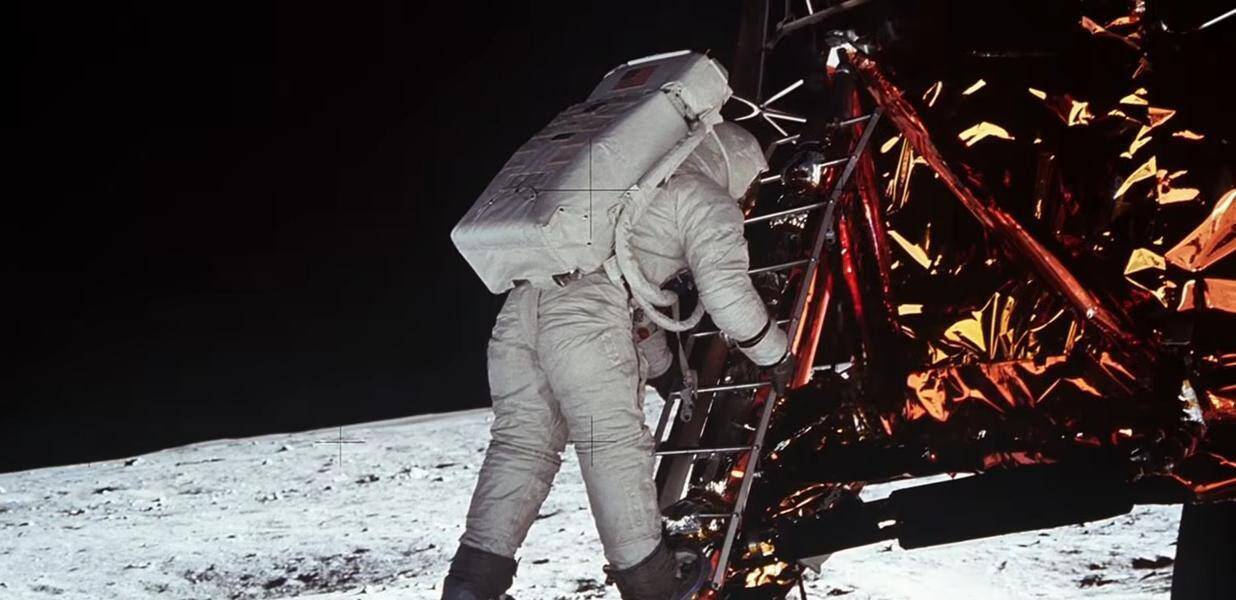
The pen is a black Duro “Rocket” brushed aluminum pen that is approximately 5.5 inches long.
Simple solution in space
With time running out, Aldrin searched for a way to solve the problem. He noticed that the broken key had left a small hole where the plastic part had been. If he can insert something small enough, he can press the inner metal contact and activate the circuit.A metal object such as a screwdriver or key could cause a short circuit and damage the spacecraft’s electrical system.Then Aldrin remembered his Duro Rocket pen. The black plastic tip of the pen does not conduct electricity, making it safe to use.
He placed the tip in the slot of the broken circuit breaker and pushed it down. The switch moved into position, and the system was successfully activated.The fix worked. On July 21, 1969, the ascent engine fired as planned, allowing the Eagle module to lift off from the Moon and rendezvous with Collins in lunar orbit.
The small gadget that has become a historical artifact
The pen is approximately 5.5 inches long and is a standard brushed aluminum writing instrument. Its lid has a pocket clip with the word “Rocket” on it and a small Velcro strap that helps astronauts attach it to the walls of the spacecraft in zero gravity.Sotheby’s sold the pen with a broken engine lever circuit breaker switch button that caused an emergency. Both items came with a letter of authenticity signed by Aldrin, confirming that they had been flown and used on the Moon.The auction also included other important space artifacts, including Aldrin’s personal Omega Speedmaster watches, Apollo mission equipment, and rare engineering items from the American and Soviet space programs.
Apollo 11 legacy
NASA launched the Apollo 11 mission on July 16, 1969 using a powerful Saturn V rocket. The crew spent three days traveling to the Moon before the lunar module landed in the Sea of Tranquility on July 20.After landing, Armstrong famously said to Earth: “The eagle has landed.” He later became the first person to walk on the moon, and said: “It is one small step for man, one giant leap for mankind.”During their two-and-a-half-hour walk on the moon’s surface, the astronauts collected 21.5 kilograms of lunar rocks, placed scientific experiments on the surface, and planted a US flag.After Aldrin’s quick repair allowed the Eagle to return to orbit, the crew began their journey home. They landed safely in the Pacific Ocean on July 24, 1969. After a 21-day quarantine to protect against possible lunar contamination, the astronauts returned to public life.
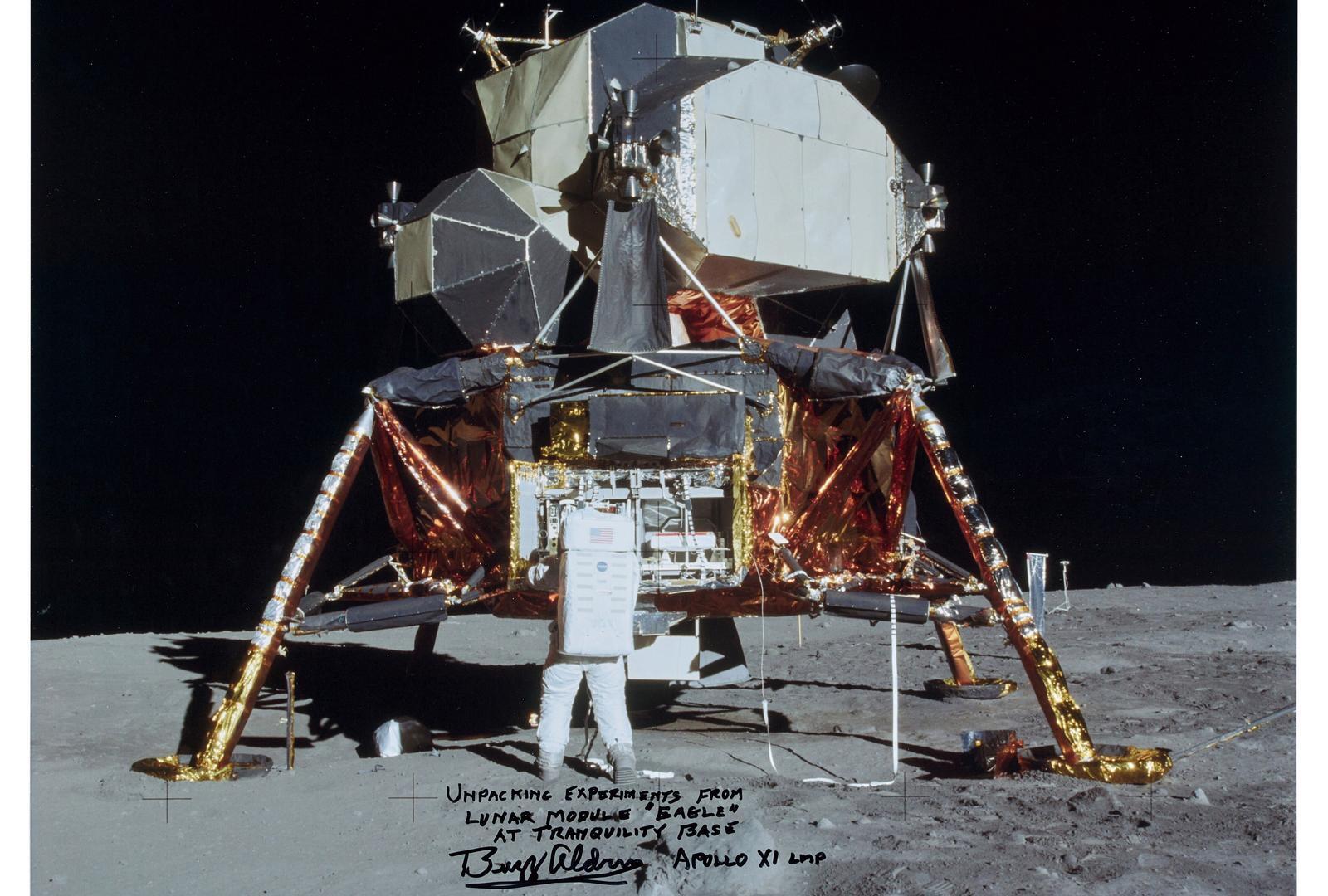
Instead of panicking, Aldrin looked for a solution.
The cost of getting to the moon
Before the Apollo missions, NASA invested heavily in astronaut preparation, making the program one of the most expensive and demanding space projects in history.
The Apollo program cost about $25.8 billion between 1960 and 1973, which is estimated at more than $250 billion in today’s money after adjusting for inflation. A large share of this budget supported astronaut training, spacecraft development, mission planning, and testing.Astronauts undergo years of intense preparation before each mission. They received classroom instruction in spacecraft systems, orbital mechanics, navigation, geology, and engineering.
Because the Apollo astronauts were expected to collect samples of lunar rocks, they trained with professional geologists and studied volcanic landscapes in places like Arizona, Hawaii, and Iceland, where the terrain resembled parts of the Moon.Physical fitness was another major requirement. The astronauts followed strict exercise programs and underwent regular medical examinations. They also trained on simulators that recreated every phase of the mission, including launch, lunar landing, spacewalk, and emergency situations. Water survival exercises prepared them for landing in the Pacific Ocean, while microgravity flights helped them practice operating in near-weightless conditions.This extensive preparation ensured that the Apollo crews were able to operate complex spacecraft, respond to unexpected problems, and safely complete the first human missions to the Moon.