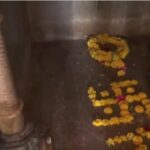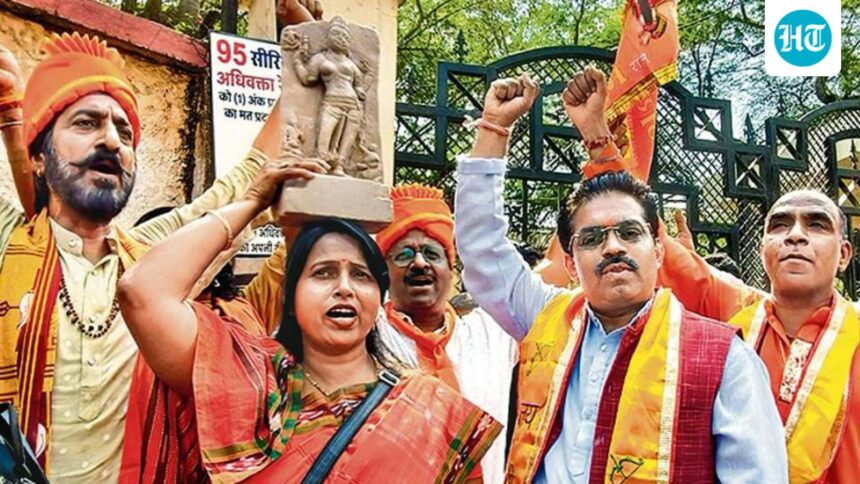
The Madhya Pradesh High Court on Friday declared the disputed Bhojshala-Kamal Maula Mosque complex in Dhar to be a temple of Goddess Saraswati, ruling that the legal moratorium imposed by the Places of Worship Act, 1991 will not apply to it as it is a protected ancient monument governed by a different law.

While determining the nature of the structure, the Supreme Court held that the 1991 Act applies only to lawsuits and prohibits changing the religious character of any place of worship. In this case, since the Supreme Court was deciding writ petitions seeking enforcement of fundamental rights of citizens under Article 226 of the Constitution, the ruling held that the constitutional authority of the Supreme Court could not be overridden by legislation.
A judicial petition is filed to enforce fundamental rights and challenge unconstitutional actions of the state; An action is brought to enforce private rights arising from contracts.
The ruling is significant because the mosque committee challenged the continuity of petitions filed by members of the Hindu community who in turn challenged the Archaeological Survey of India (ASI) order of April 7, 2003 allowing prayers to be performed in the mosque. Lawyers for the Mosques Committee held that under the 1991 Act, the place was a mosque on 15 August 1947, and Section 4 of the 1991 Act freezes the religious character of that place of worship as on that day.
Justices Vijay Kumar Shukla and Alok Awasthi of the Supreme Court disagreed: “Under Section 4(3) of the Places of Worship (Special Provisions) Act, 1991, monuments governed by the 1958 Act are excluded from its application. Hence, the 1991 Act does not apply to this monument, and it cannot be used to claim established religious status.” The 1958 Act refers to the Ancient Monuments, Archaeological Sites and Monuments Act 1958 (AMASR Act).
The court noted that the structure is considered an ancient monument due to its historical and archaeological importance under this law.
The Hindu petitioners cited the same rationale in their arguments.
The court considered the 1958 Act and the 1991 Act before arriving at the conclusion.
Section 4(2) of the 1991 Act provides: “If, at the commencement of this Act, any suit, appeal or other proceeding in respect of the conversion of the religious character of any place of worship, existing on the 15th day of August, 1947, is pending in any court, tribunal or other authority, the same shall be reversed, and no suit, appeal or other proceeding in respect of any such matter shall be instituted on or after such commencement in any court, tribunal or other authority.”
The Supreme Court struck down the two fundamental aspects of the law, namely the “change of character” of a religious place of worship and “suits” or other proceedings pending on the day the 1991 law was passed.
In its justification for excluding the current set of petitions from the 1991 law, the court said: “In the present cases, the issue is not related to ownership of the property, but rather to the claim of the fundamental right to worship or pray. Ownership in the disputed area is not being claimed in these petitions.”
Since the petitions were filed under Article 226 (which allows courts to issue writs for enforcement of fundamental rights), the court said: “It is self-evident that the same does not apply to the extraordinary jurisdiction of the Supreme Court under Article 226 of the Constitution of India. No legislation can override the power of the Supreme Court under Article 226 of the Constitution of India for enforcement of fundamental rights or any other purpose. The power of judicial review is the basic structure of the Constitution of India.”
“Given the nature of the petitions, reliefs, various notifications, ASI reports and subsequent orders of the Supreme Court, it is certain that the petitions are maintainable,” she continued.
The 1991 law is being challenged in a series of petitions to the Supreme Court. In these proceedings, the High Court passed an interim order on 12 December 2024 restraining any court from registering fresh claims or making any effective interim or final order, including a direction to sweep, until final orders in the pending proceedings are issued.
Incidentally, the lawyers representing Kamal Maula Mosque have cited this order in an attempt to restrict the hearing of the petitions by the Supreme Court. But the court said this applies to litigation and not to writing petitions under Article 226. Moreover, with regard to the Bhoshala-Kamal Maula Mosque complex, it was the Supreme Court which had passed an order in January asking the apex court to decide the matter by examining the survey report conducted by ASI.
These reasons were weighed with the court when it concluded that the disputed area of the Bhojshala-Kamal Maula Mosque is a protected monument under the 1958 Act with effect from 18 March 1904 over which ASI will have full supervisory control. Since the religious character of the area was considered to be a temple of Goddess Vagdevi (Saraswati), the court set aside the 2003 ASI order to the extent that it allowed prayers to be held for the Muslim community.