

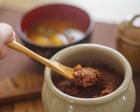
What’s the difference between white and red miso, and which should I use and why? Why don’t some recipes specify which type of miso to use?
Ben, via email
“I think what recipe writers assume — and I’m sure I’ve written recipes like this — is that either way, you’re not going to get too extreme miso,” says Tim Anderson, who has just released his latest book. Easy Japanese Cuisine: Simple Recipes Using Japanese Pantry Ingredientswill be released in April. As Ben points out, the two broadest categories are red and white, and in many situations “you can use one or the other to your taste without it having much impact on the outcome of the dish.”
This salty and (usually) delicious miso is made by steaming soybeans and mashing them with salt and garlic. fromThen leave it to ferment. “And age is what changes color,” Anderson says. “White miso is not matured for very long – three to six months – so it retains its brown and beige/yellow color and tastes more refreshing, while red miso is matured for six months or more, resulting in a darker color and more funk.” The parallel Anderson often draws is mild cheese and aged or mature cheese. “Jawda is a good example,” he says. “It can be quite soft and salty, but as it ages, it takes on a buttery, caramelized flavour.”
As for which miso to use, the general rule is: if you want to keep things light, use white; If you’re looking for something more flavorful or richer, go for red. “There’s a recipe in my new book for the mesotron [AKA minestrone seasoned with miso] “This is a good example of what miso can do to food,” Anderson says. “White miso brings out the acidity and freshness of the tomatoes, but if you use red, you get a richer, more concentrated tomato flavor.”
Likewise, Emiko Davies, author of Japanese warehouseRed miso is added over fried or roasted eggplant, while lighter miso is reserved for soups with shellfish or other seafood. Millie Tsukaguchi Lagares, author of UmamiMeanwhile, the latter is relied upon to prepare sauces, white fish marinades, baked goods or desserts (hello, miso caramel). But another thing you can — and should — do, adds Davies, is blend your own miso: “You can customize a more complex flavor — think of it as a blend.”
Other miso you may encounter include Shinshu (yellow) miso, which, fortunately, can offer the best of both worlds. “It has just the right amount of crunch and nuttiness,” says Tsukaguchi Lagares, and is best used for miso soups and sauces. Then there’s sweet white miso, or sweet rice miso, which is “fresh and not too salty or funky,” Anderson notes, making it a good choice for lighter ingredients (think classic Nobu miso marinated black cod). At the other end of the spectrum is hatcho miso, which is aged in open barrels for at least 18 months, turns a very dark brown color, and “has all these rich flavors, like cocoa and marmite and molasses.” And if you can find it, check out Anderson’s favorite category: nama miso, or unpasteurized miso. “It has an exciting, lively aroma that you can’t get from other miso,” he says, and it works like a dream as a brine. “It’s some of my favorite things.”
Got a cooking dilemma? Email feast@theguardian.com






![root-vegetable-hash-with-avocado-cream-[vegetarian]-–-one-green-planet](https://globalindiabroadcastnews.com/wp-content/uploads/2026/02/19793-root-vegetable-hash-with-avocado-cream-vegetarian-one-green-planet-300x200.jpg "root-vegetable-hash-with-avocado-cream-vegetarian--one-green-planet | GIBN")