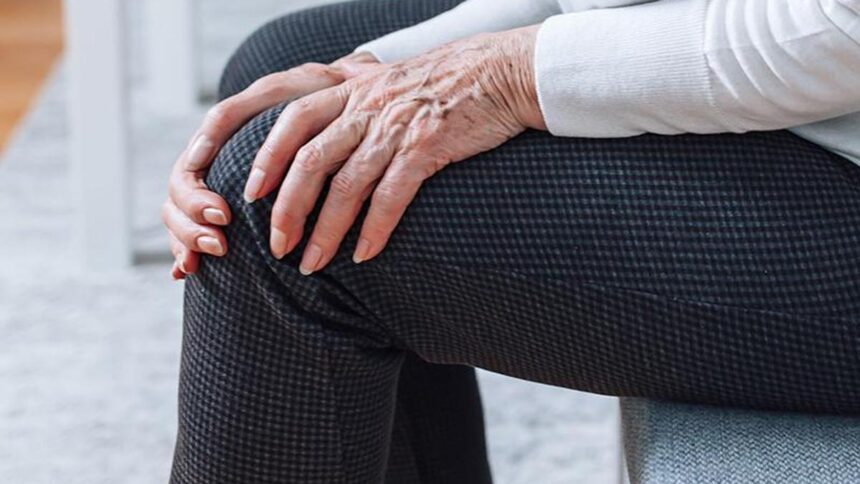

A knee pop (crepitus) is an audible cracking, clicking, or snapping sound in the knee joint during movement. It is usually harmless, caused by nitrogen gas bubbles bursting in the joint fluid or tissues/tendons shifting. However, if accompanied by pain, swelling, or locking, it may indicate injury or arthritis |Image used for representational purpose only | Photo Credit: Getty Images
The popping or cracking noise many people notice while squatting, climbing stairs or stretching after sitting for long periods is medically referred to as crepitus. According to Dilip Chand Raja S., senior consultant in Bone, Joint and Spine Surgery at Kauvery Hospital, Vadapalani, one of the most frequent causes is cavitation — a process in which tiny gas bubbles form and collapse within the synovial fluid of the knee during movement, producing an audible sound.
Prasad Dakshinamoorthy, consultant orthopaedic surgeon, SRM Global Hospitals, notes that this phenomenon is “one of the most common reasons patients across age groups seek consultation,” adding that knee sounds are frequently mistaken as an early sign of arthritis. “In most cases, especially when there is no pain or swelling, it is not something to be concerned about,” he said.
Doctors also point out that tendons or ligaments briefly shifting over bony surfaces during bending or straightening can cause similar sounds. S. Manivannan, senior orthopaedic surgeon at Apollo Speciality Hospitals, Vanagaram, describes this as a “normal mechanical occurrence in healthy joints”.

Why knees crack
While occasional, painless popping is usually benign, specialists agree that certain features should raise concern. Persistent cracking accompanied by pain, swelling, stiffness, locking of the knee, or a sense that the joint may “give way” could indicate underlying pathology.
“These symptoms may suggest meniscal tears, cartilage damage, ligament injuries, kneecap tracking problems or early osteoarthritis,” Dr. Raja explained, adding that knee popping following a fall or twisting injury should always be evaluated to rule out internal damage.
Dr. Dakshinamoorthy said that even painless popping may need attention in older adults or those with risk factors such as obesity or previous knee injuries. He pointed out that knee osteoarthritis affects an estimated 28–30% of Indians above the age of 45, making vigilance important as people age.

Activity and alignment
Ageing plays a key role in how knees sound. As cartilage naturally becomes thinner and less smooth over time, friction within the joint increases, making sounds more noticeable. “With age, there is also a reduction in joint lubrication, which can add to stiffness and crepitus,” Dr. Dakshinamoorthy said.
Activity levels matter too. Athletes and individuals engaged in repetitive knee-loading activities may experience popping due to overuse or muscle imbalance, while a sedentary lifestyle common in urban settings can weaken thigh muscles and reduce joint stability. Regular low-impact movement such as walking helps stimulate synovial fluid production and maintain joint lubrication.
Joint alignment is another factor. Conditions such as bow legs –a condition where a child’s legs curve outward at the knees; knock knees or abnormal kneecap movement can alter how load is distributed across the knee, contributing to recurrent sounds, doctors said.

Preventive care strategies
Most cases of knee popping can be managed conservatively. Strengthening exercises for the quadriceps and hip muscles, flexibility training to reduce tendon friction, weight management, and activity modification are commonly advised. Physiotherapy-guided correction of posture and movement patterns can also help.
Dr. Dakshinamoorthy recommends regular low-impact exercises such as walking, cycling and swimming, along with avoiding prolonged sitting and sudden high-impact movements. “Knee popping is normally harmless, but the body should never be ignored,” he said, stressing that early referral and lifestyle changes can prevent long-term joint problems.
Surgery, experts emphasise, is rarely required. “Most people improve with appropriate exercise and care,” Dr. Manivannan said, adding that timely evaluation helps identify mechanical issues before they progress.
Published – January 26, 2026 01:40 pm IST