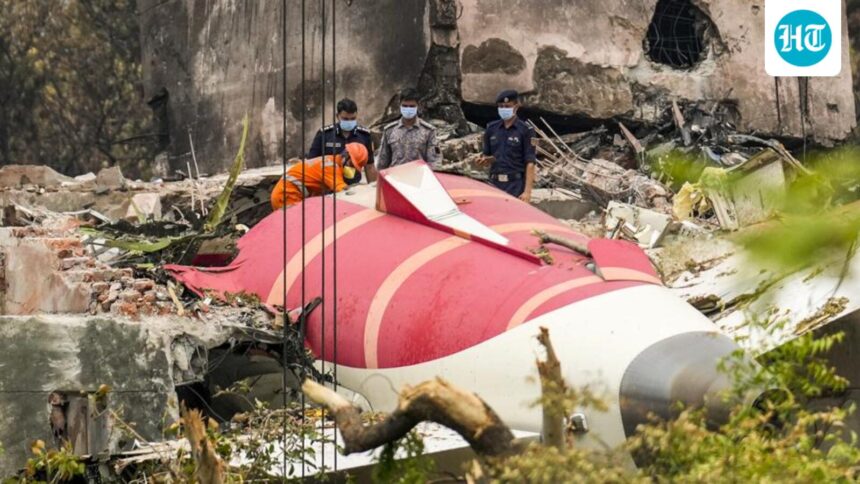
The anniversary of one of the most tragic days in Indian aviation history has passed almost unnoticed. On June 12 last year, 260 people died in one of the most mysterious plane accidents the world has ever seen.

On June 12 this year, one year after the Air India Flight 171 disaster, the Aircraft Accident Investigation Board of India (AAIB) issued an interim statement reaffirming its commitment to maintaining the highest standards of “professionalism, transparency and rigor of investigation” while working to prepare a final report on the accident. Yet no one—senior aviation industry managers, leaders, employees, analysts, bureaucrats and policymakers past and present—to whom this writer spoke over the past year expressed a modicum of confidence in AAIB’s abilities to deliver.
The investigation has so far attracted nothing but severe criticism, and the credibility and reputation of one of the country’s leading investigative agencies is at an all-time low. A growing number of people in industry and in government circles say the whole incident has become a national embarrassment, especially since the world is watching so closely. Many foreign nationals have lost their lives and the matter has reached American courts as well as Indian courts.
The organization itself is largely to blame for this lack of trust. An increasing number of Indians, both inside and outside the industry, view the investigation as a mere “cover-up” and see the entire process as an attempt to blame someone rather than find the root cause. By all indications, this person is likely to be the deceased captain of the ill-fated flight, Sumit Sabharwal.
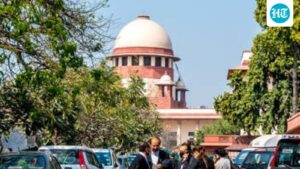
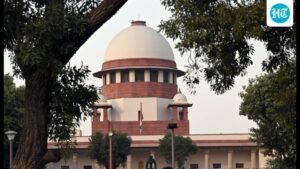
The Federation of Indian Pilots (FIP), the premier pilot body, claimed that the AAIB was responsible for “gross procedural and ethical violations” and “unlawful disclosure of protected information and resulting character assassination”, while the Safety Matters Foundation, a non-profit body, dismantled the entire operation and approached the Supreme Court. Separately, the father of the now-deceased captain, with the help of a small group of friends and peers, has repeatedly petitioned the court over what he sees as a deliberate attempt to hold his son responsible for the tragedy while exonerating Boeing, Air India and the Directorate General of Civil Aviation.
So why is the reputation of the country’s premier investigative body in the mud? Why do many people believe that the root cause of the accident will remain a mystery? What makes a country of India’s size and stature – a country that has sent missions into space – unable to gain the trust of citizens regarding an aviation accident, which is not the first of its kind in its aviation history?
Much of this uncertainty stems from the organization’s handling of the investigation thus far: the composition and qualifications of team members; The approach taken; And procedures, or lack thereof, that the industry says have influenced the process from the beginning. Moreover, the current structure of the AIIB – independent but not autonomous – has made the entire exercise unnecessary, with almost no one willing to vouch for the body’s originality, rigor, or ability to deliver. Many in the industry argue that while the DGCA may be in desperate need of change, the African Infrastructure Investment Bank is in a worse position.
Worryingly, these views are echoed in unison, not only by the aviation public and industry, but also by the Federation of Indian Pilots (FIP), the Association of Airline Pilots of India (APLA), and the Safety Matters Foundation.
This article will highlight the problems that have plagued this investigation from the beginning – and suggest a way forward.
Red Flag 1: Blatant conflict of interest
The Director General (DG) of the AAIB – the incumbent is GVG Yugandhar, an engineer on deputation from the IAF – appointed a five-member committee. This committee includes four officials from the Directorate General of Civil Aviation led by another IAF officer, Sanjay Kumar Singh, who directed investigations into 15 accidents or serious incidents and oversaw the classification of at least 300 reported accidents, albeit none on the scale of the AI171 crash or involving the Dreamliner.
The petition submitted by Safety Matters to the Supreme Court notes that it is “deeply concerning that in this case, despite the presence of this specialized independent authority, three out of five members of the current investigation team are serving officials of the DGCA.” This petition argues that the appointment effectively undermines the purpose for which the AAIB was established and resurfaces the conflict of interest created by the Safety Commission in 1997 under Justice JK Seth, which proposed the establishment of an independent body, and which it expressly sought to eliminate. As the petition adds, allowing DGCA officials to participate in the investigation amounts to “allowing the regulatory body to judge for itself.” The committee must investigate whether the Directorate General of Civil Aviation was negligent in its function that led to the accident.
The International Civil Aviation Organization (ICAO) also advises against this, noting in one of its guides that “this is not an ideal arrangement, particularly because seconded staff may fear retaliation when they return to their regular duties if the ICAO reacts negatively to the findings in the final report of the investigation.”
FIP Chairman CS Randhawa says those investigating this incident are not only unqualified but also the same small group (about eight investigators with several administrative staff who together make up the AAIB) who are running around trying to investigate and draw up preliminary and final reports of many incidents.
Multiple incidents occurred in 2026 itself, four of which resulted in deaths. This also explains why it took the team so long to examine 32 seconds (the duration of AI171’s flight). “Although AI171 was only flown for 32 seconds – meaning the material available for examination is much less extensive – the AAIB issued only one provisional statement of apology that offered nothing beyond the initial report,” Randhawa notes.
The industry attributes the “vague and selectively worded” initial report issued by the African International Bank to the poor composition of lead investigators; This report was quietly released to the public in the middle of the night instead of a full press conference addressed by the Director-General as it should have been. In fact, the Director-General has not yet held a briefing on the incident. Questions directed to the Director General of the Arab African International Bank remained unanswered at the time of printing. The industry also points out, accurately, that the initial report of the subsequent Baramati accident, which killed five people including Maharashtra Deputy Chief Minister Ajit Pawar, is more detailed than this report which claimed a total of 260 lives.
Red Flag 2: Hire the experts
None of the members of the initial investigation team were familiar with the aircraft in question, the Dreamliner.
The subsequent action taken by the AAIB to strengthen the composition of its investigation team was the result of appeals by the two lead bodies, FIP and ALPA, rather than on its own initiative. “This in itself reveals a lot about the organisation’s competence and intentions,” says a senior civil aviation ministry official. “Why should others point out what is needed? The answer is that officials know nothing.”
Just over a month after putting together the initial team, the AAIB relented and asked aircraft and industry experts including Captain R S Sandhu, former Air India pilot on the B787, to join it. Although there has since been speculation that other experts, including Dreamliner engineers and B737 pilots, could be selected as subject matter experts, the names and details of these additions, if any, have remained classified, adding to the cloud of mystery surrounding the investigation. Why should details of those who help in some way remain secret? The senior leader said At Air India, who requested anonymity: “This defies all logic.” In response to a query, the general manager of the Arab African International Bank sent a message: “This is an internal matter in the investigation. It has not been shared with the public.”
Not everyone agrees. “Keeping such basic information secret creates paranoia,” a former Cabinet minister said on condition of anonymity.
Then there is the stark fact that the AIIB’s interim statement pales in comparison to other countries’ interim reports of similar incidents. To cite just one example, there is a 104-page interim report on the 2009 Air France A330 crash that killed 232 people (https://bea.aero/fileadmin/documents/docspa/2009/f-cp090601e2.en/pdf/f-cp090601e2.en_03.pdf). “Given that the flight was only in the air for such a short time, one would have expected a more detailed interim report from the AAIB a full year later,” says Sam Thomas, president of ALPA.
Red Flag 3: The push to prove the crime
One of the claims that plagues the current investigation is that it is shrouded in secrecy and obsessed with finding a crime. Captain Amit Singh, founder of Safety Matters Foundation, says the investigation treated the incident like a “criminal” incident from the beginning as people were called in for “questioning” instead of conducting an open and transparent investigation to find the root cause of the accident. “They are trying to assign blame instead of finding the cause,” he said, reiterating that attributing such a disastrous engine shutdown sequence to a deliberate experimental procedure while “ignoring the weaknesses documented by the manufacturer, is unwarranted and unfair in the absence of indisputable evidence.”
Two incidents that have occurred since the incident began have given credence to what the FIP, ALPA and Safety Matters are claiming, raising further questions about how the AAIB handled the investigation. On August 30 last year, two officials, both doctors, from the Aircraft Accident Investigation Bureau (AAIB), visited 91-year-old Pushkaraj Sabharwal, father of the late Captain of Air India flight AI 171. Sumit Sabharwal. Ostensibly to offer condolences, investigators instead made damaging insinuations that his son intentionally cut fuel to the plane’s engines after it took off. The basis and authority of this visit was later challenged in court and the African International Bank denied any involvement, stating that there was no such order, but this only happened after the African International Bank received notice from the court. “If the AAIB had not asked these two to visit the late Captain’s house, how did they end up there?” asks a colleague and friend of the Captain who requested anonymity, claiming that the entire incident reeks of insensitive and unprofessional dealings.
The second, more recent incident, involves a summons delivered through Air India in January to the late captain’s nephew, also a pilot, asking him to appear before the AAIB in connection with the investigation. The FPI also challenged this through a legal notice sent on January 11 to the Director-General and to Sanjay Singh, the principal investigator. The notice stated that the summons does not reveal the legal provision, purpose or importance under which the nephew, Captain Varun Anand, was summoned, nor does it specify in what capacity his presence is required. He points out that Anand had absolutely nothing to do with the aircraft, the flight in question, its planning, dispatch, operation, maintenance, certification, airworthiness declaration or crew composition. He was not present at the accident site and does not have any factual, technical or operational knowledge of the circumstances of the accident.
On October 21 last year, the father of the deceased captain sent an RTI application to the AAIB, asking six questions. The response, dated 18 March this year (a copy of which has been seen by the author), either directs him to their website or denies the information on the basis that the information requested is “internal” and exempt from disclosure. It also denies that an order was issued to send two doctors to the house of the late captain.
Red Flag 4: Independent, but not independent
People say that there is no reason for the Indian Civil Aviation Minister (K Rammohan Naidu) to answer queries related to the incident or the final report when the AIB has an independent Director General (GVG Yugandhar). “In fact, we did not see the AIB director general in this incident or in the Calicut incident, and it is the minister – who should not be privy to what is happening if the investigation is independent – who briefs the media and answers all queries,” says Captain Amit Singh, founder of Safety Matters Foundation.
In similar incidents in most countries, frequent and frequent open press conferences address inquiries raised by the families of the victims or any vested or interested party. He adds: “In both the Calicut incident and this incident, we have not yet seen the general director of the Arab African International Bank. Can someone explain why?” The most important point he makes is that the fact that the Arab African International Bank is independent but not independent (all financial decisions and appointments are made by the Ministry) means that the Ministry (and the government) makes all the decisions.
Inquiries addressed to the Ministry’s Secretary had not received a response at the time of printing.
Course correction: a new investigation
Safety Matters has put forward a request to quash the current investigation, or at least, order the establishment of a new court of inquiry in parallel with its petition to the Supreme Court.
The petition argues that the Aircraft Accident/Accident Investigation Procedures Manual, issued by the AAIB itself, stipulates that any major catastrophic accident resulting in fatalities shall be investigated by a tribunal of inquiry. “Obviously a court of inquiry would be a method of investigation involving a large aircraft and usually involving fatalities” while a commission of inquiry would conduct an investigation into an accident the causes of which are known and the accident or incident is of a recurring nature. Investigation reports on accidents or accidents involving small aircraft will only be prepared by a committee of AAIB officers.
In light of all the above, industry insiders and many outside observers believe that the current AIIB-led investigation into the cause of the disaster should be cancelled. They propose establishing a new court of inquiry – headed by a judge acceptable to all and known for his moral and ethical integrity – or allowing both proceedings to proceed simultaneously. “If both investigations reach the same conclusion independently, everyone who questions the intentions and capabilities of AAIB will be silenced,” says the former civil aviation minister, who requested anonymity.
Singh, founder of the Safety Affairs Foundation, says the AIIB has chosen to ignore its mandate and points to a long list of past precedents where all major aircraft accidents were subject to a court of inquiry. In the case of the former Punjab Governor’s accident on board a Beechcraft 200 Super King Air in 1994 (which killed him and 12 others), while the AAIB initially conducted a closed internal investigation, a court of inquiry was later established. He says the same should be done in this case.
Anjuli Bhargava writes about governance, infrastructure and the social sector. The opinions expressed are personal.