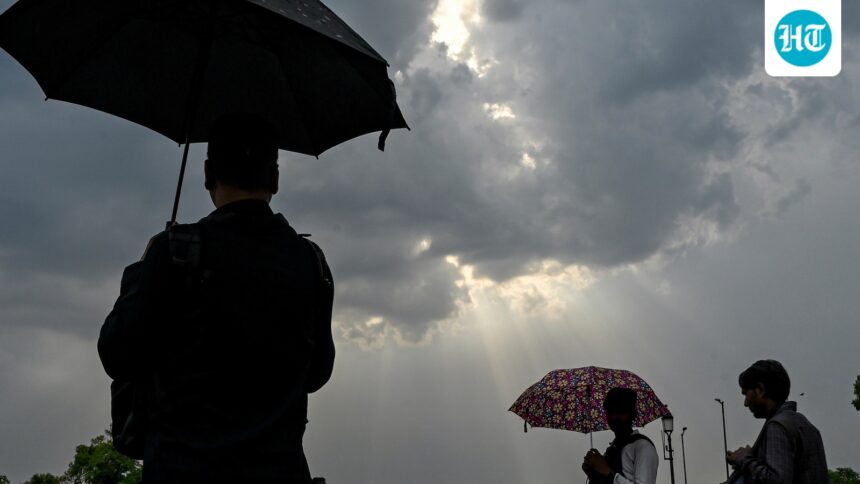
After days of widespread pre-monsoon rains and thunderstorms, the southwest monsoon has officially entered Karnataka, bringing relief to several parts of the state.

The India Meteorological Department (IMD) on Thursday announced the onset of monsoon over coastal districts of Dakshina Kannada and Udupi in Karnataka.
When will monsoon reach Bengaluru?
According to an IMD press release on June 5, the southwest monsoon is expected to advance to other parts of Karnataka, including Bengaluru, in the next two-three days. If the current weather conditions persist, the monsoon is likely to reach the Karnataka capital from June 7 to 9.
Read also | Monsoon reaches Kerala three days late, and IMD expects steady progress across India
“The region has recorded continuous rainfall of over 2-3 mm in recent days, with wind speeds of 30-35 kmph and persistent cloud cover. If these conditions persist, the monsoon is expected to advance to Mysuru, Chamarajanagar, Bengaluru and other parts of Sikk within a couple of days,” CS Patel, scientist at IMD Bengaluru, told The Times Of India.
The meteorological agency expects the system to advance to more parts of Karnataka while also covering the entire Goa region and extending to parts of Maharashtra and Andhra Pradesh. Further progress is also expected in parts of the Arabian Sea and the Bay of Bengal, along with parts of northeastern India.
Monsoon arrives in Kerala after delay
The southwest monsoon also reached Kerala on Thursday, arriving three days after its normal start date and five days after the date expected by the IMD in its earlier forecast.
Read also | A list of places Monsoon has covered so far and where it’s headed next
Usually, the monsoon reaches Kerala around June 1. On May 15, the IMD forecast that monsoon rains would reach the state by May 26, with a margin of error of four days.
Despite the delayed arrival, forecasters expect the monsoon to spread across most parts of the country by the third week of June.
While the progress of the monsoon is expected to benefit agriculture, concerns remain about the overall volume of rainfall during the season.
The IMD forecast monsoon rainfall at 90 per cent of the long period average (LPA) for 2026, putting it in the below normal category. The weather agency also indicated a 60 percent chance of precipitation, which is defined as precipitation less than 90 percent of the LPA.
However, the start remains important for India’s agriculture sector, where nearly 51 per cent of the cultivated land is dependent on rainfall, contributing about 40 per cent of agricultural production.
The monsoon may reach northwest India by mid-June
Weather experts expect the monsoon to continue to advance steadily across the country in the coming days.
“Rainfall will decrease over Kerala this week. Otherwise, monsoon is likely to reach many parts including parts of northwest India by June 15-16,” said Mahesh Palawat, Vice President, Climate and Meteorology.
Rainfall is likely to be below normal during the June-September 2026 southwest monsoon season in most parts of South Asia, with the strongest signal over central regions, according to a seasonal forecast released by the World Meteorological Organization on April 30. The map released by the World Meteorological Organization showed below-normal rainfall over almost all parts of India.