The launch experienced a brief delay after the mission control team put a countdown on the planned wait minutes before the scheduled liftoff.

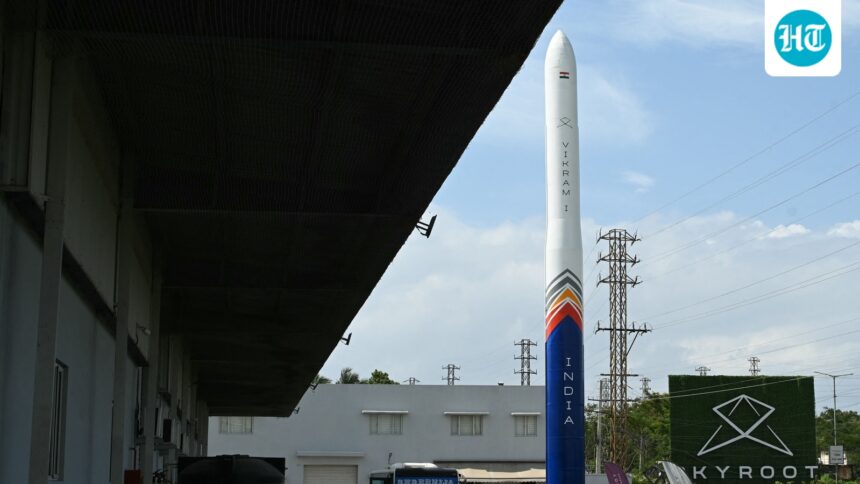
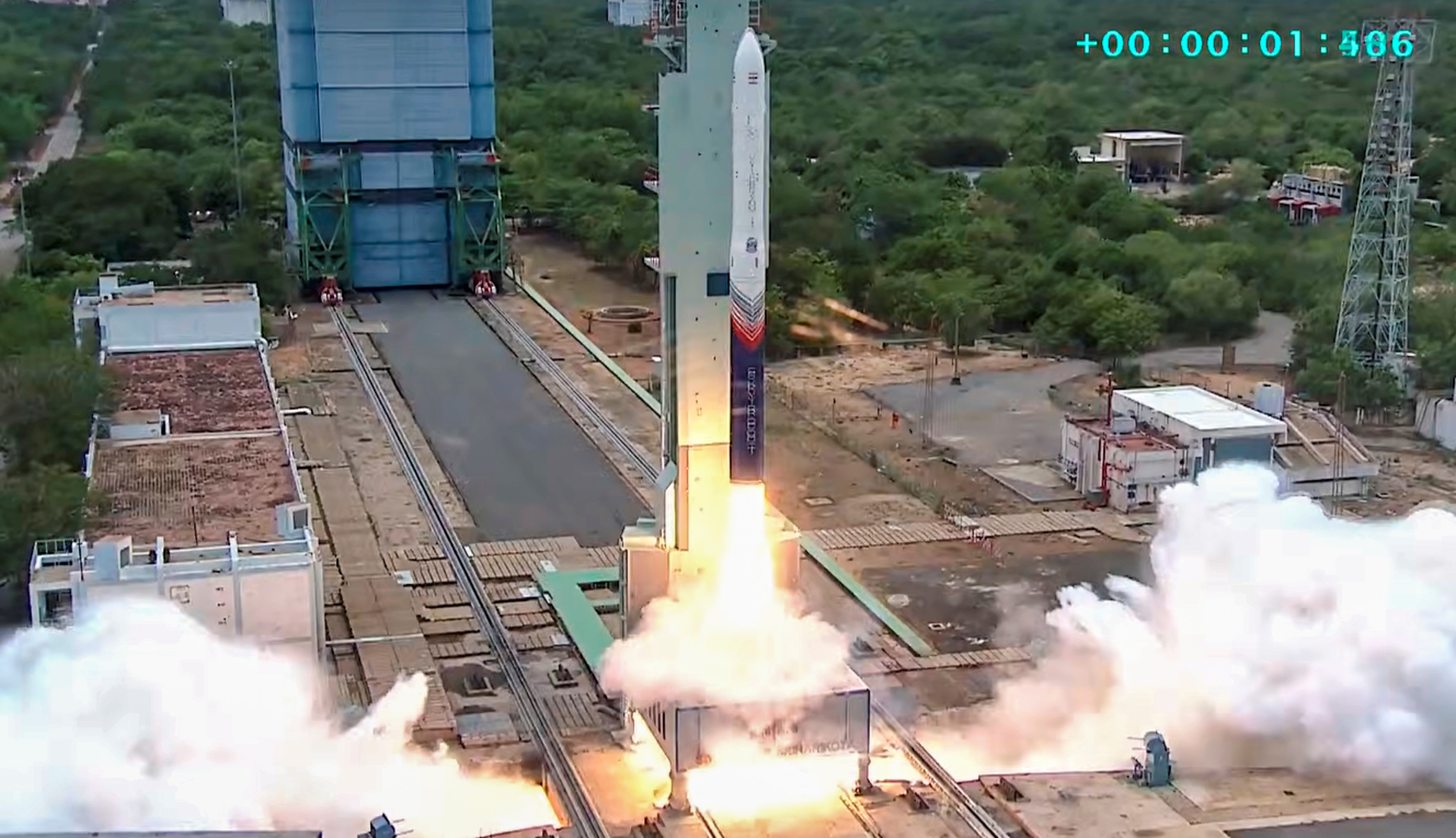
Hyderabad-based Skyroot Aerospace on Saturday created history with the successful launch of Vikram-1, India’s first privately developed orbital launch vehicle. The mission, named Mission Aagaman, was launched from the Satish Dhawan Space Center in Sriharikota.
Skyroot Aerospace wrote on the
Besides the satellites, the rocket also carried a handwritten postcard from Prime Minister Narendra Modi with the message ‘Vande Mataram’, along with postcards from Indian engineers, scientists and astronauts, PTI reported.
Ahead of the launch, Modi described Vikram-1 as a “historic new frontier for India’s spaceflight”.
What is Vikram-1?
Vikram-1 is an orbital launch vehicle developed by Hyderabad-based Skyroot Aerospace. Unlike suborbital rockets, it is designed to place satellites in geostationary orbit, enabling applications such as communications, navigation, Earth observation and scientific research, according to the Skyroot website.
Vikram-1 is India’s first privately developed orbital rocket, making Skyroot the first private Indian company to attempt an orbital satellite launch.
Importance of Vikram-1
Vikram-1 marks the Indian private space sector’s entry into the orbital launch market and is seen as a milestone in the country’s commercial space ambitions.
It is also the first major demonstration of the government’s reforms in the space sector under India’s Space Policy 2023, which has opened up the entire space value chain for private sector participation.
Read also | Success of India’s first private orbital launch with the launch of Vikram-1 into space
Key Features of Vikram-1
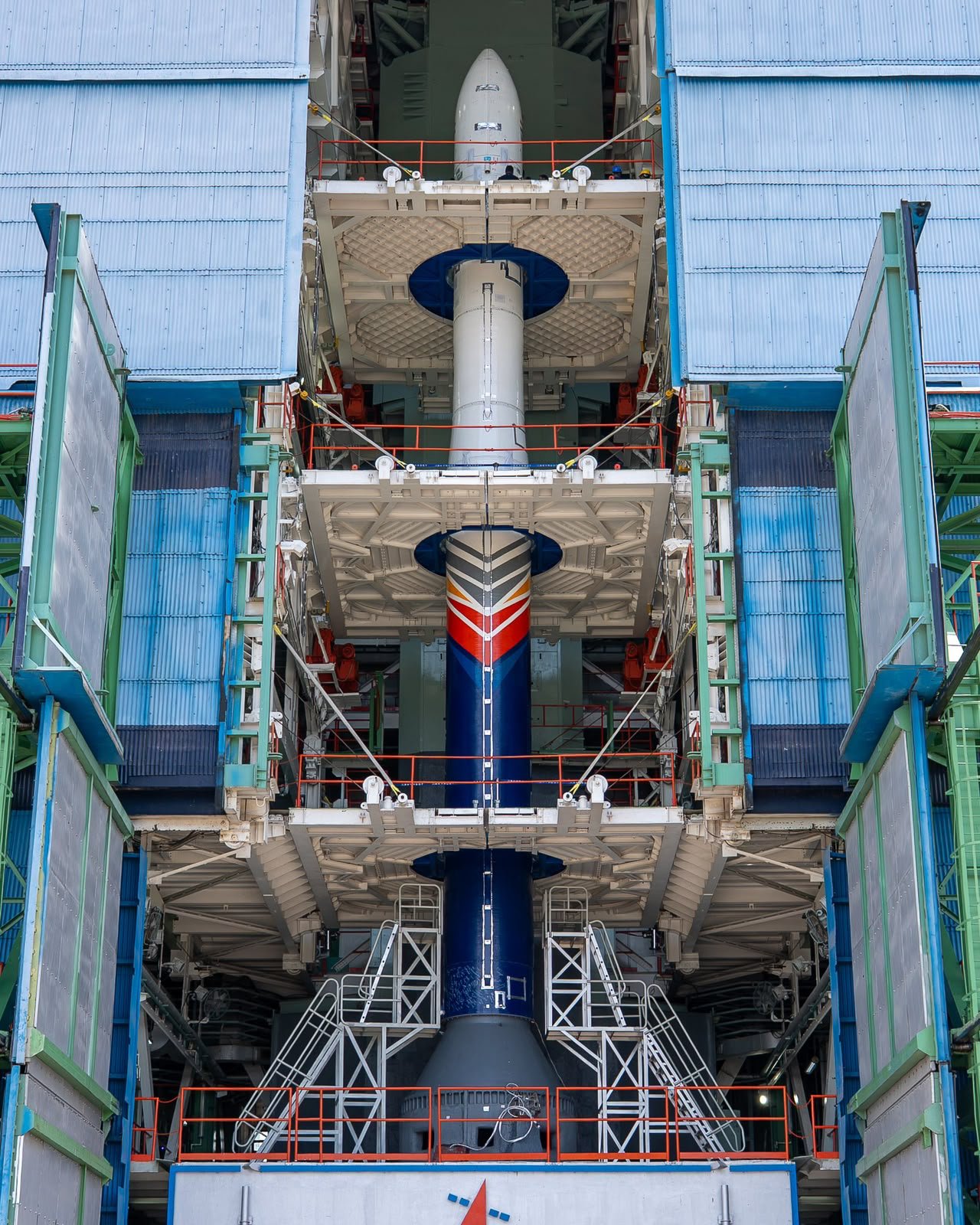
- It is 24 meters high, approximately equivalent to the height of a seven-storey building.
- Vikram-1 is designed to carry up to 350 kg of payload into a 450 km low Earth orbit (LEO) with an inclination of 60 degrees.
- It features an all-carbon composite body, making it lightweight and durable.
- The four-stage rocket uses three solid-fueled stages and a liquid-fueled orbital modification unit.
- It is powered by 3D printed liquid actuators, helping to reduce manufacturing time and complexity.
- It is designed for quick and on-demand launch services.
- Skyroot says Vikram-1 is among the few rockets globally capable of deploying satellites into orbit.
What is AGMAN’s mission?
The Aagaman mission is the maiden flight of Vikram-1 and it lifted off from the first launch pad at ISRO’s Satish Dhawan Space Centre, Sriharikota, at 12:05.
Read also | PM Modi Wishes Skyroot Success Ahead of Vikram-1’s First Orbital Launch: ‘A New Historic Frontier for India’
The mission deployed multiple customer payloads into a 450-kilometer low-Earth orbit while collecting engineering data that will be used to validate the rocket’s guidance, navigation, and control systems. The data will also help improve the vehicle for future commercial satellite launch missions.
What payloads does Vikram-1 carry?
The missile has deployed multiple local and international technological experimental payloads –
- Skyroot’s SCOPE satellite.
- Demonstration payload of DCubed technology.
- Grahaa Space’s SOLARAS S3 satellite.
- Cosmoserve Space’s Embrace, a robotic arm designed to capture orbital debris.
- “Cosmic Bloom”, a small art installation in the shape of flowers.
- A tiny 18-karat gold rocket features microscopic sculptures by CV Raman, Vikram Sarabhai and APJ Abdul Kalam, each smaller than a grain of rice.
- A handwritten postcard by Prime Minister Modi bearing the message ‘Vande Mataram’.
- Handwritten postcards from Indian engineers, scientists and astronauts.
How is Vikram-1 different from Vikram-S?
Vikram-1 is Skyroot’s second missile. Its predecessor, Vikram-S, successfully flew on a sub-orbital mission in November 2022, becoming the first private rocket to be launched from ISRO’s facility in Sriharikota.
While Vikram-S was a technology demonstration mission, Vikram-1 was designed to put satellites into orbit, representing a much more advanced capability.
Why is he named Vikram?
The Vikram Series is named after Dr. Vikram Sarabhai, considered the father of India’s space programme, in recognition of his pioneering contributions to the country’s space efforts.

Follow the latest breaking news, key developments and agenda-setting stories from India and around the world with Hindustan Times Newsdesk. Operating around the clock, the bureau brings together experienced editors, reporters and correspondents to deliver fast, accurate and contextual reporting across topics affecting public policy, governance, business, society and international affairs. The HT Newsdesk covers politics, elections, government policy, economics, business, markets, science and technology, environment, law and order, infrastructure, education, climate issues and geopolitics, while closely tracking developments across countries, institutions and global capitals. The team also leads coverage of major breaking news events, policy announcements, court proceedings, natural disasters, public emergencies and significant international developments. Reports published by the News Desk are based on information gathered from reporters on the ground, official statements, government agencies, court records, regulatory files, recognized institutions and other official sources. Stories undergo editorial review and verification to ensure accuracy, fairness and appropriateness, and are updated as events develop and additional information becomes available. Whether covering a major policy decision in New Delhi, an economic policy shift affecting millions, a landmark court ruling or a major global event, the HT News Desk aims to provide readers with trusted, fact-based journalism that provides not only the latest developments but also the context and analysis needed to understand their wider implications.Read more