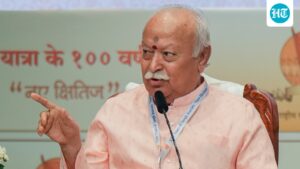
A Shockwave Through Bengal: Humayun Kabir’s Suspension Opens New Political Fault Line
West Bengal politics witnessed an unexpected upheaval when Trinamool Congress MLA Humayun Kabir was suspended from the party over his controversial announcement to build a replica of the Babri Masjid in Murshidabad. The decision, taken swiftly and publicly, ignited intense debate across the state and sparked questions about political strategy, communal sensitivities, and internal party discipline ahead of crucial elections.
The suspension marks one of the most dramatic disciplinary actions taken by the Trinamool Congress in recent years, underscoring the gravity with which the party viewed Kabir’s unilateral decision.
The Announcement That Sparked the Storm
The controversy began when Humayun Kabir revealed plans to lay the foundation stone for a Babri Masjid replica on December 6 in Beldanga, Murshidabad. The date alone — the anniversary of the 1992 Babri Masjid demolition — was enough to evoke strong political and social reactions.
Kabir argued that replicas of historic structures exist worldwide and that his intention was “cultural, not provocative.” However, the symbolic timing and the sensitive nature of the original Babri Masjid dispute elevated his announcement far beyond a local development proposal.
The proposal set off immediate alarm within the Trinamool Congress, prompting the leadership to reassess the political liability the MLA’s plans posed.
More Read
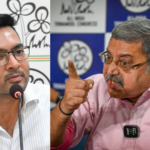
TMC Moves Quickly: Party Discipline Takes Center Stage
Within days of his announcement, the Trinamool Congress suspended Humayun Kabir, citing repeated warnings and violations of party principles. Kolkata Mayor Firhad Hakim made the suspension official, stating:
“Our party stands for secular values. Such unilateral statements create unnecessary tension. We had cautioned him earlier. This time, the decision was unanimous.”
Sources confirm that Chief Minister Mamata Banerjee was deeply displeased, viewing Kabir’s move as an attempt to create avoidable controversy and divert attention from the party’s governance agenda.
The message behind the suspension was clear: TMC cannot afford internal unpredictability at a time when political stakes are high.
More Read
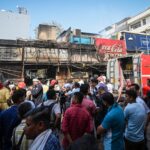
Inside the TMC Tension: Why This Issue Became Critical
Although the primary focus is Kabir’s Babri Masjid replica idea, deeper political dynamics influenced the severity of TMC’s response.
1. Murshidabad is a politically sensitive district
With a high minority population and a history of communal tension, the region requires careful handling. Kabir’s announcement risked unsettling the delicate balance.
2. TMC preparing for major elections
Any distraction or unnecessary conflict could weaken the party’s image at a crucial time.
3. Fear of opposition exploitation
TMC anticipated that the BJP would seize this issue to polarise votes, increasing pressure on the leadership to act promptly.
Security Alert in Murshidabad: Administration Steps In
Despite political pressure, Humayun Kabir still holds administrative permission for the December 6 event. However, the Murshidabad district administration has elevated the region to high-alert status, particularly after intelligence reports warned of potential mobilisation and gatherings around the site.
West Bengal Governor CV Ananda Bose questioned the government’s handling of the situation:
More Read

“If statements create law-and-order concerns, why is preventive action not being taken? Murshidabad cannot be allowed to become a center of unrest.”
His remarks heightened the political tension further, reflecting the growing friction between the Raj Bhavan and the state government.
Kabir’s Reaction: A Defiant Exit Path?
Shortly after his suspension was announced, Humayun Kabir abruptly withdrew from Mamata Banerjee’s public event in Murshidabad. Sources close to him say that he intends to resign from the Trinamool Congress and launch his own political party — a move that could reshape local power structures.
In a brief media interaction, Kabir stated:
“I do not believe I have done anything wrong. History belongs to everyone. My work will continue. Suspension does not affect my decisions.”
His defiant tone suggests he will continue pursuing the Babri Masjid replica project, potentially intensifying the political confrontation.
BJP’s Reaction: Sharp Criticism and Aggressive Positioning
The Bharatiya Janata Party promptly seized the opportunity to criticise both Humayun Kabir and the Trinamool leadership. BJP spokesperson Pratul Shah Deo called the announcement a calculated move to stir religious sentiment:
“These statements are designed to create communal tension. Let them try to build such a structure — the outcome will be the same as the original Babri Masjid dispute.”
The BJP framed the issue as part of a larger pattern of what it calls TMC’s “vote-bank politics,” accusing the ruling party of encouraging divisive elements until they become politically inconvenient.
The political battle lines have now been drawn sharply, and BJP is expected to raise this topic aggressively in upcoming campaigns.
Why Kabir’s Plan Became a Major Flashpoint
Several intertwined factors turned Humayun Kabir’s idea into a state-level political crisis.
1. The Babri Masjid’s historical sensitivity
Any reference to the Babri Masjid — let alone constructing a replica — instantly becomes a national issue.
2. December 6: A date with deep significance
Announcing a foundation stone ceremony on this date was inevitably interpreted as a political statement.
3. Rising political polarisation in Bengal
Bengal’s political landscape is deeply competitive, making every symbolic issue a potential battlefield.
4. Kabir’s personal political ambitions
His assertive statements suggest an independent power base, which TMC leadership cannot risk.
What This Means for West Bengal’s Politics
The Babri Masjid replica controversy has opened multiple political trajectories in Bengal:
Impact on TMC
- The party must now reassure minority voters that it is committed to secularism.
- It must also prevent further defections and internal contradictions.
Impact on BJP
- The controversy offers an opportunity to mobilize its base.
- BJP may use the issue to frame TMC as unstable and opportunistic.
Impact on Murshidabad
- The region may see increased political activity and strict surveillance.
- Local sentiments may be sharply divided in the coming weeks.
Impact on Humayun Kabir’s career
- He may emerge as a local political player with a new party.
- Or he may find himself isolated if administrative restrictions tighten.
Political Analysts Speak: A Battle of Narrative Control
Several political analysts believe the suspension was not only a disciplinary step but also a strategic political move.
Analyst Points Include:
- TMC wants to maintain a clean secular image.
- BJP intends to turn the issue into a law-and-order debate.
- Kabir’s potential new party could divide minority votes.
- The symbolic power of religious architecture remains profoundly influential in Indian politics.
As a result, the controversy is expected to shape political messaging for weeks to come.
Conclusion: A Single Announcement That Shifted an Entire Week of Politics
Humayun Kabir’s suspension over the Babri Masjid replica plan has not merely removed one MLA from TMC — it has opened a new and unpredictable chapter in West Bengal’s political story. The issue has pulled the ruling party, the opposition, the administration, and the Governor’s office into a multi-layered confrontation.
With December 6 approaching, political tensions are likely to intensify, and the state may face one of its most sensitive law-and-order tests of the year.
What began as one man’s statement has now evolved into a statewide political flashpoint, with long-term implications for every major political player.
Get the latest updates on Global India Broadcast News your trusted digital destination for breaking headlines, entertainment buzz, lifestyle trends, health and fitness tips, technology insights, business developments, political updates, world news, and exclusive interviews from India and around the globe.