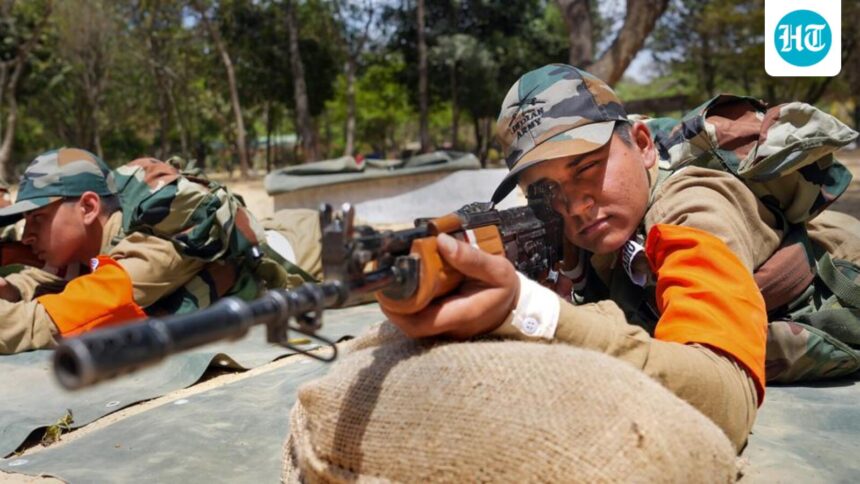
India’s youngest soldiers, Agniers, went through fire during Operation Sindoor last year, but their performance in the first encounter of the conflict exuded courage, resilience and composure, and helped dispel doubts about the Agneepath scheme under which they were recruited into the armed forces in the two years preceding the military standoff with Pakistan, senior officials said on the eve of the first anniversary of the operation.

“Operation Sindoor marked the first exposure to combat for thousands of newly recruited Agniveers across the three services. They have proven themselves on the battlefield and we hope that their performance has put an end to the debate on the effectiveness of the Agnipath scheme,” one of the officials cited above said on condition of anonymity.
Read also: The armed forces are sharpening their armor and striking capabilities for future wars
The operation, which began in the early hours of May 7, 2025, was New Delhi’s strong response to the Pakistan-backed Pahalgam terror attack that killed 26 people. It caused four days of strikes and counter-strikes with combat aircraft, missiles, drones, long-range weapons and heavy artillery before the two sides reached an understanding on cessation of all military actions on May 10.
“The Agniveers team turned their training into results during the engagement and their performance was at the same level as the regular soldiers they were fighting alongside,” said another official who requested anonymity. “The Agneepath scheme has achieved the expected results,” he added.
Introduced about four years ago, the Agneepath recruitment model has long been a political flashpoint because it reduces the length of service of individuals below the rank of officer and offers them fewer service benefits, with the aim of keeping the armed forces young and combat-ready. It was a major departure from the decades-old military conscription system, which the National Democratic Alliance government replaced when it announced the new scheme in June 2022. Under Agneepath, soldiers are conscripted for four years, with the provision of keeping 25% of them in regular service for another 15 years.
Soldiers enlisted under the old system serve for about 20 years before retiring in their late 30s with pensions and other benefits including health care and canteen facilities, to which discharged soldiers are not entitled.
A third official, who requested anonymity, said there were no plans to change the Agneepath model as it was working well, as observed during Operation Sindoor and in its overall performance. “But the scheme could be modified in future years as services may want to retain more people with specialist skills and working in specialist areas.”
Only young men and women between the ages of 17 and a half and 21 years are eligible under this scheme. Two years ago, the armed forces were discussing the possibility of raising the age limit for Agneepath recruits to 23 years, and retaining at least 50% of them in service after four years.
The Agnives operated specialized equipment and played a key role in ensuring that aircraft, warships and ground units remained battle-ready, officials said.
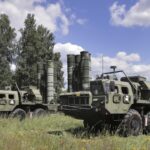
One of the most important lessons learned from Operation Sindoor was how India’s powerful air defense network was able to defeat multiple waves of Pakistani air attacks. More than 3,000 Agniveers were equipped with weapons and critical systems that form an integral part of the Army’s air defense (AD) shield activated during Operation Sindoor. Pakistan was unable to penetrate this shield despite launching several missile and drone attacks.
Many AD units had between 150 and 200 Agniveers in their ranks. The Agniveers helped operate the indigenously developed air defense control and reporting system, called Akashteer, which became the hub of India’s AD network during the engagement, as first reported by HT.
Agniveers are deployed in AD units specializing in four main occupations: gunners, fire control operators, radio operators, and drivers of heavy vehicles equipped with guns and missiles.
The Agniveers, along with regular soldiers, shot down targets with shoulder-fired missiles. Advanced manned and fired guns, including L-70s and Zu-23-2Bs; It operated the Pechora, Schilka, OSA-AK, Strela and Tunguska weapons, as well as a medium-range surface-to-air missile system; Operating a variety of radars and manned Akashteer nodes; Formed an integral part of the communications network; He drove the vehicles used to transport and launch missiles.
The Akashteer system was introduced just a year before India launched the process. The agile system played a pivotal role in detecting, identifying, tracking and engaging Pakistani missiles and drones.
The system integrates a range of AD and weapon sensors, speeds up the decision-making process and tightens the sensor loop to the shooter to quickly detect and destroy hostile targets.
It is integrated with the Indian Air Force’s Integrated Air Command and Control System (IACCS), the beating heart of the four-layer military air defense shield that Pakistan has been unable to penetrate. Indian forces responded to threats that included Chinese-made PL-15 air-to-air missiles, long-range missiles, loitering munitions, and drones of Turkish origin.