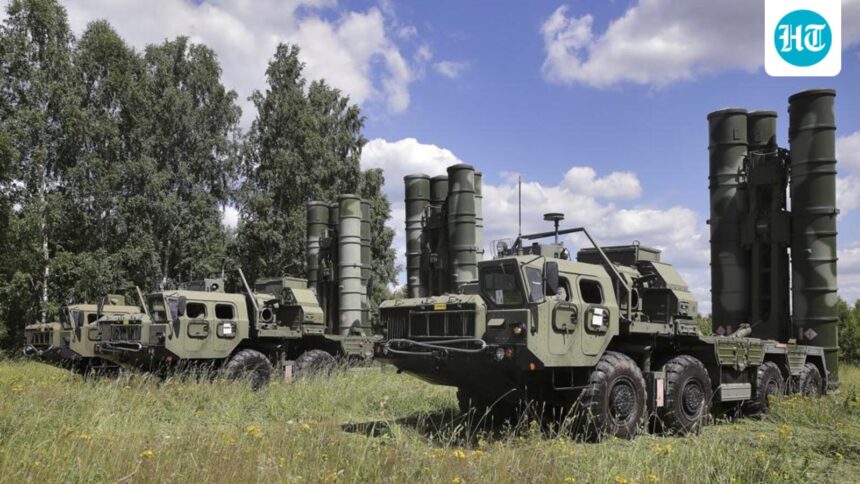
The Indian Armed Forces has initiated several major procurement worth billions of dollars over the past year after Operation Sindoor, including additional S-400 air defense systems, Rafale fighter jets, loitering munitions, unmanned systems and missiles, and has also inducted new platforms to enhance its capabilities and meet emerging challenges with readiness and determination, officials familiar with the matter said on Wednesday.

The Army also rolled out joint doctrines during this period to chart a roadmap for enhancing operational readiness, the officials said.
One of the important projects launched after Operation Sindoor includes the creation of a National Defense Shield, a formidable military capability to defend the country’s defense and civilian installations against air attacks and respond with overwhelming force, signaling India’s intent to be prepared to meet future battlefield challenges.
The proposed acquisition of five new units of the S-400 missile system, which struck Pakistani targets during Operation Sindoor last May, will significantly enhance the IAF’s ability to detect, identify, track and engage enemy fighters, missiles and drones. After approval by the Defense Acquisition Council (DAC) in March, the additional air defense systems will bring the number of S-400 units in the Indian Air Force to 10.
The S-400 systems will be central to the National Defense Shield proposed under the Sudarshan Chakra Mission, announced by Prime Minister Narendra Modi in his Independence Day address last year. The country plans to deploy this capability by 2035.
In February, the DAC – India’s apex military procurement body – cleared the purchase of military equipment worth $3.6 lakh crore, including 114 Rafale aircraft under the MRFA (Multi-Role Fighter Aircraft) programme. Acceptance of Necessity (AoN) by the Council for new combatants was the first step in the procurement process.
The cost of enhancing Rafale’s capability is expected to be approx $3.25 million crores. The next steps before an actual deal is reached include tendering, technical discussions, cost negotiations and final approval from the Ministerial Committee for Security.
The Army plans to induct tens of thousands of home-made unmanned aerial systems and loitering munitions over the next five years to enhance its battlefield capabilities, given the growing impact of these systems on military operations and how they have reshaped modern warfare as evidenced in ongoing global conflicts including the US-Israel war with Iran, and earlier during Operation Sindor.
The Army’s requirements include 80 different types of unmanned systems for specific roles including intelligence, surveillance, reconnaissance, precision strike, munitions drop, air defense, jamming, mine warfare, data relay and logistics.
“The focus on unmanned systems, electronic warfare systems, and loitering munitions is driving efforts to enhance overall military capability,” said one of the officials cited above. The Army is seeking loitering munitions for long, medium, and short range strike, swarms of UAVs (for surveillance and strike), and FRV (first person perspective) UAVs with strike capability.
The induction of INS Aridaman into the Navy has been one of the major developments over the past year. In April, the Navy commissioned its third nuclear-powered ballistic missile submarine, INS Aridaman, during a closely-guarded ceremony in Visakhapatnam, where it was built under a top-secret program to enhance the naval portion of the country’s nuclear triad — the ability to launch strategic weapons from land, air and sea. The United States, Russia, the United Kingdom, France and China are the only other countries that can launch nuclear warheads from a submarine.
Lessons learned from Operation Sindoor, the four-day military standoff with Pakistan in May, have also been incorporated into the theater model currently under consideration, officials said.
Also last August, India issued three joint doctrines, including one for special forces operations, in what was seen as a needed boost to the ongoing drive for jointness and integration of the armed forces as it takes steps towards theatre.
The other two doctrines relate to airborne and helicopter-borne operations, and multi-domain operations, highlighting the steps taken towards engagement, which is a prerequisite for establishing theater commands.
On Wednesday, the Defense Ministry described the first anniversary of Operation Sindoor as a “historic tri-service operation that bears witness to India’s unwavering political will and military resolve characterized by surgical precision.”