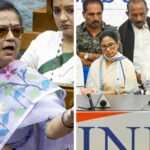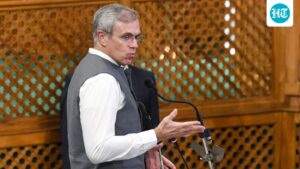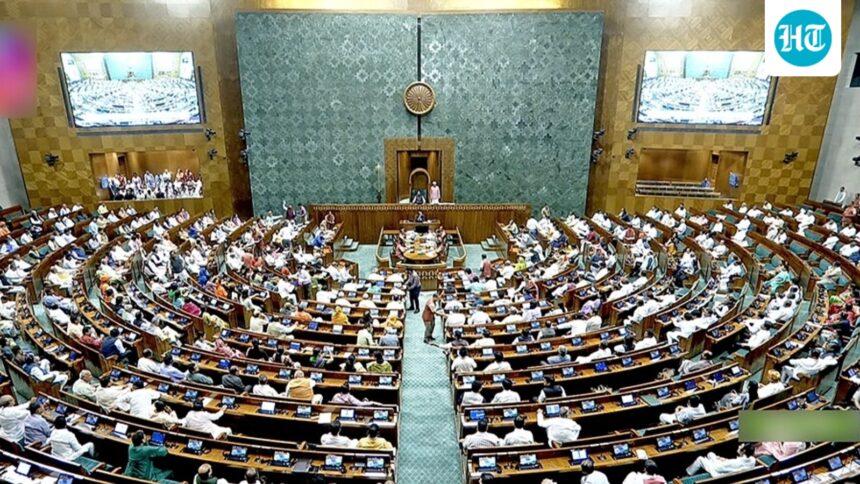
The Bharatiya Janata Party (BJP), which leads the National Democratic Alliance (NDA), can look forward to easier passage of key bills in the Lok Sabha, as 20 legislators from the Trinamool Congress (TMC) on Monday conveyed their decision to join the coalition as a separate group. In the Rajya Sabha, where the NDA already has a majority, the party is expected to gain another seat, as Sukhendu Sekhar Roy resigned from the Upper House.

An increase in the strength of the Lok Sabha would help the ruling coalition pass controversial bills, including the delimitation bill that will pave the way for carving out new constituencies and increasing the number of seats in the Lok Sabha, a prerequisite for implementing 33% reservation for women in legislative assemblies. Other important bills that the government needs to support are the Constitution Amendment Bill 129 of 2024, and the Federal Territories Laws (Amendment) Bill 2026, which seeks simultaneous elections, which are currently being examined by a joint parliamentary committee.
Read also | TMC crisis worsens: 14 rebel MLAs meet Suvendu Adhikari, discuss exit as Mamata attends key India bloc meeting
The NDA has 293 members in the 543-member Lok Sabha and 149 members in the 245-member Rajya Sabha. According to people familiar with the details, the BJP is also counting on support from other non-aligned parties, including the DMK. While 20 of the 28 TMC MPs have declared their support for the NDA in the Lok Sabha, there are 12 members in the Rajya Sabha. The DMK has 22 MPs in the Lok Sabha and eight in the Rajya Sabha and is believed to be talking to the BJP.
“The unrest in the TMC is a result of dynastic politics, ignoring the concerns and suggestions of senior party leaders. The BJP has not engineered any division… The 20 MPs who wrote to (Lok Sabha) Speaker Om Birla have made it clear that they want to join the NDA… If anyone wants to extend support to our policies, which are in the national interest, we welcome the move,” the leader said. “It is too early to talk about the DMK’s decision, but we have been informed that the DMK, which has distanced itself from the India bloc, also wants to support the NDA,” the Democrat said.
Read also | Mahua Moitra with Mamata amid TMC collapse, flays ‘traitors with yellow-stained trousers’, targets Pathan with Shah sarcasm
The BJP’s ideological wellspring, the RSS, has certainly expressed its reservations about TMC and DMK legislators joining the party. “RSS does not interfere in political decisions, but feels that a party that has for a reasonable period declared anti-Santan sentiments (like the DMK) cannot be a partner of the BJP. Likewise, they did not want to jump from the TMC in order to gain support or escape scrutiny (for their alleged corruption),” said a Sangh functionary who requested anonymity.
A DMK legislator in the Rajya Sabha also refuted reports of the party’s alliance with the NDA, while conceding that there could be some issue-based support. “There is plenty of time for the (next) Assembly elections and enough time for the (2029) Lok Sabha elections, the DMK has a strong cadre on the ground and stronger leaders, we will bounce back… As for NDA support, the party will take the decision based on the merits of the bills,” the DMK MP said.
Read also | As the TMC team travels to Delhi, Mamata looks for warmth in the situation in India: the two meet at the decoder
Monday’s development would strengthen the government’s hand in approving the draft border demarcation law as well as the draft law for holding simultaneous elections.
A second BJP leader, who requested anonymity, said: “The government was in talks with all other parties to support the bills. There were coercive motives for alliance which prevented the KDP and TMC from supporting the bill in favor of women. Their opposition to the demarcation bill was political, because the bill guaranteed an increase in the number of seats for each state, so there was no question of punishing the southern states.”
His reference to a bill in favor of women is certainly part of the BJP’s efforts to pass the Opposition’s repeal of the Women’s Reservation Amendment Bill and the Delimitation Bill as anti-women. A women’s protection law is already in place (and supported by almost all opposition parties). What was rejected was the amendment to the law and the draft border demarcation law.