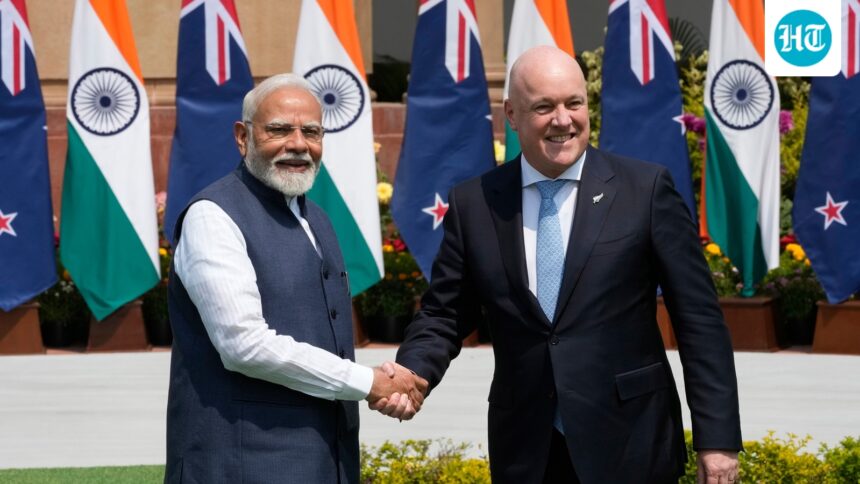
Prime Minister Narendra Modi will make his first official visit to New Zealand next week, Prime Minister Christopher Luxon announced on Friday. The visit comes at a time when Wellington is considering stricter immigration rules for Indian citizens.

Meanwhile, the free trade agreement that India and New Zealand signed in April is still awaiting approval in the New Zealand Parliament.
Here’s why PM Modi’s upcoming visit is so important:
Stricter immigration rules for Indians
New Zealand is considering stricter immigration rules for Indian citizens, a move that the country’s Foreign Minister Winston Peters warned could affect relations between the two countries, New Zealand newspaper The Post reported, citing an unnamed source. It is said that the proposed changes could also have wider diplomatic and trade implications.
Work on the proposed immigration changes is already underway, the report said. Immigration Minister Erica Stanford said a draft of the new policy had been shared with ministers, but a final decision had not yet been made.
Peters, who leads the New Zealand First party, a partner in the government’s coalition, said officials had presented evidence showing the proposed immigration changes would make the rules more restrictive specifically for Indian citizens.
“We have recently received evidence in the form of a briefing from officials and subsequent decisions by the Immigration Minister that immigration policy settings have become more restrictive in a way that targets India and India alone,” he said, according to the report.
He added that officials warned that stricter rules could affect bilateral and trade relations with India, harm New Zealand’s reputation as a business destination, face legal challenges and even lead to retaliatory measures.
Peters told Parliament: “This is our concern as Foreign Minister, because they may harm our reputation as a transparent country in dealings and a country whose word can be relied upon.”
He also questioned why the proposed restrictions would apply only to India and not to other countries that have concluded free trade agreements with New Zealand. He said the government “must explain why these restrictions apply to India and India alone and not to all of New Zealand’s FTA partners.”
The free trade agreement is still awaiting approval by the New Zealand Parliament
The free trade agreement between India and New Zealand has not yet received approval from the New Zealand Parliament.
Peters has opposed the agreement, arguing that it does not serve New Zealand’s interests. However, the ruling National Party has received support from the opposition Labor Party, making it more likely that the legislation will pass.
Luxon said the agreement would create new opportunities by opening access to a market of 1.4 billion people for New Zealand goods and services.
India and New Zealand signed a free trade agreement earlier this year to expand trade in goods and services and encourage investment between the two countries.
Under the agreement, 100 per cent of India’s exports to New Zealand will get duty-free. For India, the deal improves access to the high-income, rules-based Pacific market, and supports its broader economic strategy in the Indo-Pacific region.
With input from agencies