Differences between the United Arab Emirates and Iran over the conflict in West Asia pose a major challenge to the BRICS foreign ministers’ meeting hosted by India this week, people familiar with the matter said.

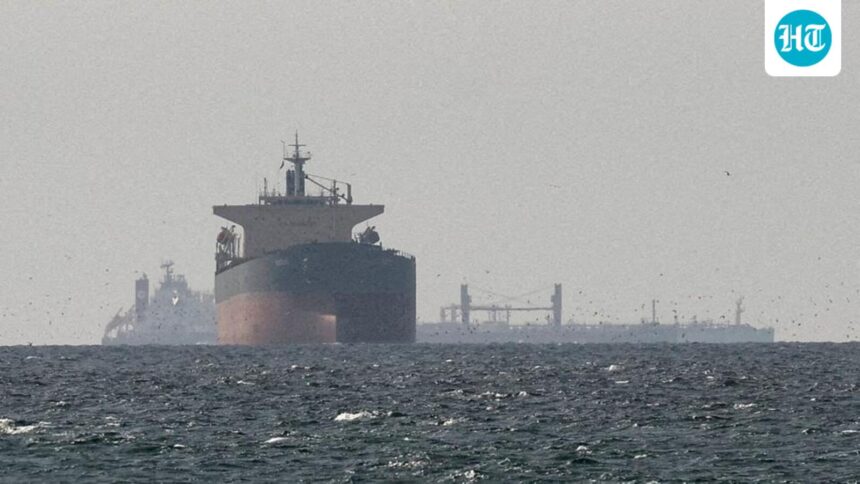
The sources added that Iran and the United Arab Emirates have quarreled several times in recent weeks over the targeting of oil production facilities and energy infrastructure in the Emirates with Iranian drones and missiles, and that differences over the conflict prevented the adoption of a joint statement at the meeting of senior BRICS officials on the Middle East and North Africa region, which was held during the period from April 23 to 24.
Another contentious issue that has emerged in recent weeks is the opposition of almost all BRICS member states, including Brazil, China, Egypt, Russia and South Africa, to any softening of tone in reference to the situation in Palestine, diplomats from several countries said, on condition of anonymity.
The Indian side has found itself in a challenging position on these two issues, given the need to keep all BRICS members on the Council to ensure the smooth conduct of the next foreign ministers’ meeting, scheduled to be held from May 14-15, and to issue a joint statement paving the way for the BRICS summit to be held in September.
The United Arab Emirates has continued to criticize what it describes as “blatant Iranian aggression,” with a UAE Ministry of Defense statement on May 10 stating that the country had engaged 2,265 Iranian drones and 551 missiles. After three Indians were injured in an Iranian attack on the Fujairah Petroleum Industries Zone in the United Arab Emirates on May 4, the Indian side condemned this targeting of civilians and infrastructure, and said it stood in “strong solidarity” with the United Arab Emirates.
“The need of the hour is to build bridges,” said a diplomat from one of the BRICS member countries. “The deliberations at the meeting of BRICS officials dealing with the MENA region have always fed into the foreign ministers’ meeting, which in itself is crucial for the preparation of the BRICS summit.”
“Issuing a joint statement at the foreign ministers’ meeting is doable, but it will require some skillful diplomacy,” this person added.
The sources said that several BRICS member states, including Brazil, China and South Africa, opposed changes to the language that had already been used to refer to the Palestine issue in joint statements adopted at the previous BRICS summits in Russia (2024) and Brazil (2025).
The joint statements at these two summits reiterated the call for a two-state solution, including the establishment of an independent State of Palestine with East Jerusalem as its capital, living side by side with Israel. The joint statement from last year’s summit in Rio de Janeiro also sought “the complete withdrawal of Israeli forces from the Gaza Strip” and other parts of the “occupied Palestinian territories.”
A second diplomat said: “This language has already been accepted at previous BRICS summits and any effort to change or tone it down will affect the consensus in future meetings.”
The Indian side acknowledged that the “sharp difference in positions” between BRICS members who are party to the West Asian conflict hampered a consensus document at the meeting of senior officials on the Middle East and North Africa region last month, and also said that the position taken by New Delhi on the Palestinian issue is in line with the position adopted at the meeting of foreign ministers of India and the Arab League on January 26, when support for the two-state solution was reiterated.
There is a question mark over Chinese Foreign Minister Wang Yi’s participation in the BRICS foreign ministers’ meeting, given its coincidence with US President Donald Trump’s visit to China. However, Iranian Foreign Minister Seyed Abbas Araqchi and Russian Foreign Minister Sergei Lavrov are scheduled to participate in the meeting, according to the sources. They added that Araqchi will also hold several bilateral meetings in New Delhi.