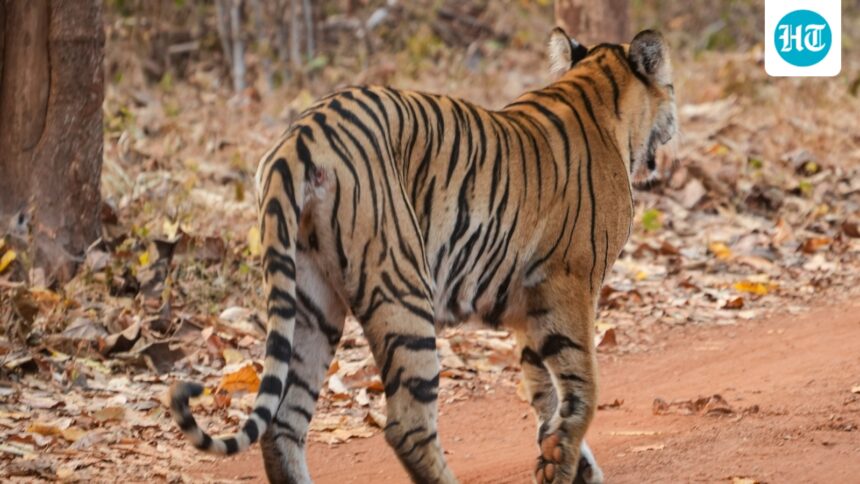
BHOPAL: Kuno National Park in Madhya Pradesh has decided to launch a multi-species conservation plan for the big cat with a tiger from Rajasthan’s Ranthambore Tiger Reserve joining leopards and cheetahs at the facility.

According to the state forest department, Kono has 50 imported cheetahs from South Africa, Namibia and Botswana and 60 local tigers.
Uttam Sharma, field director of Qunu National Park, said the tiger identified as RBT-2512, a descendant of T-107 from Ranthambore, had been roaming in Qunu since December and was seen by villagers again on Thursday.
“There is a corridor between Ranthambore and Qunu and the movement of the leopard is always recorded. This time, the leopard stayed longer, which is encouraging as Qunu now hosts all three major carnivores. We are monitoring its presence, as the park currently has 50 leopards, including newborns, and more than 60 leopards,” Sharma said.
It is a traditional corridor for tiger movement, and in the past 10 years, Ranthambore tigers have entered Qunu and stayed there for several months before returning. Ranthambore has the third highest density of tigers in India after Corbett National Park in Uttarakhand and Kaziranga National Park in Assam.
Sharma said carnivores are able to coexist with each other.
He added: “In South Africa, cheetahs live alongside lions, and historically in India, cheetahs shared habitats with leopards and leopards before their extinction. With the leopard settling in Kuno, the park has emerged as a model for multi-species conservation. Cheetahs have also started moving towards Madhav National Park, where leopards already live, strengthening the cause of coexistence.”
However, forest officials remain wary about the permanent residence of the tiger, as it may move further or return to Rajasthan in search of a mate. “We hope that the female tigers will migrate to Kuno, making their presence permanent. Otherwise, it may come back,” Sharma said.
Before cheetahs were transported to India, wildlife experts raised doubts about cheetahs coexisting with leopards and leopards. Officials said no conflict between cheetahs and leopards has been reported in Kono so far. “We are monitoring the movement of the tiger inside Kuno,” the official said.
An expert, who is part of the cheetah relocation project, said the cheetahs are already living with leopards in the Kuno and Gandhi Sagar Wildlife Sanctuaries in Mandsaur, where the former was relocated from Kuno to develop a second habitat for them.
The National Tiger Conservation Authority (NTCA) and the Cheetah Steering Committee discussed the coexistence of the carnivores, noting that cheetahs are moving towards Sawai Madhopur in Rajasthan, where Ranthambore is located. They stressed the need to study the behavioral patterns of the three species to guide future strategies for the freedom of movement of cheetahs.
Chief Conservator of Forests (Wildlife) L Krishnamurthy said: “Kuno National Park has been a success not just in India but across the world. This is a good sign of the success of the cheetah translocation project.”