The June 6 protests at Delhi’s Jantar Mantar marked an important milestone for the Kokruche Janta Party (CJP), turning a satirical social media movement into a documented campaign on the ground. A turnout of more than 1,200 people, international media coverage and support from prominent politicians and activists helped make the fledgling organization more than just a viral Internet phenomenon.

However, even as the protest demonstrated the potential for offline mobilization of the CJP, agencies say a series of counternarratives that emerged before the event highlighted weaknesses that could shape the movement’s future course.
The most prominent challenge relates to the CJP’s claim to political neutrality.
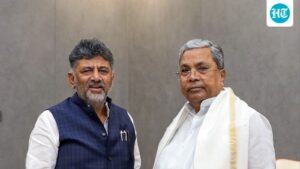
According to agencies, several current and former Aam Aadmi Party leaders have publicly supported the protest, including National Congress convener Arvind Kejriwal, senior leaders Manish Sisodia and Jarnail Singh, as well as former party members Prashant Bhushan and Yogendra Yadav. Trinamool Congress MP Sagarika Ghose also extended support.
Officials say that while the endorsement boosted the movement’s visibility and legitimacy, it also reinforced accusations that the CJP operates as an opposition-backed platform rather than an independent citizens’ movement.
What happened in Jantar Mantar
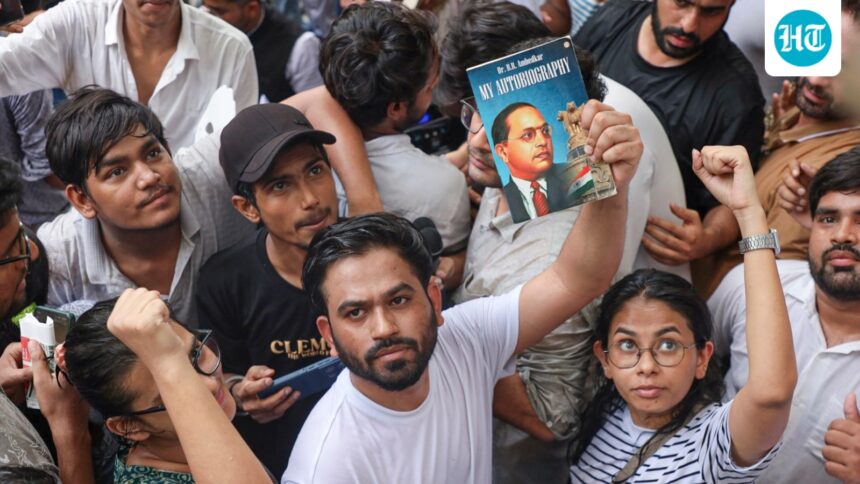
Thousands of students, competitive exam aspirants, young professionals and parents gathered at Jantar Mantar to demand the resignation of Education Minister Dharmendra Pradhan over alleged exam-related lapses, including controversies related to NEET, CBSE and CUET. The demonstrators raised slogans demanding accountability in the education system, and called for reforms in examinations and recruitment processes.
The demonstration was led by CJP founder Abhijit Debaki, who returned to India to lead the agitation. Many participants wore cockroach masks and carried flowers, while many school students attended alongside their parents. The protest ended peacefully, with Debke later giving the government a seven-day deadline to act and warning of wider unrest if demands were not met.
The event also received support from activist Sonam Wangchuk and several opposition leaders. Kejriwal described the mobilization as an expression of youth anger and frustration, while leaders of other opposition parties openly supported the protest.
Foreign funding and ideological ties?
According to the agencies, there are still pressing questions about allegations of foreign influence and political affiliations.
Officials say social media posts claimed Debke’s first call after arriving in India was to Communist Party of India leader Brinda Karat, and they say this is evidence of ideological alignment and outside political direction. AKP supporters rejected the allegations as an attempt to discredit the movement through guilt by association.
Security concerns
Former soldier and social media personality Lucky Bisht has alleged links between RJD spokesperson Sourav Das and activists linked to the 2020 Delhi riots, warning that the protest could turn disruptive.
These allegations pushed criticism beyond routine political attacks and into the realm of concerns about law and order and national security, reflecting a more sophisticated effort to shape public perception of the movement before it reaches the streets.
The road ahead
Despite the controversies, the June 6 demonstration proved that the CJP is more than just a movement driven by online memes. Within three weeks of its formation, the organization succeeded in gathering a large crowd, attracting the attention of international media and attracting the support of activists, politicians and public figures.
However, significant weaknesses remain, officials say. Questions surrounding political affiliations, allegations of outside influence, and concerns about maintaining a nonpartisan identity continue to overshadow the movement. More importantly, the long-term challenge will be to maintain public engagement after one successful demonstration.
The key question remains whether the AKP is able to transform widespread student frustration into a lasting accountability movement, rather than a short-lived viral phenomenon.