The Assam government on Monday introduced legislation in the state assembly to introduce a Uniform Civil Code (UCC), a controversial and polarizing issue, which refers to a common set of laws relating to personal matters such as marriage, divorce, inheritance and succession for all citizens.

Article 44 of the Constitution, one of the directive principles of state policy, calls for the establishment of UCC. But religion-based civil laws have governed personal matters since independence.
In February 2024, Uttarakhand became the first state in the country to pass the UCC Act. The other BJP-ruled state of Gujarat followed suit in March. The BJP-ruled Madhya Pradesh state has formed a committee to draft the UCC. In Goa, the Goa Civil Code, derived from the Portuguese Civil Code of 1867, provides for mandatory registration of marriage before a civil authority
The All India UCC is the third unfulfilled ideological promise of the BJP. The construction of a Ram temple in Ayodhya and abrogation of Jammu and Kashmir’s semi-autonomous status under Article 370 of the Constitution, the other two major ideological goals, have been achieved since the BJP came to power at the Center in 2014.
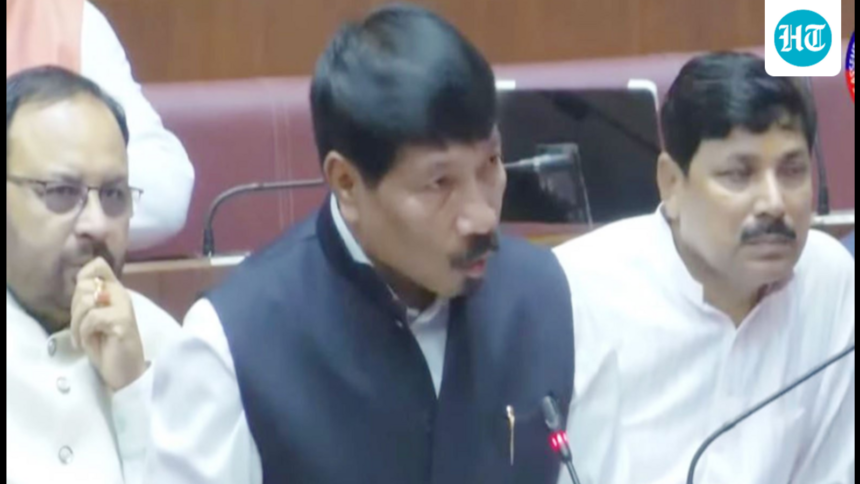
Assam Minister Atul Bora introduced the Assam Uniform Civil Code Bill, 2026, making the north-eastern state the third BJP-ruled state to introduce such legislation. The bill is expected to be discussed and voted on on Tuesday, the last day of the first session of the 16th Assembly that was formed after elections in April.
The BJP promised to introduce UCC in Assam in its manifesto ahead of the 2026 Assembly elections. The state cabinet approved the legislation in its first session on May 13.
Details of the legislation are not yet available. On May 13, Prime Minister Himanta Biswa Sarma said that tribals, who live in hills and plains, would be kept out of UCC’s purview in line with similar provisions in Uttarakhand and Gujarat. He said: “All religious rituals, customs and traditions will also be outside its scope.”
Tribals account for 12.45% of Assam’s population and Muslims 34.22%, according to the 2011 census.
Sarma said the Marriage Coordination Committee will regulate the minimum age for marriage, protect women’s right to family property, abolish polygamy, recognize direct relationships, and impose compulsory registration of marriages and divorces.