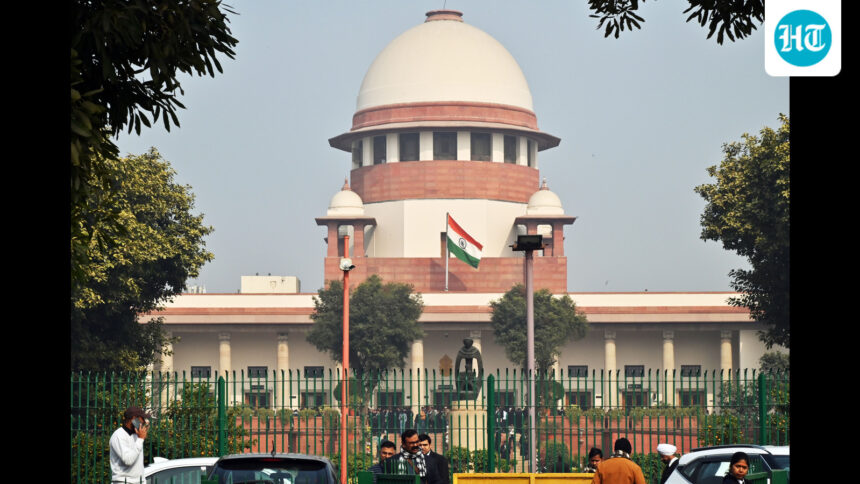
The Supreme Court on Wednesday strongly criticized the common practice in hospitals of discharging patients “against medical advice” when treatment is interrupted, warning that such a course of action may undermine patient care and may amount to an abdication of medical liability.

Discharge Against Medical Advice (DAMA) forms are frequently issued in cases where patients are on life support, such as ventilators, and their families seek to take them home after doctors indicate that further therapeutic treatment is uncertain. The observations came in a landmark ruling allowing passive euthanasia for a 32-year-old man who had remained in a permanent comatose state for more than a decade.
While clarifying the legal framework governing the withdrawal of life-sustaining treatment, the court emphasized that the decision to discontinue medical intervention cannot lead to abandonment of the patient.
A bench of Justices JP Pardiwala and KV Viswanathan held that once a legal decision has been made to withdraw or withhold medical treatment as per the guidelines laid down in the Supreme Court’s 2018 judgment in the joint case, the process must be carried out in a humane and orderly manner through palliative and end-of-life care.
The court said: “Withdrawing or withholding treatment must not lead, in effect or in practice, to abandoning the patient.” Instead, she added, the decision should represent a transition from curative medical intervention to a “carefully organized and medically supervised palliative and end-of-life care plan.”
The court said such a plan should focus on relieving pain and distress, managing symptoms and preserving the patient’s dignity during the final stages of his life. In this context, the Court expressed strong disapproval of the hospital’s routine practice of issuing a “discharge against medical advice”, also referred to as a “discharge against medical advice” or “discharge at your own risk”.
“We strongly reject the routine practice of ‘going against medical advice’… which is abused in cases where medical treatment is discontinued,” the ruling said.
According to the authority, hospitals sometimes resort to such discharges when curative treatment is not possible.