The Supreme Court on Thursday approved the cutting of a road through the Rajaji National Park on the condition that no commercial vehicles ply on the 4.7 km stretch connecting Kotdwar and Haridwar.
The court said the road will not be allowed for any commercial purpose. (Sanjay Sharma)The Uttarakhand government approached the apex court on January 11, 2023 to vacate the stay imposed by the apex court on the road project known as Laldhang Chillarkhal Road. The 11 km long road could not be used due to its location. Also, a 4.7 km stretch of this road cuts through reserved forest which serves as an important tiger and elephant corridor between Rajaji and Corbett. This road could not be black-topped and was therefore not motorable.
Revising its 2013 order, the bench headed by Chief Justice of India (CJI) Surya Kant said, “Our earlier order has been modified to allow the state to metalle roads, essentially to provide better access and facilities, especially for the benefit of people in nearby village areas.”
A bench comprising Justices Jayamalya Bagchi and Vipul M Pancholi further said, “We will not allow this road for any commercial purpose. Once the exception is carved out, it will be misused as roaring trucks and dumpers will pass through the forest even at night.”
The state represented by advocate Abhishek Atrey told the bench that the road project has received approval from expert bodies of the National Board for Wildlife (NBWL), National Tiger Conservation Authority (NTCA), Ministry of Environment Forest and Climate Change (MoEFCC) and CEC.
More Read
Atreya said the CEC in its report had given permission for the road subject to certain conditions, one of which was to allow only 150 vehicles in a day. He showed a map of the area and suggested that the construction of the road would greatly reduce travel time. According to him, if commercial vehicles are not allowed, the only alternative route would be to cover an additional 65 km.
“In the interest of environment, they must take alternate routes,” the bench said, as it ordered, “commercial vehicles shall be allowed to ply through alternate roads, irrespective of length or time. To this extent, the petition is allowed.”
The court also criticized the CEC for allowing 150 vehicles to pass through a reserved forest area. It said, “Why did CEC allow the road for commercial use. Please have some sense before giving permission. You said well, the state needs to ensure only 150 vehicles.”
More Read
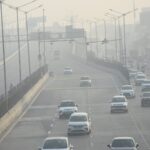
Atre noted that the road will benefit around 18 villages that do not have access to motorable roads. His plea was supported by a petition moved by Lok Sabha MP from Garhwal Anil Baluni, who was represented by senior advocate Bansuri Swaraj. He informed the court that the stretch of the road has been elevated by 400 meters to facilitate the movement of wild animals.
The bench agreed that villagers are entitled to roads as it observed, “Every villager is entitled to the benefit of roads. But in the name of giving access to a few villages, if you want to provide a commercial road, we will not allow it.”
Senior advocate K Parameshwar, amicus curiae assisting the court, pointed out that from the point of view of accessibility, state transport buses, which serve as the only public mode of transport for villagers, should be allowed. The court directed the state to list the measures taken to curb the use of commercial vehicles. It asked the CEC along with the amicus to examine it at a later date for further hearing.
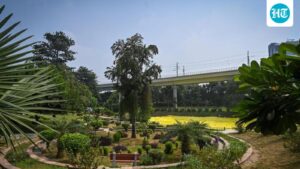
The road cuts through the buffer zone of Rajaji National Park, home to tigers, elephants, cheetahs and bears. The 4.7 km stretch falls between Chamaria and Sigadi Sot. NTCA, NBWL and MOFCC suggested mitigation measures for the project to which the state objected. The bench refused to allow these objections while allowing the construction of the road.